
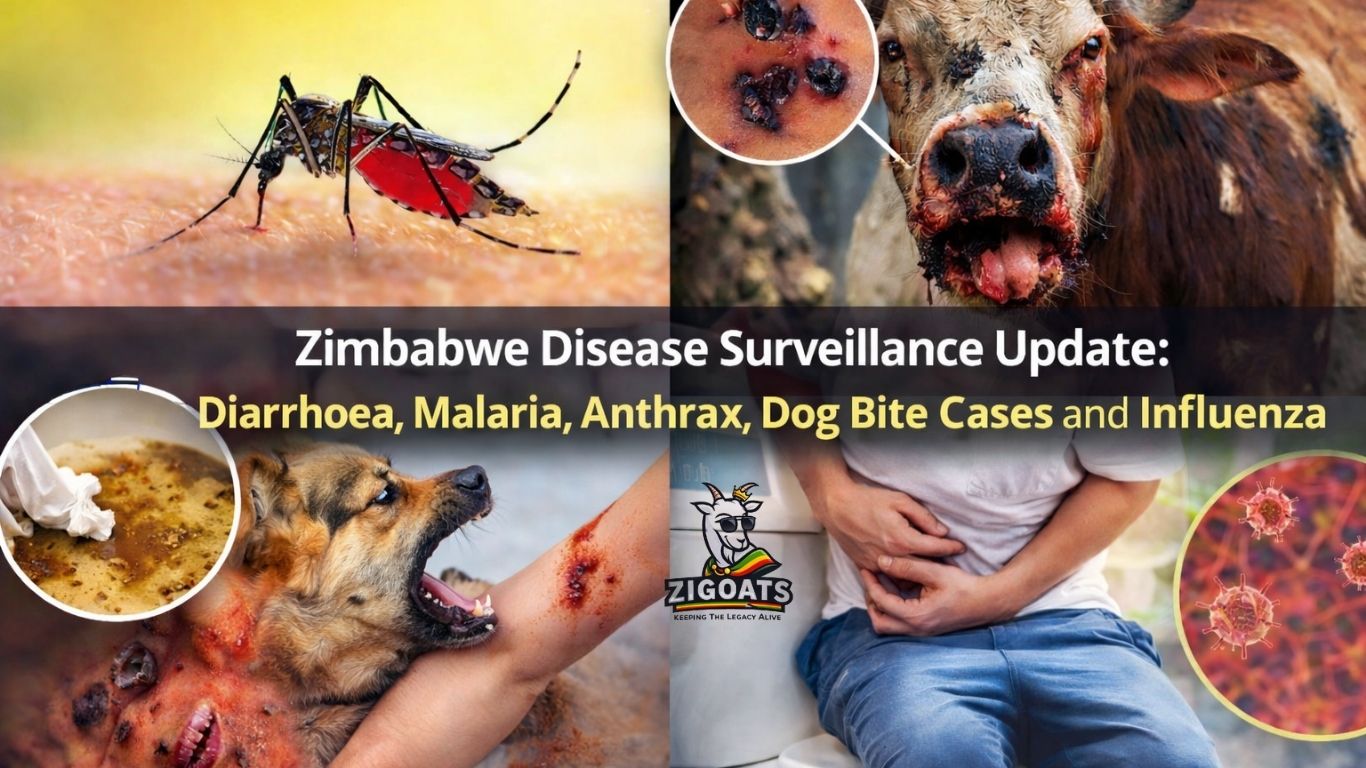
The most worrying signal comes from malaria…
By Advent Shoko
Zimbabwe’s disease surveillance data is revealing a mixed public health picture, with some illnesses showing a decline while others are rising sharply, raising fresh concerns about seasonal risks, water safety, and vector control.
In its latest Weekly Disease Surveillance Report released on 19 January 2026, the Ministry of Health and Child Care reported 4,903 common diarrhoea cases and two deaths for the week ending 4 January 2026. While the numbers remain high, they mark a decline from late November, when 5,402 cases and two deaths were recorded.
Encouragingly, this drop suggests modest improvement in diarrhoeal disease control, possibly linked to better hygiene awareness and emergency water interventions. However, the burden remains heavy on children, with nearly 40 percent of cases affecting under-fives, underlining persistent vulnerabilities in sanitation and safe water access. Mashonaland West and Manicaland continue to drive the numbers.
Influenza-like illnesses are also trending downward. Suspected influenza cases fell from 4,809 in late November to 2,893 in early January, with no deaths reported. Health experts say this decline may reflect seasonal easing, but warn against complacency, especially in overcrowded communities.
The most worrying signal comes from malaria, which has spiked sharply. Cases jumped from 519 in late November to 1,725 in early January, while deaths, although fewer than cumulative figures, remain a concern. The rise is closely linked to increased rainfall, stagnant water, and mosquito breeding, particularly in Mashonaland Central and Manicaland.
Anthrax cases remain stable but persistent, with six cases reported, all in Midlands Province. While no deaths were recorded, officials caution that anthrax remains a livestock-linked threat requiring continued surveillance.
Dog bite incidents show a slight decline, dropping from 716 to 619 cases, but the data reveals a troubling pattern: over half of bites involved dogs of unknown vaccination status, keeping rabies risks firmly on the table.
Dysentery numbers remained largely unchanged, signalling a plateau rather than progress in sanitation-related disease control.
Overall, the data paints a picture of decline in some communicable diseases, stability in others, and a worrying rise in malaria. Health analysts say Zimbabwe is at a critical point where preventive action, community awareness, and rapid response will determine whether these trends improve or deteriorate as the rainy season continues.
For now, the message from the numbers is clear: progress is possible, but fragile.
Leave a Reply