
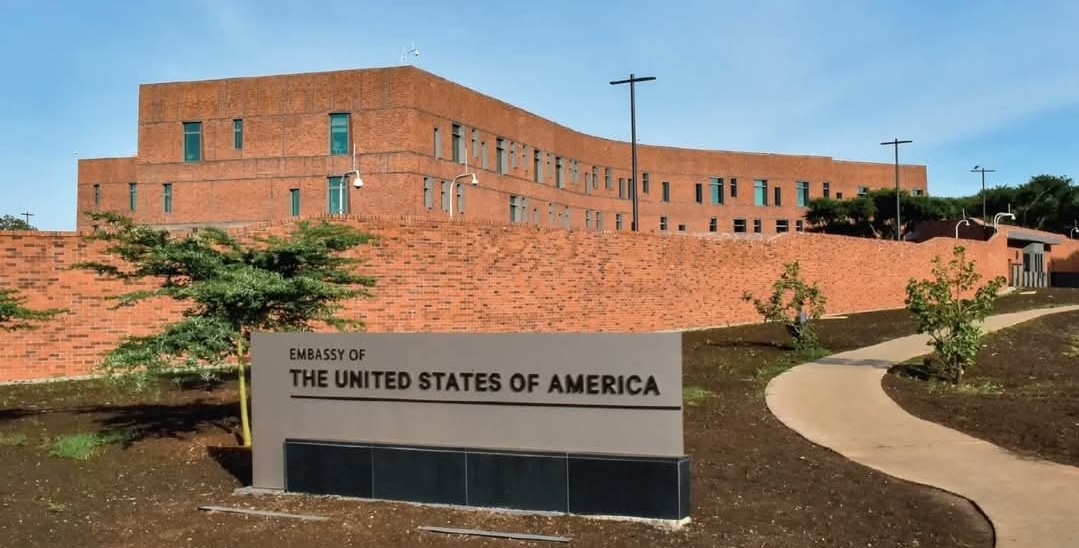
Harare/Washington – The United States (U.S.) has pushed back firmly against claims that it attempted to secure access to Zimbabwe’s critical minerals under a proposed US$367 million health funding agreement, saying the draft deal was strictly about public health cooperation.
The denial comes after Zimbabwe walked away from negotiations on the Memorandum of Understanding (MoU), which had been framed under Washington’s America First Global Health Strategy. Authorities in Harare said they halted talks over concerns about sovereignty and long-term national interests.
A U.S. official familiar with the negotiations dismissed speculation that mineral access was tied to the health package. The official said:
“The MOU focused solely on health cooperation and did not contain any provisions related to Zimbabwe’s critical minerals neither explicitly nor implicitly.”
Zimbabwe: “A Partnership Must Be Built on Mutual Respect”
On the Zimbabwean side, the government says the decision to terminate negotiations followed a “rigorous inter-ministerial review” directed by President Emmerson Mnangagwa.
Nick Mangwana, Secretary for Information, Publicity and Broadcasting Services, said Harare values long-standing health cooperation with the United States, particularly under the President’s Emergency Plan for AIDS Relief (PEPFAR). But he argued the draft MoU did not meet Zimbabwe’s threshold for an equitable partnership. Mangwana said:
“However, a partnership, by its very definition, must be built on a foundation of mutual respect, transparency, and reciprocal benefit.”
According to the government, the proposed agreement would have required Zimbabwe to share sensitive health data, including pathogen samples and epidemiological information, without firm guarantees that any resulting vaccines, treatments or diagnostics would be accessible to Zimbabweans. Mangwana added:
“In essence, our nation would provide the raw materials for scientific discovery without any assurance that the end products would be accessible to our people.”
Sovereignty and the Global Health Framework
Harare also raised concerns that a bilateral arrangement could undermine broader multilateral health negotiations.
Zimbabwe recently represented 50 African states at the World Health Organization (WHO), advocating for pathogen-sharing to be handled through the WHO’s Pathogen Access and Benefit-Sharing (PABS) framework to ensure fair distribution of benefits. Mangwana said:
“To accept a bilateral arrangement that bypasses this multilateral mechanism would undermine the very solidarity that African nations have been advocating for.”
He stressed the decision was not anti-American, but constitutional.
“No foreign assistance, regardless of its monetary value, should compromise the sovereignty and independence of Zimbabwe as a nation.”
Minerals Rumours Add Diplomatic Heat
The fallout intensified after speculation emerged that Washington was seeking leverage over Zimbabwe’s lithium and other critical mineral reserves, resources increasingly central to global supply chains and clean energy transitions. However, Zimbabwean authorities have not stated that the proposed health agreement was tied to mineral access.
U.S. officials maintain that such claims are misplaced and insist the draft MoU was strictly limited to public health cooperation. The U.S. official reiterated, rejecting any suggestion of mineral provisions:
“The MOU focused solely on health cooperation.”
There has been no public evidence presented by either side showing language in the draft MoU referencing mining, extraction rights, or resource concessions.
The collapse of talks leaves uncertainty around funding for Zimbabwe’s health programmes, many of which have historically relied on U.S. support.
Harare says it remains open to cooperation, but on revised terms.
Zimbabwean authorities insist future agreements must preserve data sovereignty, guarantee reciprocity, and align with multilateral health frameworks.
Leave a Reply