
By Advent Shoko
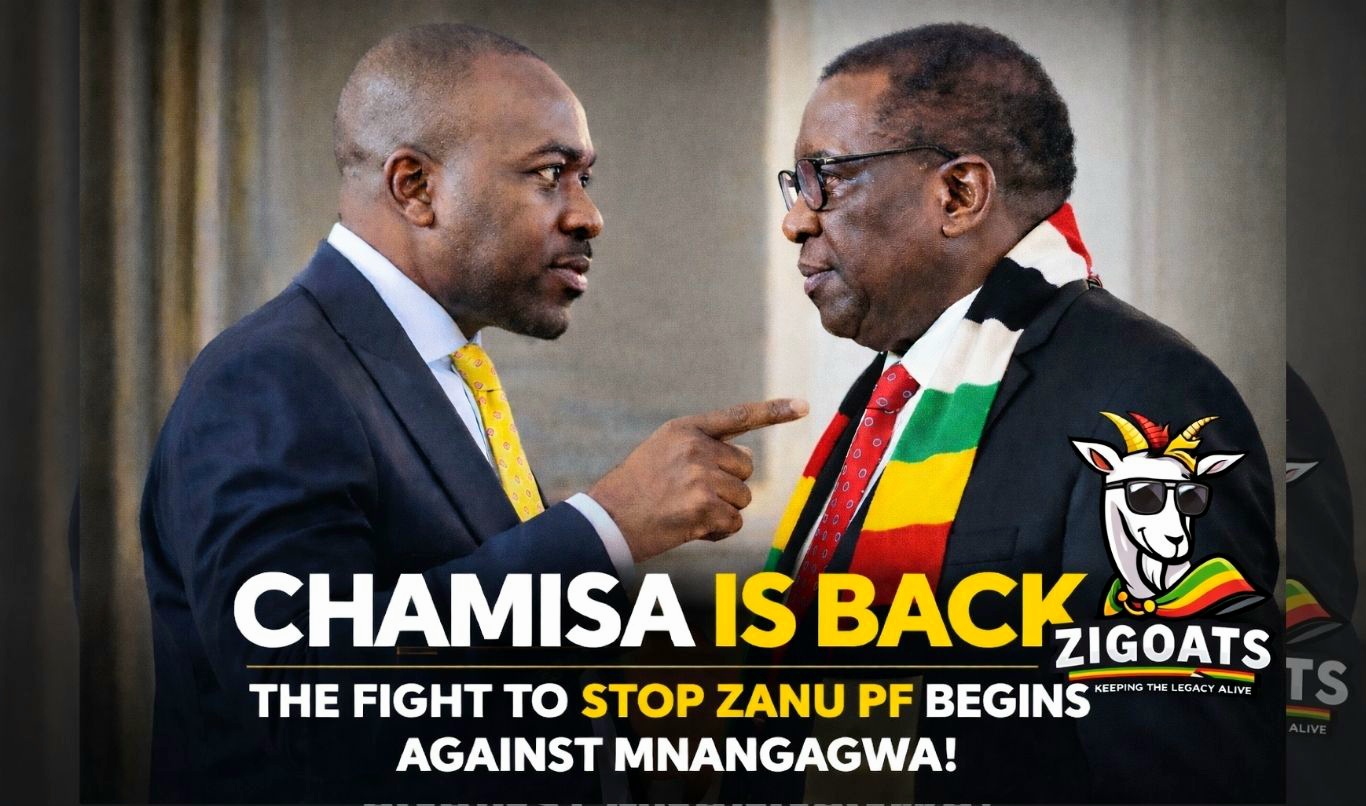
HARARE – When Nelson Chamisa stepped back from the frontline of Zimbabwean politics nearly two years ago, it looked like the curtain might finally be falling on one of the country’s most polarising, and persistent, political figures. But this week he returned with a bold declaration:
“This is not a career; it’s my calling.”
His re-entry, through a citizens’ initiative he calls Agenda 2026, has revived debate over leadership, legitimacy and Zimbabwe’s troubled political landscape. Chamisa didn’t just announce himself back; he launched a vision. In an interview with South Africa’s SABC international service, he explained why he’s stepping back into the fray:
“Zimbabwe has been leaderless and rudderless … there’s been no dance to counter the kind of terrorism, tyranny, dictatorship, and authoritarianism in the country … what is inviting me back are the circumstances in our country.”
His tone was urgent, almost personal, a leader framing himself as both a voice and a vessel for a nation he says is in crisis.
To understand the full weight of this return, you have to start with Chamisa’s political roots. Born in Masvingo in 1978, Chamisa rose through student politics at the University of Zimbabwe, where he majored in political science and administration, a foundation that shaped his cerebral, confident style. He became youth leader and later national secretary for publicity in the old Movement for Democratic Change (MDC), aligning himself with the charismatic Morgan Tsvangirai in the early battles against the long-standing ZANU-PF hegemony.
That alliance carried him to national prominence. In 2018, after Tsvangirai’s death, Chamisa assumed leadership of the MDC Alliance and became the main presidential challenger to Emmerson Mnangagwa. He narrowly lost in an election observers described as lacking credibility, and his legal challenge was dismissed by the Constitutional Court. He contested again in 2023 under the Citizens Coalition for Change (CCC) banner, and was again defeated in polls that critics labelled deeply flawed.
But Chamisa’s journey hasn’t been linear. After the 2023 elections, internal fractures erupted. He resigned from the CCC in January 2024, accusing the party of being “hijacked” and undermined by rival political forces, a stunning development given that he had founded the party just two years earlier to replace the MDC as the main opposition vehicle. Critics say this back-and-forth has damaged political cohesion, leaving Chamisa without a formal party even as he retained a loyal base.
It was during that sabbatical that many Zimbabweans wondered if he had quietly exited politics for good. Instead, Chamisa used the time to reflect, consult, and, by his account, listen to the calls of citizens disillusioned by stagnation at home and exodus abroad. In renewing his commitment, he has repeatedly cited the five million Zimbabweans in the diaspora and almost half the population living in extreme poverty as a core motivation for his comeback.
Agenda 2026, he explains, isn’t a party; it’s a citizens’ movement aimed at tackling what he calls Zimbabwe’s deep governance crisis. He said:
“This is not about positions or personalities. It is about purpose … a movement by the citizens, for the citizens and from the citizens.”
For Chamisa, this is a strategic shift: transcend tribal, class and party divides to rebuild consensus, democracy, and economic opportunity.
Yet not all see this return as a fresh dawn. Critics warn that Chamisa’s previous organisational strategies lacked institutional depth. His opponents within and outside opposition ranks argue that his emphasis on personalised leadership, rather than institution-building, set the stage for the collapse of both the MDC Alliance and the CCC. Some commentators and ordinary citizens see his re-emergence with skepticism, claiming he must first account for past exits and rebuild trust before leading again. Some even go as far as labeling him a ZANU PF agent sent to disrupt anti Vision 2030 agenda premised on extending Mnangagwa’s rule beyond constitutional term limit.
Even among supporters, there’s a mix of hope and caution. Many young Zimbabweans are enthusiastic, citing his rhetoric of dignity, unity, and empowerment. Others want tangible policy frameworks, not just slogans. Amid economic crises and political polarisation, the debate touches on a bigger question: can personality-driven leadership translate into sustainable democratic progress? Or will old patterns, opposition fragmentation, internal disputes, and reliance on a single figure, repeat themselves?
Despite the uncertainties, Chamisa’s rhetoric is clear: Zimbabwe, in his view, is at a crossroads. He told SABC:
“You can never defeat a people who are determined. And you can never delay a time whose moment has come.”
Whether this moment signals a political renaissance or another chapter in an enduring struggle will depend on whether the citizen movement he envisions can grow beyond charisma into a resilient, inclusive force for change, a test both for him and for Zimbabwe’s democratic trajectory.
Leave a Reply