
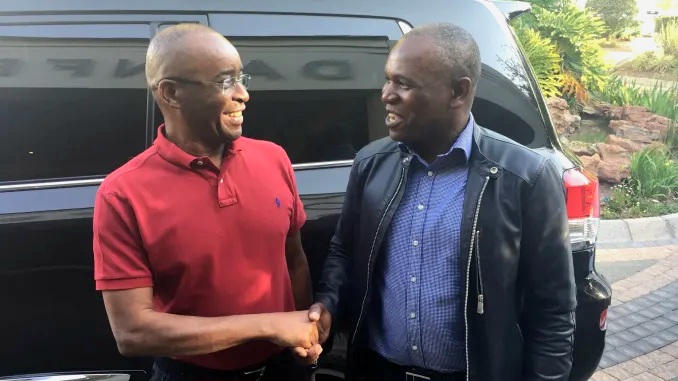
Businessman and lawyer Tawanda Nyambirai has broken his silence, offering a deeply personal account of why he continues to support President Emmerson Mnangagwa, even as debate rages over Constitutional Amendment Bill No. 3 of 2026.
The proposed amendment could extend presidential terms from five to seven years and shift the election of the President from direct citizen vote to Parliament, a move that has sharply divided legal and political opinion.
But Nyambirai says his stance is rooted in lived experience.
“After my recent opinion on Constitutional Amendment Bill No. 3, many have speculated about my attitude toward President E.D. Mnangagwa. Some have labeled me as they wish.
My position, however, has never changed, I have supported President Mnangagwa from before he became President until now. And I will continue to support him.
Tawanda Nyambirai Says, “I Have a Strong Bias” Towards Mnangagwa
Nyambirai does not hide his position.
“I have a strong bias in favour of President Mnangagwa. I say so openly and without apology. It is rooted in personal experience.”
He traces that experience back to his early days as a young lawyer at Kantor & Immerman, when he was appointed the youngest member of the board of the National Empowerment Corporation.
The board included heavyweights such as James Mushore, Godfrey Gomwe, Greg Brackenridge, Shingi Mutasa, Rachel Kupara, Gedion Gono and others. They reported to the Indigenisation Committee chaired at the time by then Minister Emmerson Mnangagwa.
Nyambirai recalls a defining moment.
“At one meeting, I was attacked over petty and false allegations that arose from Kantor & Immerman, that I was some sort of ‘uncle Tom.’ Because I had been allocated computers ahead of others.”
He says many remained silent.
“President Mnangagwa immediately shut the matter down. He reminded the room that we were there to discuss policy, not gossip from a law firm. He was firm. Decisive. Focused. Fair.”
A Letter That Stayed for Decades
Nyambirai also recounts a professional disagreement while he was in London working on a corporate finance deal.
“On another occasion, I held a legal view he did not agree with. While I was in London… colleagues called to say I was ‘in trouble.’”
When Tawanda Nyambirai returned, a letter awaited him from Mnangagwa, then Minister of Justice.
“He reminded me that as the legal person on the board, my duty was not merely to identify problems but to find solutions.
That lesson has stayed with me for decades.”
The Strive Masiyiwa Battle: Tawanda Nyambirai Says Mnangagwa Removed Hurdles
Nyambirai’s story extends to his representation of telecoms entrepreneur Strive Masiyiwa during the long and complex licensing battle that reshaped Zimbabwe’s telecommunications sector.
“When I represented Strive alongside Anthony Eastwood in his fight for a license, we needed ministerial approval to bring senior counsel Wim Trengove. We were blocked.”
He says a meeting was arranged through Permanent Secretary Yunus Omarjee.
“The meeting lasted less than five minutes.
He stated clearly that Strive was entitled to counsel of his choice. He signed the necessary certificates immediately and handed me every copy — including the Ministry’s file copies — instructing me to return them once the judgment was registered.”
Only later, Nyambirai says, did he grasp the significance.
“Had the papers remained within the system, the registration could have been frustrated before I even returned to my office.”
Twenty Years of Waiting
Perhaps the most personal part of his testimony relates to land.
“In 2002, when my farms were taken, the late Vice President Msika told me plainly: ‘The only person who can resolve this is Emmerson.’”
Nyambirai says he sought a meeting.
“In a brief meeting, he advised me to vacate and wait. I did. I waited nearly twenty years. Today, my farms are back.
My Support Is Not Blind”
As public debate intensifies over Constitutional Amendment Bill No. 3 of 2026, Nyambirai insists his support is neither transactional nor naïve.
“President Mnangagwa has been consistent with me. Firm. Decisive. Fair. At times feared, yes — but predictable in his reasoning and clear in his direction.
So when people question my stance, understand this: my support is not blind. It is informed by lived experience.”
He ends on a deeply personal note:
“You may label me as you wish. I do not repay good with ingratitude.
I stand where I stand because of what I have personally known.
May God show him the same fairness and kindness he has shown me.”
As Zimbabwe continues to debate constitutional reform, Nyambirai’s voice adds a rare personal dimension to what has largely been a legal and political contest.
Leave a Reply