
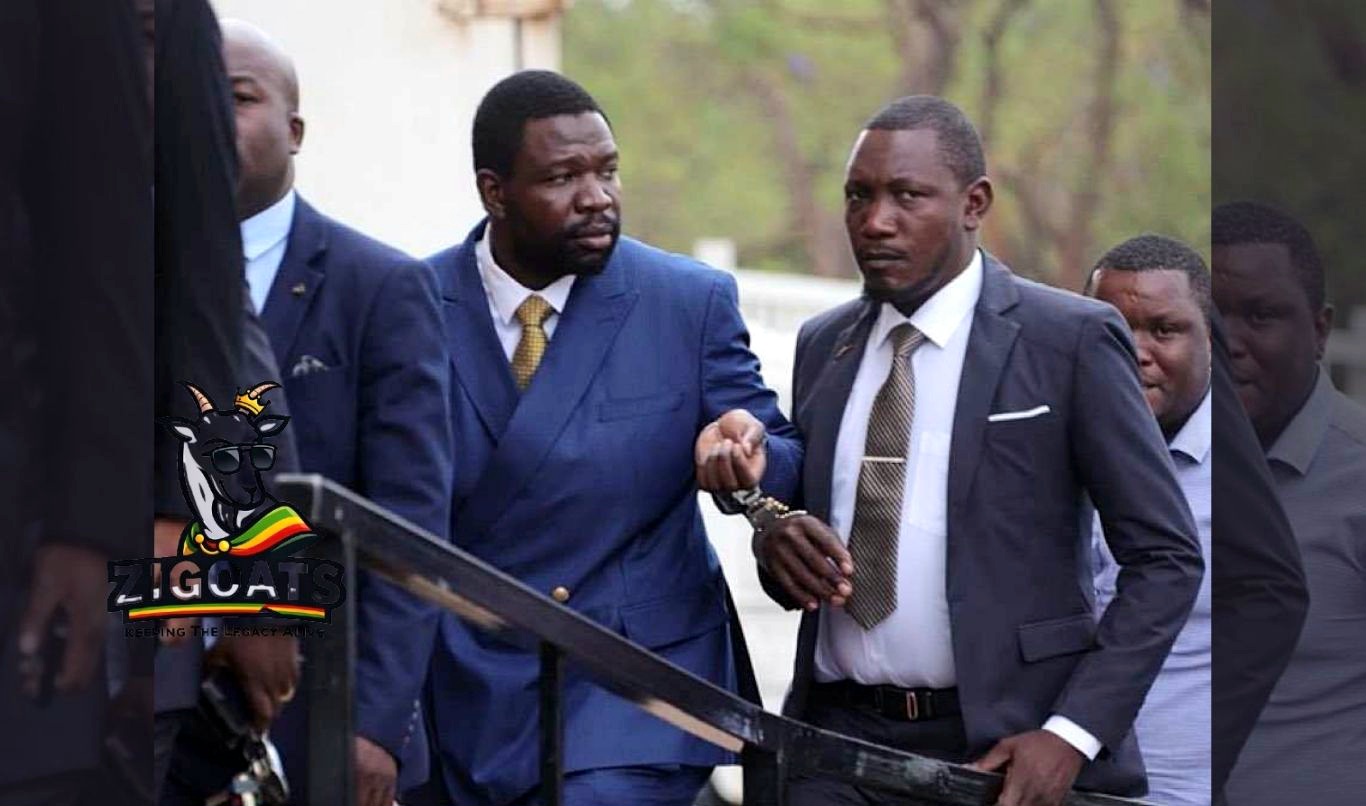
The State has flatly rejected Prophet Walter Magaya’s attempt to have a senior prosecutor removed from his ongoing rape trial, dismissing claims of church rivalry and bias as baseless and unsupported by evidence.
In a strongly-worded public statement issued on 18 February 2026, the National Prosecuting Authority of Zimbabwe (NPAZ) confirmed that the Prosecutor General conducted a “thorough investigation” into allegations raised by Magaya’s lawyers, and found nothing to justify the recusal of Chief Director of Public Prosecutions, Ms Tendayi Shonhayi.
The decision marks a critical turn in a case that has already been overshadowed by claims of religious rivalry involving Walter Magaya and Emmanuel Makandiwa.
Magaya’s Claim: Rival Church Influence
Through his lawyers, Rubaya and Chatambudza Legal Practitioners, Magaya argued that Ms Shonhayi should step aside because she allegedly attends Makandiwa’s United Family International Church (UFIC), which he considers a rival to his Prophetic Healing and Deliverance Ministries.
In their letter dated 17 February 2026, Magaya’s legal team claimed:
“Our client instructs, and has it on good authority, that Ms Tendayi Shonhayi is a member of a rival church known as United Family International Church (UFIC) which is considered by our client as a rival church to the Accused person’s church PHD Ministries as well as to the Accused person himself.”
The lawyers went further, alleging:
“It is our client’s considered view that Ms Tendayi Shonhayi is on a mission of her own to try and persecute him on the basis that she wants to destroy our client’s church for the benefit of UFIC which is a competing rival church.”
The application effectively sought to recast the criminal trial as part of a broader religious turf war, a narrative that has been circulating among sections of Magaya’s followers for months.
NPAZ Hits Back: “Allegations Without Substance”
But the prosecution authority was unmoved. In its official response, the NPAZ stated:
“The allegations are without substance and were made without any cogent evidence of any prosecutorial impropriety.”
The authority stressed that prosecutorial decisions are governed strictly by law, not personal affiliations. NPAZ said:
“In terms of the Constitution of Zimbabwe and the National Prosecuting Authority Act, the Prosecutor General and officers of the National Prosecuting Authority are independent and are not subject to the direction or control of any person or authority in the exercise of their prosecutorial functions.”
It added that decisions are made based on “the law, the evidence available, and the public interest.” The Prosecutor General ultimately ruled:
“There is no rational or lawful basis for the recusal of Ms Tendayi Shonhayi from the prosecutorial team.”
Magaya’s lawyers have formally been notified of the decision.
The Law of Recusal
Under Zimbabwean law and the principle of Nemo judex in sua causa, a prosecutor can only be removed from a case if there is credible evidence of bias, conflict of interest, or misconduct that threatens the fairness of proceedings.
Legal experts say mere allegations, particularly those rooted in speculation about church membership, are unlikely to meet that threshold.
The Constitution safeguards prosecutorial independence precisely to prevent external pressure, whether political, religious or personal, from influencing criminal proceedings.
In this case, the NPAZ appears determined to draw a clear line, church rivalry does not equal legal bias.
Rivalry Spills Into Court
The tension between Magaya and Makandiwa is long-standing. Both command significant followings in Zimbabwe’s charismatic Christian movement, and their ministries have often been viewed as competitors for influence, congregants and media attention.
However, until now, that rivalry had largely played out in sermons, social media narratives and public perception, not inside a courtroom.
By introducing allegations of UFIC links into formal legal proceedings, Magaya’s defence team has effectively shifted the battleground from the pulpit to the justice system.
The State’s firm rejection signals that the trial will proceed on criminal law grounds, not ecclesiastical politics.
What This Means for The Trial
Magaya is facing serious rape charges, allegations he has consistently denied. The case has already experienced procedural twists, bail applications, and intense public scrutiny.
With the recusal application now dismissed, the prosecution team remains intact. The focus returns squarely to the evidence and the merits of the criminal case itself.
For now, the message from the State is clear, allegations of church rivalry, without proof of misconduct, will not derail a prosecution. And in a case as high-profile and sensitive as this one, the courts, not congregations, will decide the outcome.
Leave a Reply