
By Advent Shoko
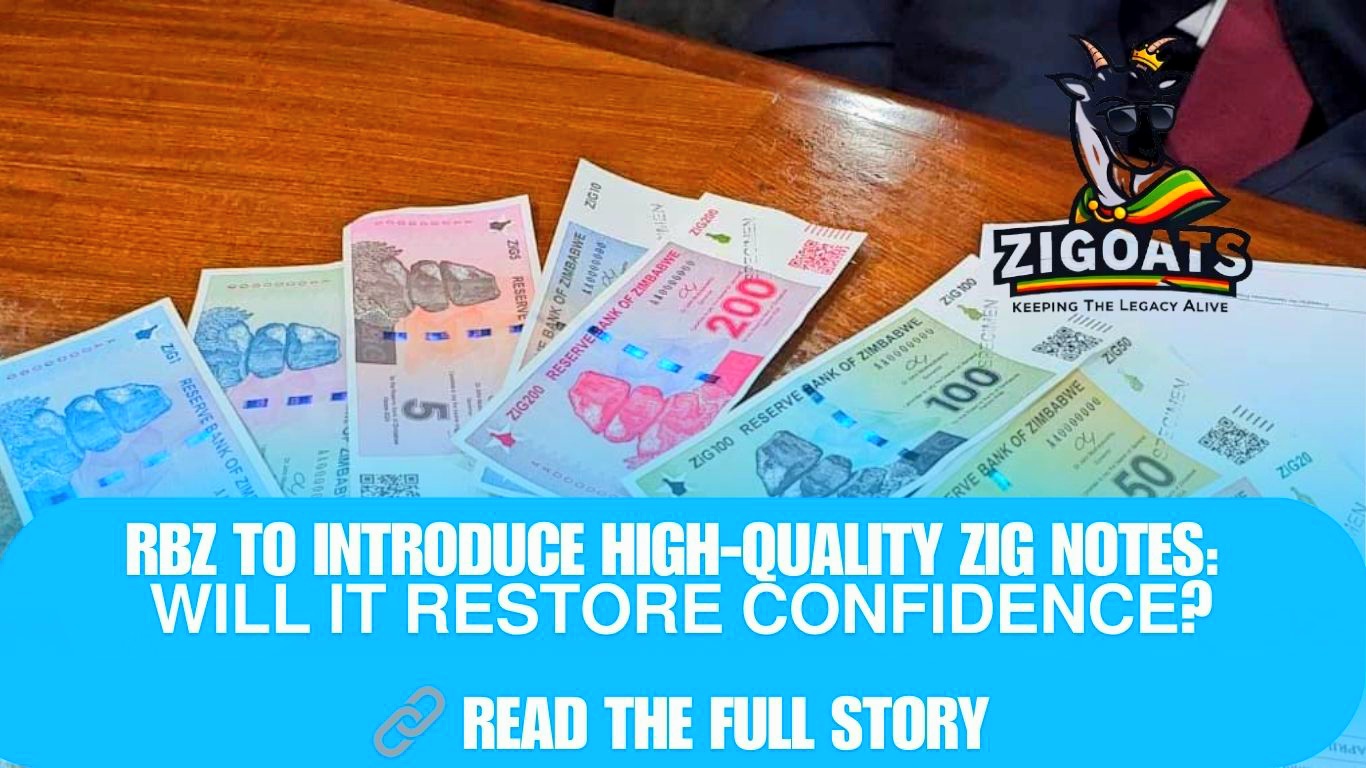
The Reserve Bank of Zimbabwe (RBZ) says it is preparing to introduce high-quality Zimbabwe Gold (ZiG) banknotes that meet international monetary standards, fitted with enhanced security features and improved durability.
Authorities argue the move is critical in restoring confidence in the domestic currency, curbing counterfeiting, and anchoring macroeconomic stability at a time when the economy remains fragile but cautiously optimistic.
Yet beneath the polished promise of better paper and stronger security threads lies a deeper national question, is Zimbabwe’s currency problem really about the quality of banknotes, or about trust?
You May Like To Read This
Quality ZiG Notes Vs Confidence Deficit
Reserve Bank of Zimbabwe officials insist the new ZiG notes will be comparable to international currencies in both form and function. The thinking is simple, better quality money signals seriousness, permanence, and discipline.
However, critics counter that Zimbabwe’s currency history shows confidence is not built on paper quality, but on policy consistency, transparency, and credibility. One economist remarked on condition of anonymity:
“People don’t reject money because it tears easily. They reject it because they fear what it will be worth tomorrow.”
That fear is deeply rooted in Zimbabwe’s lived experience.
A Long And Painful Currency Journey
Since independence in 1980, Zimbabwe has experimented with multiple currency regimes, each shaped by political choices, fiscal pressures, and economic shocks.
1980 – 1990s, Zimbabwe adopted the Zimbabwe dollar at Independence. Initially stable, it gradually weakened due to rising fiscal deficits, unbudgeted spending, and economic mismanagement.
2000 – 2008, The currency collapsed spectacularly during the land reform era, culminating in record-breaking hyperinflation that wiped out savings and incomes.
2009, The Zimbabwe dollar was officially abandoned, replaced by a multi-currency system, mainly the US dollar, which brought temporary stability.
2016 – 2019, Bond notes and coins were introduced as an “export incentive,” later morphing into the RTGS dollar, reigniting inflation and currency mistrust.
2024, The government launched the Zimbabwe Gold (ZiG), backed by gold and foreign currency reserves, promising discipline, transparency, and a market-aligned system.
It is against this backdrop that the RBZ now wants Zimbabweans to trust yet another iteration of local money.
Authorities Point To Falling Inflation
Government officials argue the ZiG has already delivered tangible results. Treasury reports show inflation falling to single digits, with 4.1% recorded, the lowest level Zimbabwe has seen since 1997.
Economists such as Professor Gift Mugano and independent commentator Tinashe Murapata, popularly known as Baba Nyenyedzi, have acknowledged this progress. Murapata said:
“Without doubt, 4.1% inflation in ZiG is positive and encouraging.”
For a country traumatised by price instability, this is no small achievement. But Murapata and others caution that headline numbers alone do not tell the full story. He warns that Treasury’s own reports lack nuance and understate the fragility of the current system. He argues:
“Treasury’s report lacks the necessary nuance about how fragile the currency and the broader monetary system remain. There are significant economic headwinds that authorities must confront directly.”
Murapata points to inflation expectations, noting that they remain elevated despite the low headline figure. He added:
“Expectations feed into realised inflation in the months that follow.”
Zimbabwe, he reminds, has seen this movie before. Murapata said:
“Zimbabwe experienced deflation in 2015–2016, meaning negative inflation, just before the currency regime collapsed. That is the cautionary tale.”
According to Murapata, the ZiG is not yet fully fungible or market-determined, a critical weakness. He said:
“ZiG is fixed, and with that rigidity comes fragility which, if mismanaged, can quickly turn destructive.”
He further argues that the fall in inflation is not driven by market forces, but by administrative controls. Murapata added:
“The RBZ told us one thing when they launched ZiG but now ZiG operates a fixed exchange rate.
ZiG low inflation of 4.1% is not result of market dynamics but a fixed exchange rate, NNCDs and export surrender ZiG of which, given the high export revenue, is quite significant, not being paid.”
The View From The Streets
Opposition figures and civil society actors argue that official stability does not reflect lived reality.
Former Mt Pleasant MP Advocate Fadzayi Mahere has described current price stability as “fictitious”, pointing to the daily struggles faced by ordinary Zimbabweans whose wages remain low while basic costs stay stubbornly high. For many households, stability on paper has not translated into relief at the till, the kombi rank, or the pharmacy.
Enter Tendai Biti: A Deeper Structural Warning
Former Finance Minister Tendai Biti places the currency debate within a broader fiscal and governance crisis. The leading voice on economic policy, has been sharply critical of Zimbabwe’s currency reforms. Speaking previously on the state of the monetary system, Biti said,
“De-dollarisation is a failed ritual, with 80% of all transactions done in US$. The ZIG$ is a myth, a lie, imposed to guarantee extraction through exchange manipulation and fraud.”
Zimbabwe plans to phase out the multicurrency system by 2030. Biti’s comments underscore persistent doubts about ZiG’s real acceptance in the economy, with most commerce still dominated by the US dollar. Even government departments demand payments to be made in US dollar. For Biti, such reliance on fixed exchange rates and administrative controls weakens the currency’s legitimacy and undermines efforts to achieve genuine monetary stability.
The RBZ’s plan to introduce quality ZiG notes may improve durability and security, but Zimbabwe’s currency problem runs deeper than ink, paper, and holograms.
Until trust, transparency, fiscal discipline, and constitutional governance are restored, even the best-printed money will struggle to win hearts, wallets, and confidence.
Leave a Reply