
By Advent Shoko
The Zimbabwe Public Service Commission (PSC) has warned government workers against staying away from work on Friday, July 31, saying any unauthorised absence will be treated as a disciplinary matter.
The warning comes as calls for a nationwide shutdown gather momentum over the controversial Constitutional Amendment No. 3, which President Emmerson Mnangagwa signed into law earlier this month.
In a statement issued on Thursday, July 30, the PSC said July 31 remains a normal working day and ordered civil servants to report for duty unless they are on authorised leave or have been officially excused.
The commission also warned workers against relying on social media messages calling for them to stay at home.
“The 31st of July 2026 is a normal working day,” the PSC said.
“All Public Servants, except those on authorised leave or otherwise officially excused from duty, are expected to report for work and observe normal working hours.”
The commission said public service buses would operate as usual and directed accounting officers to ensure that attendance registers were completed and submitted.
It also said its inspectors would collect and verify attendance records as part of the commission’s monitoring and enforcement duties.
“Any unauthorised absence from work is a dereliction of duty and will be dealt with in terms of the applicable Public Service regulations,” the PSC warned.
Workers caught between protest calls and job security
The warning places thousands of government employees in a difficult position.
Organisers of the July 31 shutdown have called on workers and members of the public to stay away from work as part of a protest against the government and the recently enacted constitutional changes.
For public servants, however, failing to report for duty could now carry consequences under the Public Service regulations.
That creates a straightforward but serious dilemma: stay home to support the shutdown and potentially face disciplinary action, or report for work despite the wider political grievances driving the protest.
The PSC said messages circulating on social media purporting to instruct public servants to absent themselves from duty had not been authorised by the commission.
“The Commission wishes to make it unequivocally clear that these messages have neither been issued nor authorised by the PSC or any of its offices or directorates,” it said.
The commission urged public servants and members of the public to rely only on information issued through official government communication channels.
Why July 31 matters
The planned shutdown comes amid growing anger over Constitutional Amendment No. 3.
The amendment, now gazetted as the Constitution of Zimbabwe (Amendment) Act (No. 3), 2026, changed key aspects of the country’s electoral and constitutional framework. Among other changes, it extended the terms of the president and Parliament from five years to seven years, effectively moving the next general election from 2028 to 2030. It also replaced direct presidential elections with a system in which Parliament elects the president.
Mnangagwa’s signing of the law has triggered criticism from opposition politicians, lawyers and civil society groups, with opponents arguing that the changes weaken democratic accountability and should have gone to a referendum. Legal challenges against the amendments are also pending.
The July 31 shutdown is therefore not simply a workplace protest. It is unfolding against a much wider political dispute over Zimbabwe’s electoral system, presidential succession and the timing of the next election.
Economic grievances add pressure
Those mobilising support for the shutdown have also pointed to longstanding economic and service-delivery problems.
These include high unemployment, low wages, rising living costs, unreliable water supplies, inadequate sewer systems, poor roads and street lighting, among other grievances.
For many Zimbabweans, these issues are more immediate than the constitutional debate itself. The result is a protest narrative that combines political dissatisfaction with everyday economic frustration.
Recent reporting has described growing fears of unrest following the passage of CAB3, with calls for dialogue and peaceful engagement increasing as July 31 approaches.
Zimbabwe has been here before
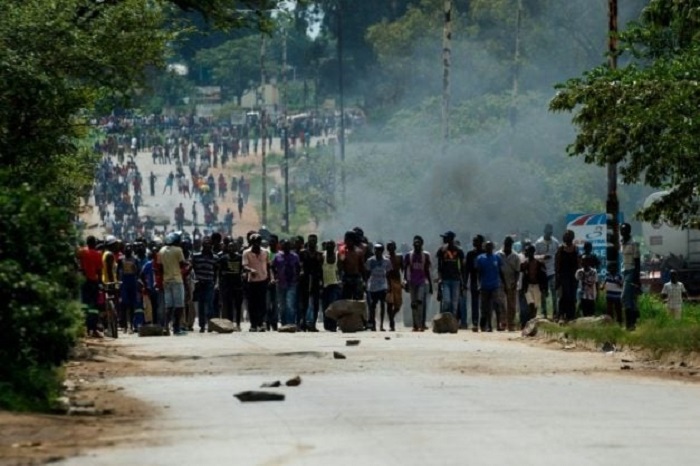
The threat of another nationwide shutdown is also bringing back memories of January 2019, when a fuel-price increase triggered widespread protests and a government crackdown.
Human Rights Watch reported that security forces used live ammunition during the January 2019 protests and documented 17 deaths, while also reporting cases of rape, torture and other abuses. The rights group said the protests involved both violence and looting by some demonstrators, alongside a disproportionate response by security forces.
That history gives Friday’s shutdown a particularly sensitive backdrop.
While there is no certainty that the July 31 action will follow the same path, the events of 2019 remain a reminder of how quickly political and economic frustration can escalate when demonstrations, security responses and public anger collide.
Government services at stake
The PSC has framed its warning not only as a workplace directive but also as a public-service issue.
It said public servants have a responsibility to serve citizens “faithfully, diligently and professionally”, arguing that their work remains essential to the delivery of government services.
For ordinary citizens, that means Friday could also become a test of whether key public services continue operating normally.
Hospitals, government offices, schools, civil registry services and other public institutions depend heavily on employees showing up for duty. The commission therefore appears determined to prevent the shutdown from paralysing the public service.
Leave a Reply