
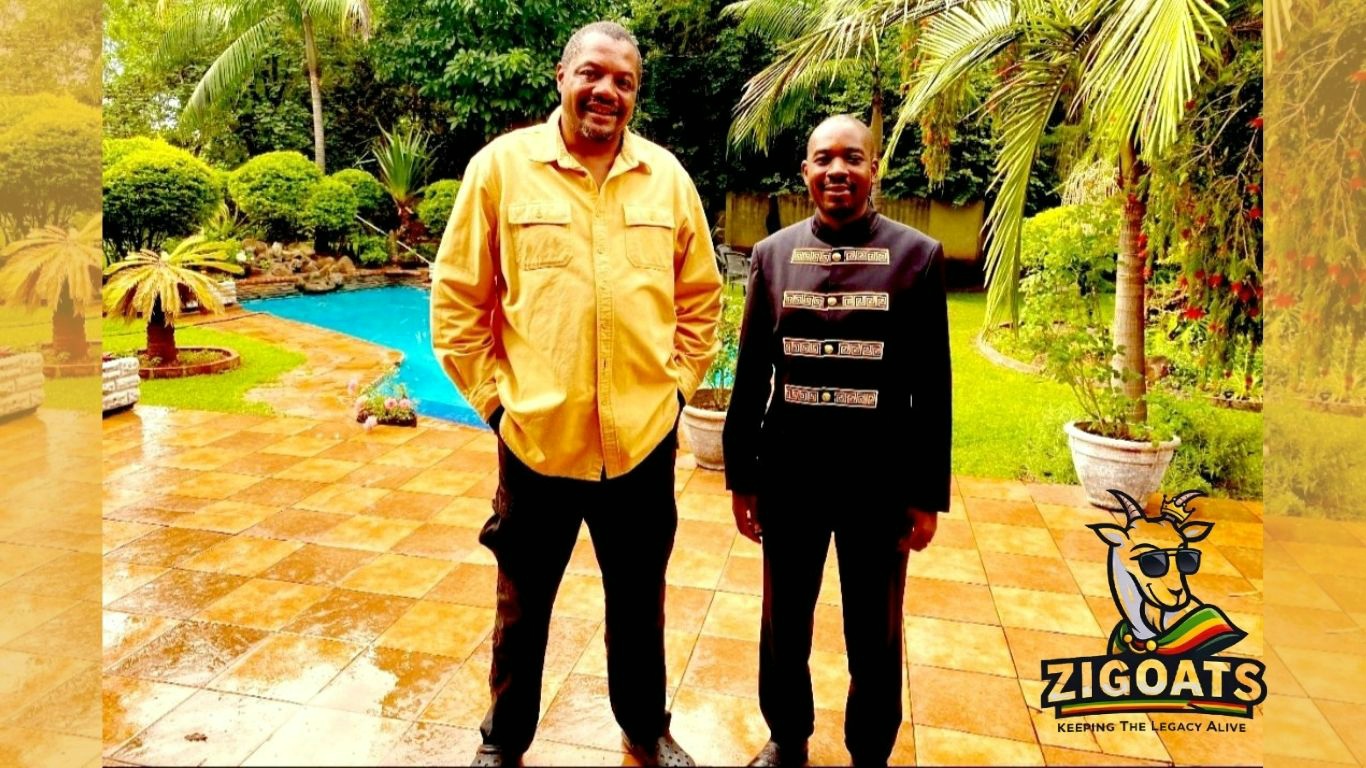
A sharp political exchange has erupted in Zimbabwe’s governance debate after UK-based lawyer Brighton Mutebuka accused investigative journalist Hopewell Chin’ono of lacking the moral authority to criticise the controversial Constitutional Amendment Bill No. 3 of 2026 and the broader Agenda 2030 discourse.
Mutebuka argues that Chin’ono, through his earlier commentary during the turmoil within the opposition Citizens Coalition for Change (CCC), indirectly contributed to the political developments that critics say have created the conditions for the proposed constitutional changes.
The constitutional amendment has become one of the most contentious governance issues in Zimbabwe, with critics warning it could pave the way for extending President Emmerson Mnangagwa’s stay in power beyond the current constitutional limit of 2028. Supporters of the amendment, however, argue the proposals are aimed at administrative and governance adjustments.
Mutebuka’s Criticism
In a lengthy statement seen by ZiGoats.com, Mutebuka claimed Chin’ono helped legitimise the role of self-proclaimed CCC interim secretary-general Sengezo Tshabangu, whose controversial recalls of opposition MPs and councillors reshaped Zimbabwe’s parliamentary landscape after the 2023 elections.
According to Mutebuka, Chin’ono repeatedly argued at the time that Tshabangu and other senior CCC figures had legitimate grievances against former opposition leader Nelson Chamisa. Mutebuka said this interpretation helped frame the internal opposition crisis as a dispute about leadership and organisational structures rather than a broader political strategy.
He further argued that Chin’ono’s emphasis on what he described as “strategic ambiguity” within the CCC contributed to a narrative that weakened the opposition during a critical political moment.
The Parliamentary Arithmetic
The recalls triggered by Tshabangu resulted in several opposition seats becoming vacant, leading to by-elections that reshaped the balance of power in Parliament. Critics of the process say the recalls ultimately strengthened the ruling ZANU-PF’s parliamentary position.
Mutebuka argues that the political consequences of that shift have been far-reaching.
He contends that without the parliamentary advantage that followed the recalls, proposals linked to the so-called Agenda 2030, a political slogan associated with calls by some ZANU-PF supporters to extend Mnangagwa’s leadership beyond the constitutional limit, would face significant obstacles in the legislature.
Call for Accountability
Mutebuka went further, saying Chin’ono should acknowledge what he described as flawed political analysis during that period. Mutebuka argued:
“The same accountability he demands from political leaders should also apply to him.”
The remarks reflect widening divisions within Zimbabwe’s civic and political discourse, where activists, journalists, lawyers, and political actors frequently clash over responsibility for the country’s evolving constitutional and parliamentary dynamics.
Broader Debate Intensifies
The dispute comes as public debate around Constitutional Amendment Bill No. 3 intensifies ahead of public consultations. Civil society groups, legal scholars, and opposition figures have warned that any constitutional change affecting presidential term limits would require strict adherence to constitutional procedures, including the possibility of a national referendum.
For now, the exchange between Mutebuka and Chin’ono highlights the deepening contest over Zimbabwe’s political narrative,where past alliances, political analysis, and accountability are increasingly being scrutinised as the country navigates another crucial constitutional debate.
Leave a Reply