
By Advent Shoko | ZiGoats
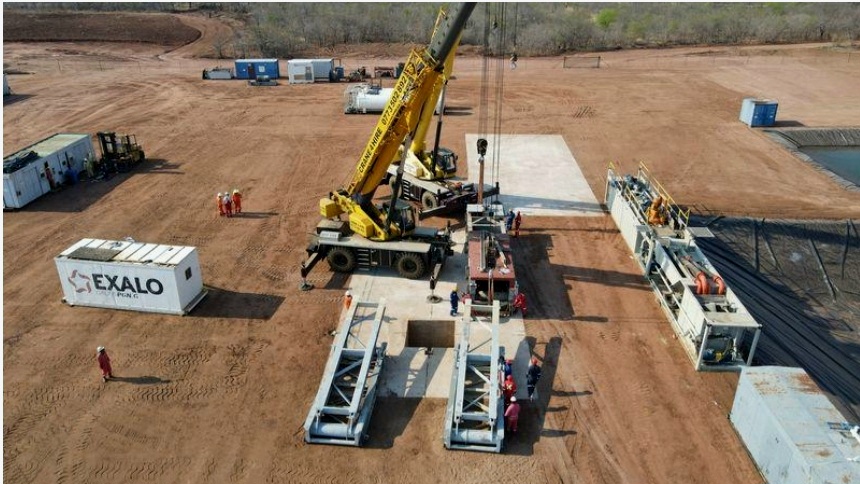
Invictus Energy has completed moving its drilling rig to the Musuma-1 exploration site in northern Zimbabwe, bringing the company closer to testing a prospect it estimates could hold 1.2 trillion cubic feet (Tcf) of gas and 73 million barrels of condensate.
The Australian-listed energy explorer announced on Thursday, 29 October 2026, that Exalo Rig 202 had been successfully relocated from the Mukuyu-2 wellsite to Musuma-1 in the Cabora Bassa Basin.
The company is targeting November 2026 to begin drilling, with rig installation, final maintenance and mobilisation of supporting equipment still to be completed before the rig receives final acceptance.
The headline figures make Musuma-1 an important exploration target, but they represent unrisked prospective resources, not a confirmed discovery or proven commercial reserves. Drilling will test whether the hydrocarbons exist in recoverable quantities.
Invictus managing director Scott Macmillan said the completed rig move marked an important step towards the next exploration well.
“The successful completion of the rig move to Musuma-1 marks another important milestone as we move into the final stages of preparations for our next high-impact exploration well,” Macmillan said.
A 1.2 Tcf Gas Target With 73 Million Barrels Of Condensate
Musuma-1 is designed to test a gas-condensate prospect on the eastern margin of the Cabora Bassa Basin, outside the existing Mukuyu Gas Field discovery area.
According to Invictus, the Musuma prospect has estimated gross mean unrisked prospective resources of approximately:
- 1.2 trillion cubic feet of gas
- 73 million barrels of condensate
Condensate is a liquid hydrocarbon that can be separated from natural gas and may have commercial value as a source of petroleum products.
The estimates are based on an undiscovered accumulation. They do not mean Invictus has already found or can commercially produce those quantities.
The company says the prospect was identified through the interpretation of multiple seismic datasets, including a prominent direct hydrocarbon indicator and a laterally extensive flat spot. These geological features can help identify potential hydrocarbon accumulations, but they do not prove that a commercially recoverable deposit exists.
The planned well will be a relatively shallow vertical exploration well, with a target depth of approximately 1,500 metres.
Invictus describes this as a cost-effective opportunity to test another potential hydrocarbon accumulation within its Zimbabwean acreage.
What happens before drilling?
With Rig 202 now at Musuma-1, the next stage involves installing and assembling the equipment, completing the remaining maintenance programme and bringing the necessary well services equipment to the site.
Invictus is working with drilling contractor Exalo Drilling, oilfield services company SLB and other contractors to prepare for operations.
Final rig inspection and acceptance must be completed before drilling begins.
“With the wellpad and associated infrastructure completed and Exalo Rig 202 now on location, our focus is on completing rig-up, finalising the remaining maintenance programme, mobilising well services equipment and achieving final rig acceptance ahead of the planned November spud,” Macmillan said.
The company said Musuma-1 remained on track for November, although the outstanding work means the start of drilling is not yet confirmed.
Building On The Mukuyu Discovery
Musuma-1 forms part of Invictus Energy’s wider exploration strategy in the Cabora Bassa Basin, where the company has already announced a significant gas-condensate discovery at Mukuyu.
The new well will test a separate prospect, potentially expanding the understanding of the basin’s hydrocarbon potential beyond the existing discovery area.
Invictus holds an 80% interest in and operates the Cabora Bassa Project. Its exploration portfolio covers approximately 360,000 hectares in northern Zimbabwe and includes the Mukuyu Gas Field and several additional prospects.
The company is pursuing both further exploration and the appraisal and commercialisation of the Mukuyu discovery.
For Zimbabwe, a commercially viable discovery at Musuma could create another opportunity to develop domestic energy resources. However, the benefits would depend on the drilling results, further appraisal, development costs, infrastructure and the ability to produce and sell the hydrocarbons economically.
Even a successful exploration well would not automatically mean gas could immediately be supplied to power stations, industries or households. Commercial development would require additional technical and financial work.
The Next Test For Zimbabwe’s Energy Ambitions
Invictus says the completed rig move brings it into the final stages of preparations for Musuma-1, with the November drilling target unchanged.
The immediate milestone is now the completion of rig-up, maintenance and final acceptance. After that, the well will test whether the prospect contains the gas and condensate indicated by the company’s geological interpretation.
The potential resources are substantial on paper, but the decisive question remains unanswered: Will Musuma-1 turn a promising exploration target into a commercially meaningful discovery for Zimbabwe?
The coming drilling campaign is expected to provide the next important evidence.
Invictus Energy trades on the Australian Securities Exchange under IVZ, the OTCQB market under IVCTF and Zimbabwe’s Victoria Falls Stock Exchange under INV.
Leave a Reply