
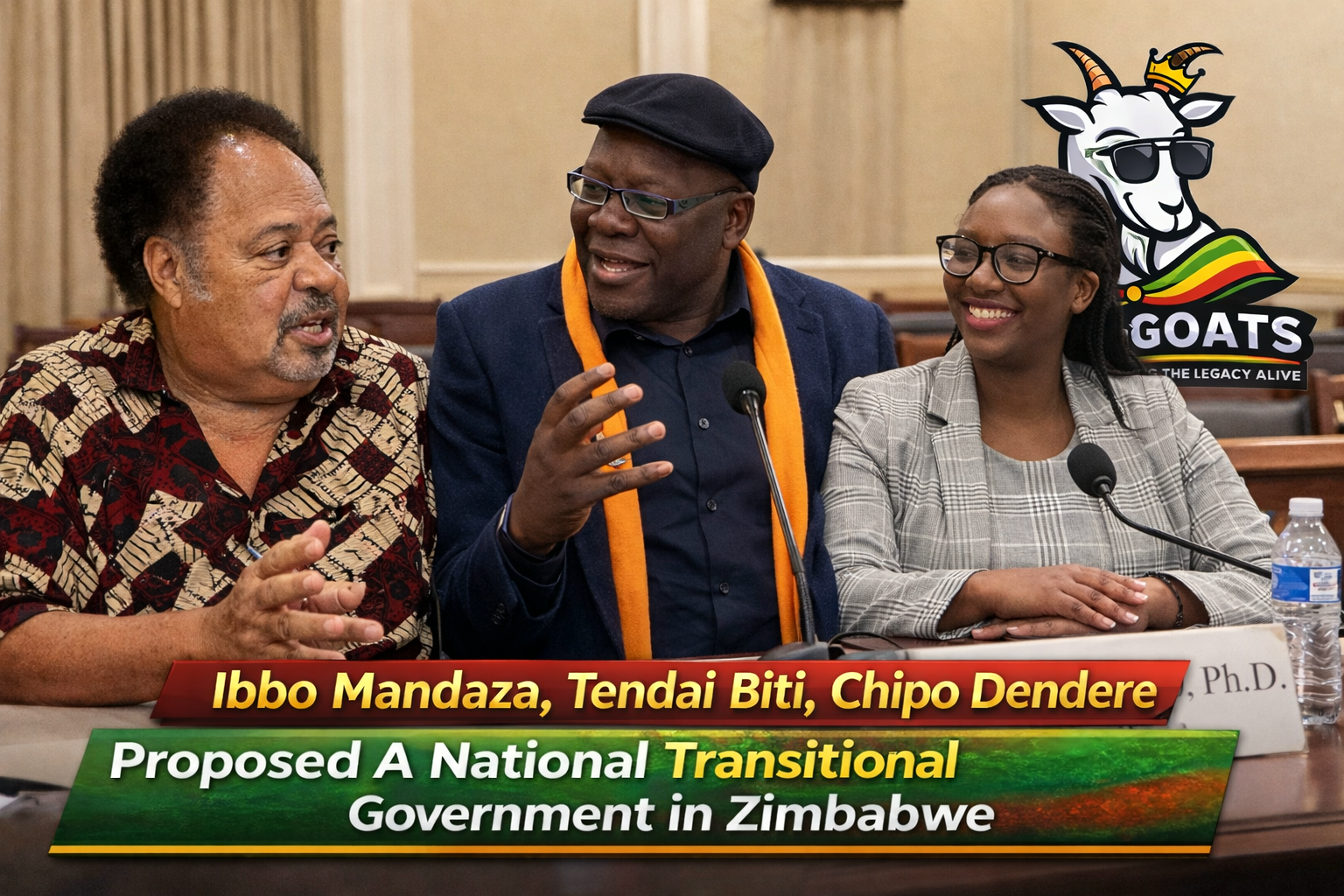
Academic and political analyst Ibbo Mandaza has confirmed publicly that he called for a transitional government to stabilise Zimbabwe amid rising tensions over constitutional amendments proposed by the ruling ZANU PF party. Cabinet recently adopted the Constitutional Amendment Bill No. 3 of 2026, a move that would extend presidential term limits to seven years and shift the power to elect the president from the electorate to Members of Parliament (MPs).
In posts seen by ZiGoats.com, Mandaza explained:
“Yes, our proposal for an NTA has been in the public domain since July 2016: it could have preempted the coup in 2017; it could have been the way forward after that coup which, as we warned then, was not a solution to the Zimbabwean crisis. The NTA will NOT be an attack on the constitution; on the contrary, it will require a referendum before it is instituted, with the full consent of the people of Zimbabwe.”
The National Transitional Authority (NTA) concept, first mooted by Mandaza and other civic actors, envisaged an inclusive technocratic government tasked with stabilising the economy, cooling political tensions, and preparing the nation for credible elections.
However, critics have highlighted what they see as hypocrisy in the debate. LEAD Party leader Linda Tsungirirai Masarira and other commentators argued that Ibbo Mandaza and his allies, after previously proposing an “unconstitutional” seven-year National Transitional Authority despite the constitution mandating regular elections, are now criticising ZANU PF for pursuing a similar outcome, extending presidential terms or deferring elections for seven years, this time through a constitutional amendment. Masarira argued:
“Do you remember Tendai Biti, Ibbo Mandaza etc supported by Oppenheimers, wanted and still want a 7-year National Transitional Authority to rule Zimbabwe? They wanted the 2023 elections to be set aside. An ‘inclusive’ NTA made up of ‘technocrats’ to run the country for 7 years, focus on stabilizing the economy and growing it, cool down the political temperature? How were they going to do that without amending the constitution?”
Masarira warned that elements of the NTA agenda appear to have influenced current constitutional amendment proposals, potentially allowing the ruling party to co-opt opposition figures based on “skills and competence” while consolidating its own power.
Another political commentator, Matigari, also weighed in, highlighting historical risks:
“Just a reminder comrades! Tendai Biti, Ibbo Mandaza, Chipo Dendere and others still have a plan to suspend the constitution or amend it to ban elected officials and impose what they call a National Transitional Authority for seven years run by technocrats. It’s unclear how they would impose the NTA without amending or violating the constitution.”
Some analysts argue that the real issue is not merely amending the Constitution, but ensuring legitimacy through a referendum. Any change to a fundamental pillar of the Constitution, including the establishment of a National Transitional Authority, extending presidential terms, and reintroducing indirect election of presidents, must be approved by the people who originally voted for the current Constitution. To date, no political actor has publicly refused to submit the NTA proposal to a public vote.
Zimbabwe previously experienced a similar arrangement between 2009 and 2013, triggered by disputed 2008 elections. During that period, hundreds of opposition supporters were killed, and the economy deteriorated amid global recession. The unity government, formed between ZANU PF and the Movement for Democratic Change (MDC) led by Morgan Tsvangirai, sought to stabilise governance after Tsvangirai boycotted a violent runoff election, exposing the fragility of Zimbabwe’s political institutions.
Leave a Reply