
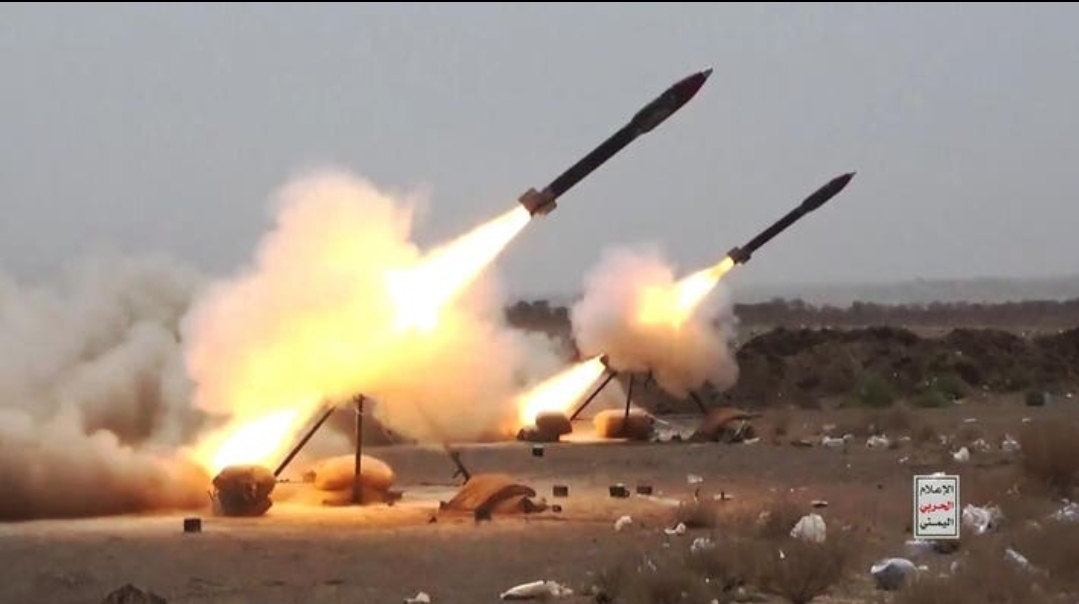
CAIRO / SANAA – Yemen’s Iran-backed Houthi movement has finally entered the widening Middle East conflict, nearly a month after strikes on Iran began, in what analysts say reflects both strategic caution and the heavy toll of last year’s U.S.-Israeli military campaign.
By Advent Shoko
The group launched a ballistic missile toward southern Israel on March 28, formally opening its front in the war after weeks of staying largely on the sidelines. Israeli forces said the missile was intercepted, but the move immediately reignited fears over renewed instability in the Red Sea and Bab al-Mandeb corridor.
For a movement that has long presented itself as a frontline pillar of Iran’s so-called “axis of resistance,” the delay was striking.
Analysts say the hesitation was less about reluctance and more about capability.
Following a 55-day U.S.-Israeli bombardment campaign last year, Houthi missile infrastructure, storage sites and supply routes are believed to have been severely degraded. Smuggling corridors and access to imported missile components have also reportedly been disrupted, forcing the militia into a hard calculation over how much of its remaining arsenal it could afford to use.
That calculation carries legal and geopolitical significance.
The Houthis control much of northern Yemen, including the capital Sanaa, and their re-entry into the war widens the regional conflict beyond Iran, Israel and the Gulf.
More critically, their position along Yemen’s western coastline places them near Bab al-Mandeb, one of the world’s most strategic maritime chokepoints.
Any renewed attacks on commercial shipping through the Red Sea could compound disruptions already caused by tensions in the Strait of Hormuz, creating a dual threat to global trade and energy flows.
For Tehran, the Houthis’ entry offers symbolic and strategic reinforcement.
For the wider world, it raises the risk that a regional war is becoming an international economic and security crisis.
Leave a Reply