
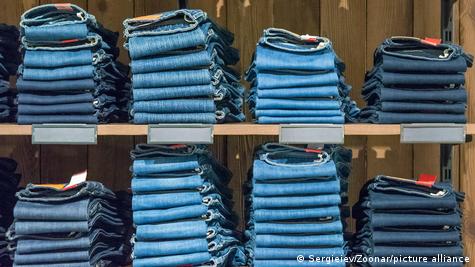
HARARE – Africa’s thriving second-hand clothing business, popularly known as “mabhero/mazitye” in Zimbabwe, could soon receive an unexpected boost after the European Union (EU) banned large companies from destroying unsold clothes, shoes and fashion accessories.
The new rules, which came into effect on Sunday, require major fashion retailers, wholesalers and manufacturers across the 27-member bloc to find alternative uses for unsold stock instead of sending it to incinerators or landfill.
For African traders who depend on imported bales of second-hand clothing, the policy could mean access to more new, unworn garments if companies increasingly choose donations over destruction.
EU Targets Fashion Waste
The ban is part of the EU’s Ecodesign for Sustainable Products Regulation, aimed at reducing waste and cutting greenhouse gas emissions linked to the fashion industry.
Under the regulation, companies employing more than 250 people and generating over €50 million in annual turnover can no longer destroy unsold clothing, footwear and accessories.
Instead, they are expected to sell the products through discounts, outlet stores, secondary markets or donate them to charities and organisations that can redistribute them.
Only products that are unsafe, badly damaged, counterfeit or rejected by charities may still be destroyed.
Companies must also publish annual reports detailing discarded goods and keep records for five years, increasing transparency in the fashion industry.
The rules will also be extended to medium-sized businesses from 2030.
A Potential Opportunity for Africa
The development could have far-reaching implications for African countries where second-hand clothing remains a lifeline for millions of consumers and traders.
Across Zimbabwe, Zambia, Malawi, Kenya, Uganda, Tanzania and several other African countries, imported clothing bales – commonly known as mabhero/mazitye – have become a major source of affordable fashion.
Many traders buy donated clothing shipped from Europe, North America and other developed regions, often paying mainly for transport, handling and distribution costs rather than for the clothes themselves.
If European companies increasingly donate unsold stock to comply with the new rules, African markets could receive higher-quality and even brand-new items, potentially improving profits for traders and expanding choices for consumers.
For shoppers battling rising living costs, the arrival of more new clothing at second-hand prices could be welcome relief.
Fashion Waste Remains a Global Challenge
The EU says the move is necessary to tackle the growing environmental impact of the fashion industry.
According to the European Environment Agency (EEA), between 4% and 9% of unsold textile products are destroyed every year across Europe.
The problem has worsened with the rapid growth of online shopping, where roughly one in five fashion items bought online is later returned and often never resold.
Millions of garments are discarded despite remaining perfectly wearable, consuming huge amounts of water, energy and raw materials during production before ending up as waste.
The EEA says Europe is shifting towards a circular economy, where products are designed to last longer, be repaired, reused and recycled rather than thrown away.
“A circular economy — where products are designed to last, and are reused, repaired and recycled — is no longer just a vision, but is being embedded in law through these new legislative measures,” the European Environment Agency said.
Retailers Welcome Goal, Warn of Challenges
European retailers have largely welcomed efforts to reduce waste but say implementing the new rules will not be straightforward.
The German Retail Federation (HDE) believes consumers will benefit from increased discounts, clearance sales and second-hand markets.
However, HDE Managing Director Stefan Genth cautioned that not every unsold item can easily be donated or resold.
“Not all unsold goods can be resold or donated easily,” Genth said, citing damaged packaging, high transport costs, weak demand and low product values as key obstacles.
Africa’s Debate Over Second-Hand Clothing Continues
The latest EU policy is likely to reignite debate across Africa over the role of imported second-hand clothing.
Several African governments have, over the years, attempted to restrict or ban used clothing imports, arguing they pose health risks and undermine domestic textile industries.
Supporters of restrictions say reducing imports could revive local manufacturing and create jobs.
However, critics argue that many local textile industries currently lack the production capacity and affordability needed to meet growing demand, leaving imported clothing as the most accessible option for millions of low-income households.
Despite restrictions in some markets, second-hand clothing continues to flow into many African countries through established supply chains, reflecting strong consumer demand driven by affordability, variety and quality.
Leave a Reply