
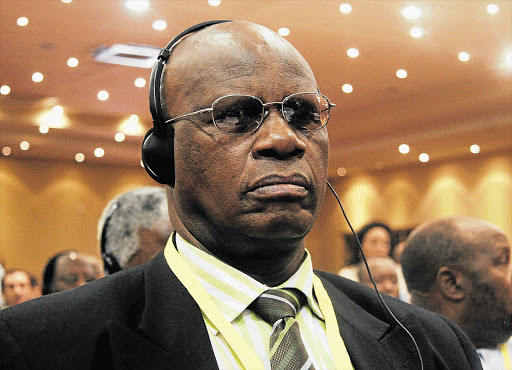
Former Finance Minister Patrick Chinamasa has reignited debate over Zimbabwe’s Constitutional Amendment Bill Number 3, arguing that election of Presidents via Parliament rather than universal suffrage is a reform long overdue. Chinamasa’s remarks come in response to clarifications by Minister of Justice, Legal and Parliamentary Affairs, Ziyambi Ziyambi, who said the Bill merely extends electoral cycles from five to seven years and preserves presidential term limits.
Chinamasa wrote:
“Another political reform introduced by Constitutional Amendment Number 3, and which I fully support, is the election of the President by Parliament and not by universal suffrage as is currently the case. This reform is long overdue. The election of the President by universal suffrage, besides being an unnecessary drain on the country’s resources and toxic, has the potential or risk that a President elected by universal suffrage may find that his Party is in the minority in Parliament creating problems of governance. A President unable to gain support of Parliament will be a lame duck.”
Supporting him, former Information Minister and Political Science professor Jonathan Moyo said:
“Hear hear hear. The guru has spoken. Cde Chinamasa’s conclusion is particularly poignant and compelling… A presidential election system that can produce a President who is an independent candidate with no party or pool in Parliament from which to choose a Cabinet or to get votes to pass a budget is simply an unworkable and bad system which must be reformed. Full stop!”
Not everyone shares this view. Legal expert Dr Justice Alfred Mavedzenge warned that Chinamasa’s reasoning straddles law and politics:
“VaChinamasa. You are a respected lawyer but we also know that you are a politician. In Bulawayo in 2024 at the ZANU PF conference, you spoke as a lawyer. Today, you have spoken as a typical politician. Section 328(1) says ‘a term limit provision means a provision of this Constitution which limits the LENGTH OF TIME that a person may hold or occupy a public office.’ It does not say a term limit provision is a provision that limits the number of times a person can qualify to be elected into public office.”
Chinamasa and Moyo argue that aligning the presidency with parliamentary support will prevent governance paralysis, save resources, and ensure a President can effectively execute policies, while critics caution the amendments are a blow to universal suffrage particularly “one man, one vote,” a fundamental democratic principle.
Leave a Reply