
By Advent Shoko
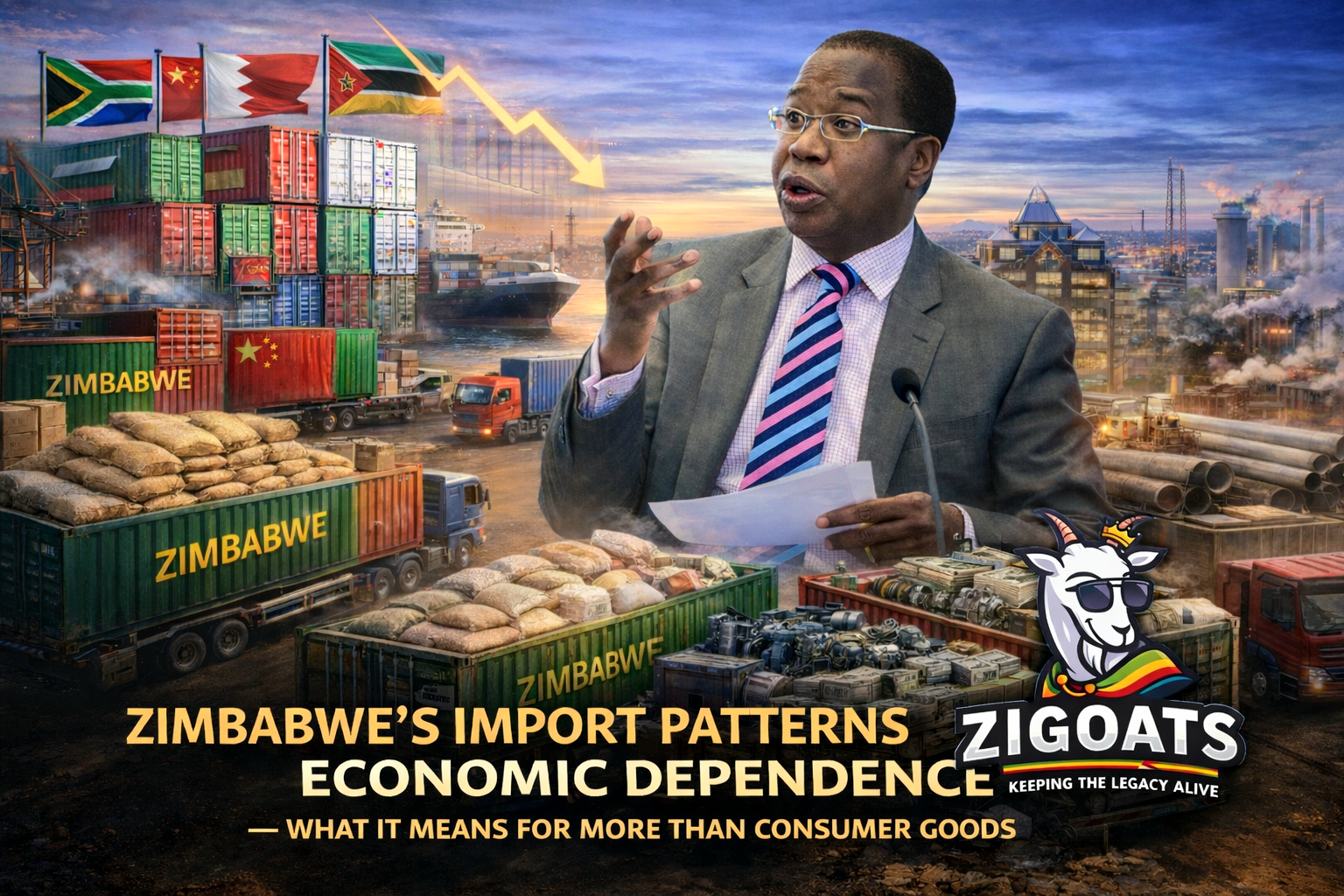
HARARE – Zimbabwe’s December 2025 import data is more than just numbers on a page. It’s a mirror reflecting structural vulnerabilities, trade dependencies, and the strategic crossroads the economy faces. According to the Zimbabwe National Statistics Agency (ZIMSTAT), total imports for the month hit US$901.5 million, with almost two-thirds (~66%) sourced from just four countries: South Africa, China, Bahrain, and Mozambique.
South Africa led the pack, supplying US$349.8 million (38.8%), underscoring decades of deep-rooted economic interdependence shaped by geography, infrastructure, and historical trade ties. China followed with US$139.7 million (15.5%), reflecting its ever-expanding footprint across Africa as both supplier and investor. Bahrain (US$61.3m) and Mozambique (US$43.3m) rounded out the top tier, mainly supplying re-exported fuels and critical commodities. Smaller partners like the Bahamas and Mauritius appear due to re-exported petroleum, machinery, and specialised goods, quirks of global trade flows more than large-scale bilateral trade.
This concentration isn’t new. For over 20 years, South Africa and China have dominated Zimbabwe’s import landscape, while the reliance on small re-export hubs signals both opportunity and vulnerability.
- Zimbabwe Inflation Debate: Mugano Stands By Price Stability As Critics Call Narrative Fictitious
- Zimbabwe’s Freedom Mukanga Wins Top Mandela Washington Fellowship Leadership Impact Award
- China–Zimbabwe Steel Boom: How Munashe Chihambakwe’s Return Is Powering Disco’s Industrial Rise
- Zimbabwe-China Trade Surpasses US$4 Billion As Exports, Surplus Hit Record High
Structural Roots: Why Zimbabwe Still Imports So Much
The dominance of imports is tightly linked to 20 years of economic evolution, marked by political shifts, land reforms, infrastructure decay, and underinvestment in industrial capacity. Local production of machinery, intermediate goods, energy infrastructure, and even some staple foods remains limited. The result? Zimbabwe must turn outward to secure machinery, fuels, electronics, and other essentials, often at high foreign exchange costs.
Energy shortages exacerbate the challenge. Chronic electricity deficits mean businesses import generators, transformers, and fuels, inflating the import bill. Meanwhile, the skewed production system, dominated by mining, platinum, gold, and tobacco, drives up demand for upstream manufacturing imports. Simply put, the country produces raw materials but relies on imported inputs to process or refine them.
Despite export resilience, notably in minerals and select agricultural commodities, import bills often outpace revenue, creating persistent trade deficits. December 2025 saw a rare trade surplus thanks to stronger exports, but the trend over years highlights a fundamental dependency on external supply chains.
Regional and Global Patterns
Zimbabwe’s import patterns are also shaped by SADC integration. Proximity and preferential trade with South Africa streamline cross-border sourcing, while Chinese imports reflect wider continental trends: Beijing supplying manufactured goods, vehicles, electronics, and industrial inputs not yet produced locally.
Bahrain, the Bahamas, and other small economies highlight the globalised nature of trade, with petroleum, machinery, and re-export hubs flowing through these jurisdictions, a reminder that Zimbabwe operates within a complex web of regional and global supply chains.
What This Means for Policy
Zimbabwe’s import profile is a stark wake-up call for policymakers, investors, and business leaders alike. With 66% of December 2025 imports sourced from just four countries, South Africa, China, Bahrain, and Mozambique, the data exposes deep structural dependence. The pressing questions are clear: can industrial policy drive meaningful import substitution in energy, agro-processing, and machinery? Should trade agreements prioritise value-chain participation over mere tariff preferences? And how can logistics, quality assurance, and export competitiveness be strengthened to shift production from foreign imports to locally made alternatives? Experts argue that these challenges require more than trade liberalisation, coherent policy, targeted incentives for domestic production, technology transfer, and strategic investment are essential to break entrenched dependency.
Economic analysts advocate leveraging regional value chains by linking local manufacturing to SADC and AfCFTA markets, investing in renewable energy, industrial clusters, and modern logistics to reduce energy imports and boost domestic output. At the same time, export diversification, from minerals to niche products like blueberries for China, can improve foreign exchange inflows and strengthen economic resilience. Zimbabwe’s December 2025 import data is more than just numbers: it is a clear signal of structural vulnerabilities and a call to action. For an economy striving to break cycles of dependence, these statistics must drive bold decisions on industrial strategy, investment priorities, and trade policy reforms.
Leave a Reply