
By Advent Shoko
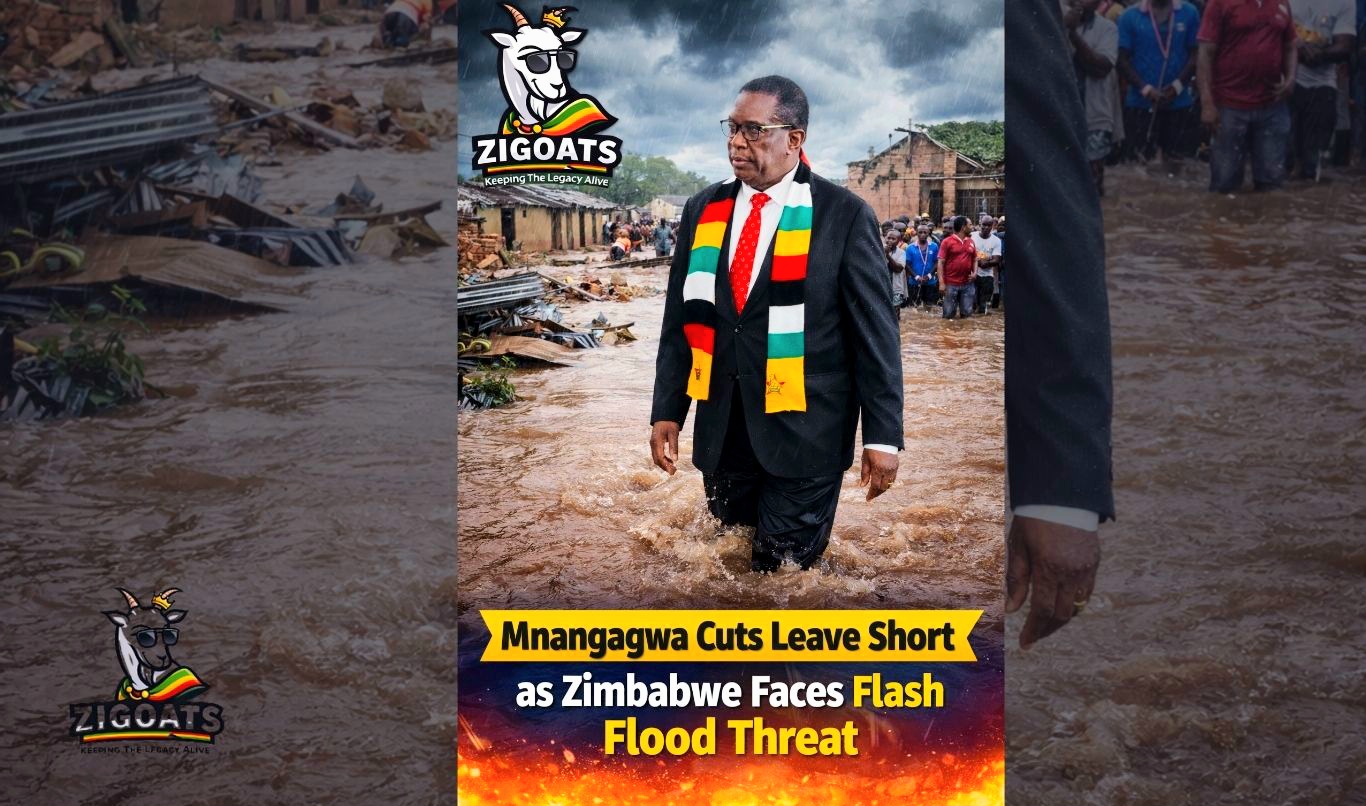
HARARE – In a move that has rippled through government circles and political commentary alike, President Emmerson Dambudzo (ED) Mnangagwa has abruptly cut short his annual leave amid unfriendly weather conditions, including severe thunderstorms, heavy rains and flash flood warnings across parts of Zimbabwe. The decision comes days after the Meteorological Services Department issued alerts of widespread thunderstorms and flash flood risks.
ED reportedly returned to the capital to personally oversee the nation’s readiness against the anticipated weather onslaught. According to pro-government voices, this signals a president who treats disaster risk reduction as a national priority, not just a line item in a briefing note. Critics, however, see another layer of political calculation at play.
Weather Warnings Hit Harder Than Usual
Meteorologists have warned that warm, moisture-laden air systems are expected to generate intense storms and heavy downpours, with some areas facing over 50 mm of rain within 24 hours, enough to spark flash floods, derail transport and threaten lives and livelihoods. This warning comes against a backdrop of escalating climate volatility in Zimbabwe, where past disasters like Cyclone Idai in 2019 wrought havoc, leaving hundreds dead, thousands displaced and entire communities struggling to rebuild.
Experts say such extreme weather events are becoming more frequent as climate change amplifies both droughts and deluges. Zimbabwe’s Multi-Hazard Contingency Plan, adopted by government to enhance preparedness for flooding, heatwaves and storms, reflects this new normal.
For many Zimbabweans, the risk isn’t abstract: collapsed bridges, submerged homes and disrupted supplies from previous floods linger in vivid memory.
“Duty-Driven” or Distrust in Deputies?
While state media and allied commentators praise Mnangagwa’s return as decisive leadership, opponents argue it betrays a deeper lack of trust in his lieutenants, Vice Presidents Kembo Mohadi and Constantino Chiwenga, to manage crises without presidential oversight. Some voices claim the move is designed less for weather response and more to keep key deputies politically undercut at a time when internal party tensions are already high.
These tensions have been building for months within the ruling ZANU-PF, as factions jockey for influence ahead of the critical leadership transition period post-2028. At the heart of the dispute is Chiwenga, whose relationship with Mnangagwa has swung between cooperation and confrontation. Recently leaked internal memos show Chiwenga accusing Mnangagwa and his closest allies of corruption and state capture, allegations swiftly dismissed by the President’s camp as “reckless” and even labelled by party lawyers as bordering on treason.
Parallel to that, the party is still grappling with the controversial “ED 2030” slogan, a faction-driven refrain supporting an extension of Mnangagwa’s presidency beyond the constitutionally mandated two terms. Chiwenga’s camp has resisted this narrative, creating an opaque political landscape that insiders say could shape Zimbabwe’s governance long after the current weather front clears.
Weather, Politics and Preparedness
Beyond the political theatre, the real stakes remain Zimbabwean lives and property. The government’s established response mechanisms, including disaster risk committees and early warning systems, are being put to the test. Emergency services and local authorities are reportedly mobilising, urging residents in flood-prone areas to stay alert and take precautions.
Yet Zimbabwe’s capacity to respond to extreme weather remains uneven, hampered by infrastructure deficits, limited resources and the legacies of past disasters that left some communities still rebuilding. Climate projections suggest the country will face more variable rainfall patterns, increased drought frequency and rising average temperatures, conditions that strain both urban planning and rural resilience.
Solidarity Beyond Borders
The Presidency has also hinted that Zimbabwe remains poised to extend support to neighbours affected by climate shocks, particularly Mozambique and Malawi, which have experienced their own recent flooding challenges. International solidarity missions, including from Zimbabwean agencies, are reportedly on the agenda, reflecting Harare’s broader regional role.
Leave a Reply