
By Advent Shoko | ZiGoats
Former Zimbabwe international George ‘Zambia’ Mbwando has urged the nation to exercise patience with the Young Warriors, insisting that the current crop of youngsters could form the backbone of the senior national team if given time, support and consistent opportunities.
Mbwando believes Zimbabwe must resist the temptation to demand immediate results and instead commit to a long-term football development strategy, drawing inspiration from Germany’s successful youth development project and Mali’s investment in grassroots football.
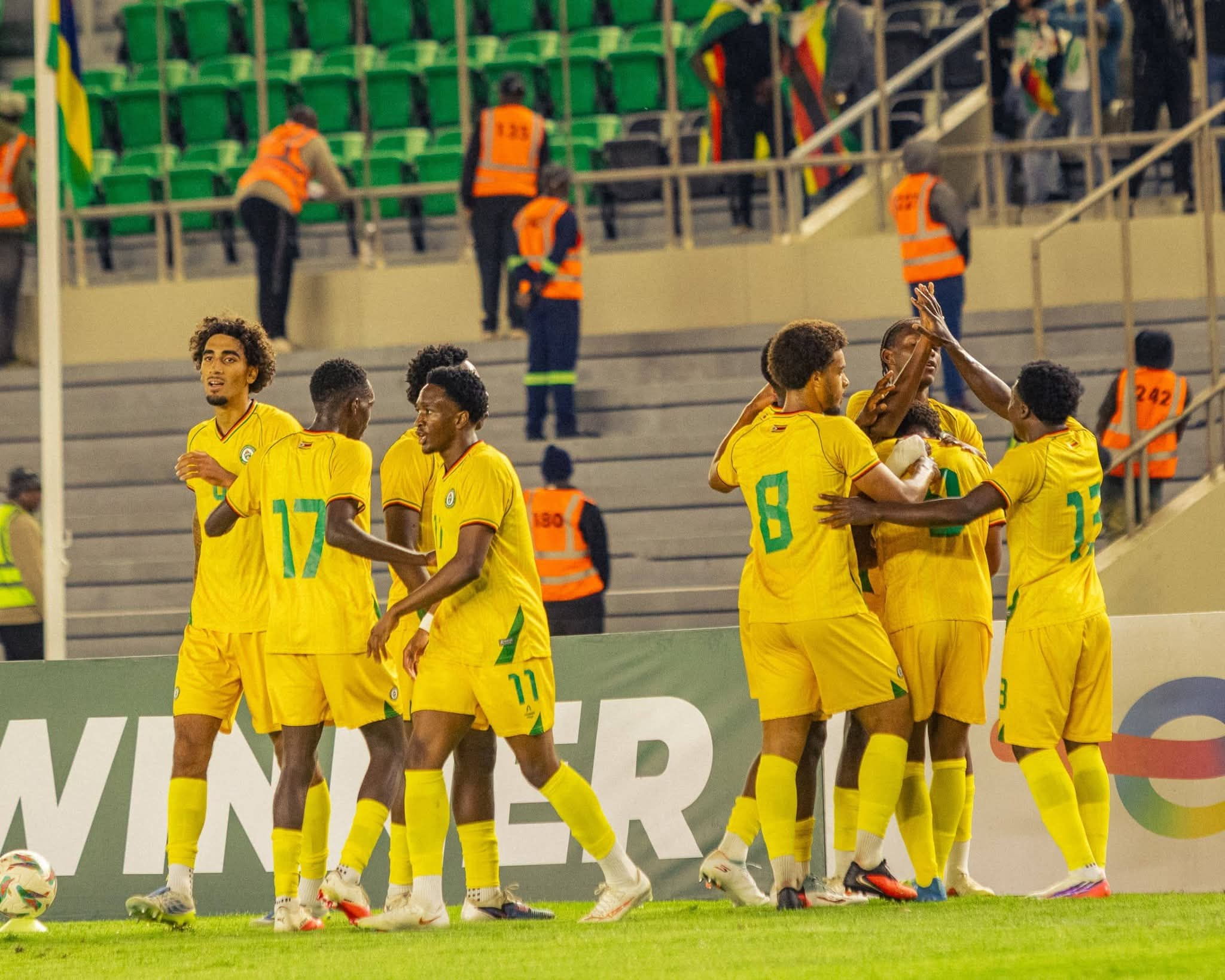
His comments come amid growing debate over the future of the Young Warriors following their 3-0 defeat to Mali at the National Sports Stadium. The result triggered widespread criticism, with sections of the football community questioning the quality of the squad, particularly players based outside Zimbabwe and those born abroad.
However, Mbwando believes the criticism overlooks the bigger picture.
“Our current team’s average age is 18, meaning that 90 percent of the boys will still be under 23 in four years. This means that right now we have a very strong Under-20 team,” he said.
He pointed to Mali as an example of what sustained investment in junior football can achieve, explaining that the West African nation began laying the foundations for its current success years ago.
“The Malians started their projects years ago. They built a complex with almost everything: accommodation for players, swimming pools, football fields, including artificial turf, exclusively for Under-17 boys and girls and younger age groups.
“Their projects are yielding results now. They didn’t take any shortcuts.”
Mbwando believes Zimbabwe’s Dream 2030 World Cup project must follow a similar path, with the current group of youngsters given enough time to develop together.
“Where Mali is now is where we are going with the Dream 2030 World Cup project. We are going to be with these boys for the next four years, so a lot of patience is needed in football.
“Just imagine what can come out of this project if we work together as a nation. I personally don’t understand people who expect instant results from such big projects.”
He also dismissed the growing divisions between locally based and foreign-based players, arguing that talent should be judged on merit rather than geographical location.
“This local-based, foreign-based discussion is really a shame. Whoever started those stupid discussions will one day be humbled when the train is rolling. We are still pushing the train to roll.”
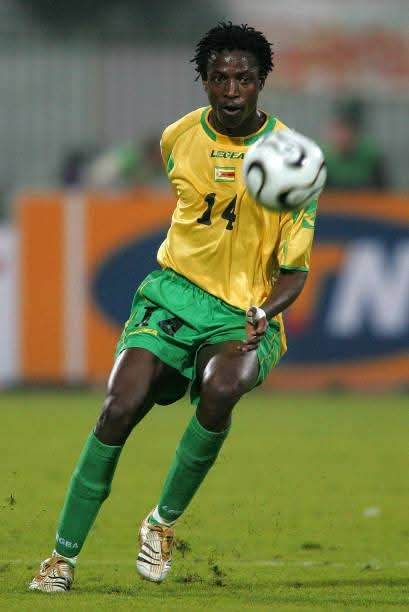
Using former Dynamos and Warriors defender Francis Shonhayi as an example, Mbwando argued that talented players can emerge from anywhere if given an opportunity.
“There were no special scouts who went to Zvishavane and discovered Francis Shonhayi. Someone saw him, brought him to Dynamos and he became part of the famous Dream Team. This shows that bhora harinyepi,” he said.
For Mbwando, the priority should be building a competitive team over time rather than allowing one disappointing result to derail an ambitious development programme.
“This is a long-term project which needs a lot of patience. Germany started a 10-year project in 2004 with players such as Bastian Schweinsteiger, Lukas Podolski and Jérôme Boateng. They played together through the junior teams and, in 2014, the journey culminated in winning the World Cup in Brazil.
“Our boys need support, not division.”
Bunjira Backs Mbwando’s Long-term Vision
Mbwando’s position received strong backing from another former Warriors international, Alois Bunjira, who believes Zimbabwe should continue developing the current group while exposing them to competitive tournaments.
Bunjira suggested that the team could be retained for upcoming Under-20 World Cup qualifying campaigns and COSAFA competitions as the country builds towards a stronger generation of players.
“This is so profound, George Mbwando. I wish everyone could align with this mindset. We could take this very team to the Under-20 World Cup qualifiers and to COSAFA, while we build them into a team that we can be proud of,” Bunjira said.
He drew parallels with Zimbabwe’s Under-23 generation that won silver at the 1995 All-Africa Games, arguing that the team’s eventual success was built on years of playing together and learning from difficult defeats.
“Our Under-23 team that won silver at the All-Africa Games in 1995 started together at Under-17 level, where we were humbled 4-0 on aggregate by Zambia in a World Cup qualifier.
“Two years later, we met again in Swaziland, the same teams, and they beat us 1-0 in the COSAFA Under-20s.
“But another two years later, we knocked them out of the group stages at the 1995 All-Africa Games. We beat that same team and knocked them out of the 1996 Olympic qualifiers. We went on to beat them in different COSAFA tournaments at senior team level.”
Bunjira described that journey as a practical example of how continuity and patience can transform a struggling junior side into a competitive national team.
“That was progress and the true definition of development and progress. We can do the same with these boys.
“The local versus foreign discussion is unfortunate and tosh. Indeed, bhora harinyepi.”
Mali Defeat Should Not Define The Project
The 3-0 home defeat to Mali exposed the gap Zimbabwe must bridge if it hopes to compete consistently at the highest levels of African youth football.
The result also intensified scrutiny of the squad selection, with some supporters questioning whether foreign-based and foreign-born players have the quality and required to represent Zimbabwe. Some say they were being selected merely because of the myth that foreign is better.
But Mbwando and Bunjira are saying junior football development cannot be measured by a single result.
Zimbabwe Football Association (ZIFA) under the leadership of Nqobile Magwizi has been rebuilding its junior national teams as part of wider efforts to restore the country’s competitiveness in international football. The Dream 2030 project provides an opportunity to develop a generation capable of progressing through the age groups and eventually strengthening the senior Warriors.
That ambition, however, requires more than assembling talented players. It demands consistent coaching, proper facilities, competitive exposure, scouting, player development and continuity in team selection.
The Young Warriors now face the challenge of responding to their Mali setback in the return leg scheduled for this week.
While the result will matter, the bigger test will be whether Zimbabwe can maintain its commitment to developing the players beyond the immediate outcome.
For Mbwando and Bunjira, the youngsters need time, to be kept together and built rather than divided.
Zimbabwe’s next generation may not deliver everything immediately, but with the right investment and sustained support, today’s Young Warriors could become tomorrow’s senior Warriors.
Leave a Reply