Invictus Energy is moving closer to drilling its Musuma-1 exploration well in northern Zimbabwe, but growing public scepticism is raising questions about when the country’s gas ambitions will translate into actual production.
Comments on ZiGoats’ coverage reveal mounting frustration, with some readers questioning the prolonged exploration process and whether it will ever deliver tangible benefits. One reader asked:
“Still exploration or it’s now extraction under the disguise of exploration?”
Another questioned why exploration and extraction could not happen simultaneously, saying:
“Why can’t they explore and extract where they are done simultaneously. We are tired of exploitation.”
Others went further, dismissing the project as a waste of time and questioning whether commercially viable oil or gas exists at all.
The concerns point to a bigger question hanging over Zimbabwe’s energy ambitions: after years of exploration, when will the country see actual production and economic benefits?
Zigoats.com obtained the company’s latest quarterly report from which provides some answers about where the project stands, but it also makes clear that commercial production is not yet around the corner.
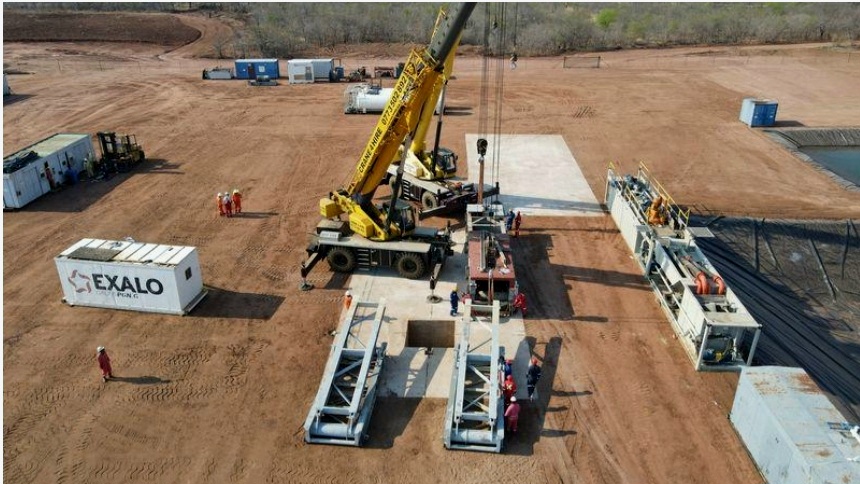
The company has moved Exalo Rig 202 from the Mukuyu-2 wellsite to Musuma-1, bringing it closer to its next major test for oil and gas resources in the Cabora Bassa Basin.
The relocation was completed on 29 October, clearing a major hurdle ahead of the company’s targeted November 2026 drilling programme.
But while the latest development marks progress, Zimbabwe is still some distance from producing and selling gas commercially. Musuma-1 is an exploration well, and its results will help determine whether the prospect contains commercially viable quantities of hydrocarbons.
The quarterly report for the three months ended 30 September 2026, released on 30 October, notes that preparations had advanced from planning into execution, with the drilling contractor, specialist service provider and supporting infrastructure secured.
Managing Director Scott Macmillan said the company had made substantial progress towards its drilling target.
“This quarter marked an important transition for Invictus as Musuma-1 advanced from planning into execution,” he said.
“With the drilling contract in place with Exalo Drilling, SLB secured for specialist well services and the wellpad completed and accepted, we have made substantial progress towards our targeted November 2026 spud.”
Invictus Energy has moved Rig 202 to Musuma-1, but public questions remain over when Zimbabwe’s gas exploration could lead to commercial production.
Rig Moves From Mukuyu-2 To A New Exploration Target
The move to Musuma-1 raises an important question: what happened to the previous drilling site?
Rig 202 was previously stationed at Mukuyu-2, part of Invictus’s earlier exploration campaign in the Cabora Bassa Basin. The company says it has drilled two wildcat wells since acquiring the project in 2018, resulting in a significant gas-condensate discovery at the Mukuyu field in late 2023.
The quarterly report does not describe Mukuyu-2 as a failed well or say that the Mukuyu discovery has been abandoned. Instead, it confirms that the rig was relocated after the previous drilling campaign to test a different exploration target.
Musuma-1 is particularly important because it will be Invictus’s first high-impact exploration well outside the Mukuyu discovery area.
The company is targeting a new geological play along the eastern margin of the Cabora Bassa Basin.
Macmillan said: “Musuma-1 represents an important exploration opportunity for Invictus, targeting a new play along the Eastern Margin of the Cabora Bassa Basin, beyond the Mukuyu discovery area.”
He added that success could “unlock a new area of exploration and materially expand the resource base of the Cabora Bassa Project”.
Invictus has completed several important preparations.
The company signed a drilling contract with Poland-based Exalo Drilling for Rig 202 and confirmed a November 2026 start date, commonly referred to in the industry as the spud date.
It also awarded the specialist well services contract to SLB, formerly known as Schlumberger, on 11 September.
The Musuma-1 wellpad, access road upgrades and associated civil works were completed after the September quarter. Exalo subsequently inspected and formally accepted the wellpad.
The Rig Relocation Was Completed On 29 October.
However, moving the rig to the site does not mean drilling has started.
According to the report, the remaining work includes rig-up, final maintenance and operational readiness checks, mobilisation of SLB equipment and personnel, delivery of tubulars and wellhead equipment, and final rig acceptance.
Only after these activities are completed can drilling begin.
The company is targeting a November start, but the report does not give a specific drilling date or guarantee that the well will reach its target within a particular timeframe.
Zimbabwe’s Gas Potential: What Is Invictus Looking For?
The Cabora Bassa Project covers approximately 360,000 hectares in northern Zimbabwe, close to the Mozambique border.
Invictus holds an 80% interest in the project through its interest in Geo Associates.
The company’s exploration work has included acquiring approximately 1,400 kilometres of two-dimensional seismic data, which helps geologists interpret underground rock formations and identify potential hydrocarbon targets.
The Mukuyu discovery in 2023 provided an important breakthrough. Musuma-1 will now test whether the eastern margin of the basin contains another promising petroleum system.
The company’s wider exploration portfolio includes three major geological play types and multiple identified prospects across its licence areas.
However, potential resources must not be confused with proven reserves. A promising geological structure does not automatically mean that recoverable gas or oil has been discovered.
Drilling and further evaluation are needed to establish what is actually underground.
When will Zimbabwe start selling gas?
This is arguably the biggest question for Zimbabweans following the latest developments.
The short answer is that there is no confirmed commercial production or gas sales date in the quarterly report.
Invictus remains in the exploration phase. The immediate objective is to drill Musuma-1 and establish whether the target contains hydrocarbons.
If the well encounters gas or oil, further work would still be required to assess the discovery, establish recoverable quantities, determine whether production is economically viable and plan the infrastructure needed to bring the resources to market.
That could involve additional appraisal wells, engineering studies, development financing, regulatory approvals, processing facilities and pipelines or other transport arrangements.
Commercialisation would also require agreements with potential customers.
The company has not provided a timetable for completing these steps or beginning commercial sales.
Therefore, even a successful Musuma-1 well would be an important milestone rather than an immediate start to gas production.
For Zimbabwe, the potential prize is significant. Locally produced gas could eventually support power generation, industrial activity and other energy-intensive sectors. But those benefits depend on discoveries being converted into commercially viable production projects.
Funding The Next Phase
Invictus ended the September quarter with A$7.97 million in cash and cash equivalents, down from A$10.89 million at the beginning of the period.
The company reported net operating cash outflows of A$1.09 million, while exploration and evaluation expenditure totalled approximately A$1.74 million.
Its Appendix 5B cash flow report estimated that the company had 2.8 quarters of funding available based on the reported cash position and relevant expenditure levels.
That figure is a calculation based on the quarter’s reported spending, not a guarantee of how long the money will last or confirmation that all future drilling and development costs are covered.
The company had previously completed a A$10 million placement, which was ratified by shareholders at a general meeting in July.
The financial position will remain an important consideration as Invictus moves from exploration towards any future appraisal and development work.
A Significant Test For Zimbabwe’s Energy Ambitions
Invictus’s latest progress puts Zimbabwe’s Cabora Bassa exploration programme at an important stage.
The company has secured its drilling contractor, appointed SLB for specialist services, completed the Musuma-1 wellpad and moved Rig 202 to the new site.

Leave a Reply