
By Advent Shoko
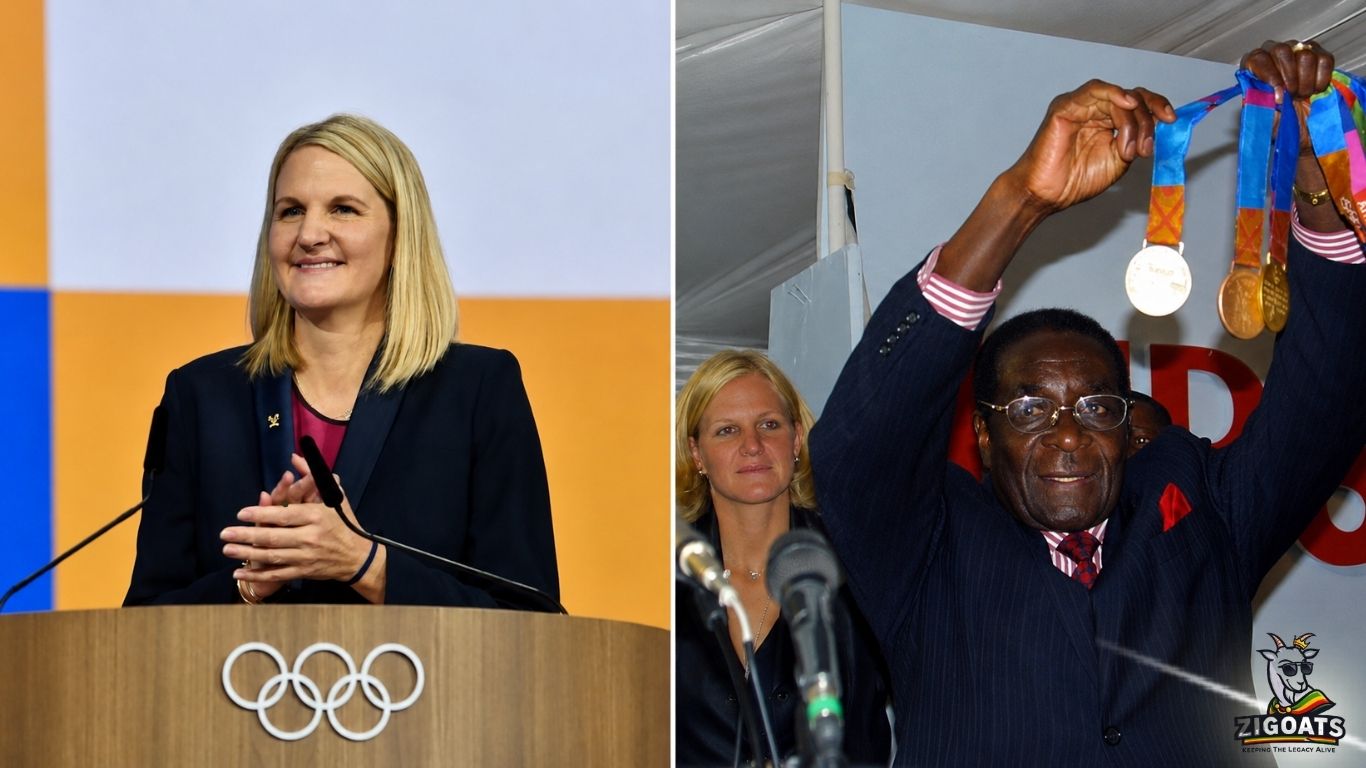
Zimbabwean Olympic legend and International Olympic Committee (IOC) president Kirsty Coventry has found strong support online after introducing one of the toughest policies yet on transgender participation in women’s Olympic sport. But the rule has also opened a fresh scientific debate over whether a single gene can determine who qualifies as a woman in elite sport.
Coventry, the first woman and first African to lead the IOC, announced the landmark policy in March 2026, restricting the female category at IOC events to athletes who meet the organisation’s biological-sex eligibility criteria.
From the Los Angeles 2028 Olympics onwards, athletes seeking to compete in the female category will undergo a one-time screening for the SRY gene, which is usually found on the Y chromosome and plays a key role in male sex development.
Coventry has defended the move as a matter of fairness and safety.
“The scientific evidence is very clear – male chromosomes give performance advantages in sports that rely on strength, power or endurance.” — Kirsty Coventry
She later put the issue even more directly:
“At the Olympic Games, even the smallest margins can be the difference between victory and defeat, so it’s absolutely clear that it would not be fair for biological males to compete in the female category. In addition, in some sports it would simply not be safe.” — Kirsty Coventry
The IOC says the policy followed an 18-month consultation process involving athletes and medical and scientific experts. It applies to IOC events, including the Olympics, Youth Olympics and relevant qualifying competitions, but does not apply to grassroots or recreational sport.
Strong reaction online
Coventry’s position has triggered a heated debate online, but many commenters have welcomed the decision, arguing that women’s sport exists precisely because biological differences can affect sporting performance.
One commentator wrote:
“As a gay man I concur with the President’s decision. I have no issue with anyone identifying who they are. My issue, for example, is that no matter how many operations a male has to become a female, the physiology of the body rarely changes. They will always have the option of the advantage to become or be stronger than a natural-born female.”
Another commenter stressed that the policy should not be understood as a blanket ban on transgender athletes from the Olympics.
“Clarification: they are not banned from competing in the Olympics, they are simply required to compete in the appropriate category. You don’t put a 100kg boxer in the same category as the 70kg just because they claim they are lighter. XX and XY categories.”
Another reduced the argument to a simple headline:
“Only women can compete in women’s Olympic events.”
A further commenter said supporting transgender people and protecting women’s sport were not necessarily contradictory positions.
“I support transgenders, but women fought hard to have our own sports. DNA gives each sex advantages and those usually make physical competition unfair, thus separation of sports. Just as weight separation makes wrestling fair… separating DNA makes it unfair for that gives the male body the edge in most physical contests.”
Another wrote:
“Women’s sports exist because biological differences matter in athletic competition. Acknowledging that reality is not hatred or intolerance. It is fairness.”
One commenter argued that without sex-based restrictions, biological males could dominate female events.
“Had they not, genetic males would win almost every medal available, both men’s and women’s category.”
Another suggested creating an open category for athletes who do not fit traditional male or female classifications, pointing to a 2023 World Aquatics open-category pilot event in Berlin that received no entries.
But there is a major scientific question
While Coventry says the policy is firmly based on science, the use of the SRY gene as the decisive screening marker has itself become controversial.
And this is where the story gets particularly interesting.
Professor Andrew Sinclair, the Australian geneticist who discovered the SRY gene in 1990, has criticised the use of the gene as a stand-alone test for determining biological sex.
Sinclair argues that biological sex is considerably more complicated than the presence or absence of one gene.
“The SRY gene should not be used to exclude women athletes from competition.” — Andrew Sinclair
He has explained that an SRY test shows whether the gene is present, but does not by itself establish how the gene functions, whether testes formed, whether testosterone is produced or whether the body can use that testosterone.
In other words, the scientist who helped discover the gene now being placed at the centre of elite sport eligibility does not believe the gene alone should determine who can compete in women’s events.
That has created an unusual situation: one scientist helped identify the genetic mechanism, while sporting authorities are using it to draw a line between categories that he says are biologically more complicated.
What exactly does the IOC rule say?
The IOC says athletes who test negative for SRY will meet its eligibility criteria for the female category, subject to confirmation if there is reason to believe the result is incorrect.
Athletes who test positive will generally not be eligible for the female category, although the IOC provides limited exceptions for rare differences in sex development, including certain cases of Complete Androgen Insensitivity Syndrome (CAIS) where athletes do not benefit from testosterone-related performance effects.
Importantly, an athlete who is not eligible for the female category is not automatically excluded from Olympic competition altogether.
The IOC says athletes with an SRY-positive result can still compete in other classifications for which they qualify, including male, mixed or open categories.
The policy is also not retroactive.
Coventry’s personal connection to the debate
For Coventry, the issue carries unusual weight.
The Zimbabwean is a seven-time Olympic medallist and multiple Olympic swimming champion who spent her sporting career competing at the highest level.
She became the IOC’s first female and first African president in 2025, taking charge of an organisation facing mounting pressure to establish a consistent global approach to transgender participation.
Her position marks a significant departure from the IOC’s earlier approach.
The organisation had previously left much of the responsibility to individual international federations. Coventry promised during her leadership campaign to tackle the issue and subsequently established a process that resulted in the new policy.
Her argument is straightforward: women’s sport needs a protected category because physical differences can matter enormously when athletes compete at the margins of elite performance.
The IOC says its review found a strong consensus among consulted athletes that fairness and safety in the female category required clear, science-based eligibility rules.
The debate is far from over
Coventry’s policy has won praise from people who believe women’s sport must be protected from what they see as male physical advantages.
But critics say the policy risks reducing a complex biological question to a single genetic marker and could affect athletes with differences in sex development who do not identify as transgender.
That criticism is not coming only from advocacy groups. Sinclair’s objections demonstrate that there is genuine scientific disagreement over whether SRY screening should be used as the decisive test for sporting eligibility.
The controversy therefore goes beyond transgender participation.
It raises a much bigger question for Olympic sport:
How should the world define the female category when biology itself is more complicated than a simple XX-versus-XY equation?
For now, Coventry and the IOC have made their position clear.
From Los Angeles 2028, the world’s biggest sporting stage will operate under a new rule: eligibility for Olympic women’s events will be determined through biological-sex criteria, with the SRY gene screening at the centre of that system.
Leave a Reply