
By Advent Shoko
HARARE – Often treated as a simple food crop, bananas could quietly become one of Zimbabwe’s most powerful agribusiness exports, if the country chooses to take the sector seriously.
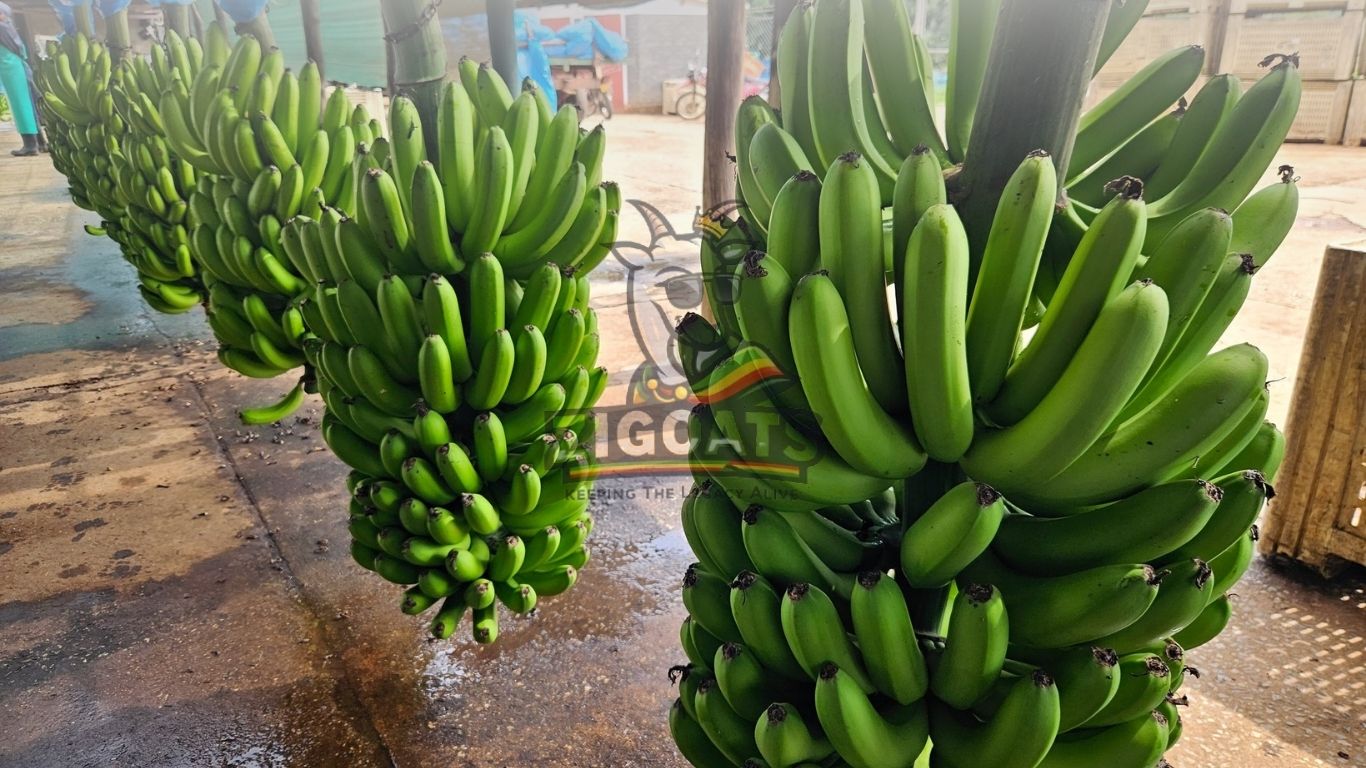
Fresh insights from the Ministry of Agriculture, Fisheries, Water and Rural Development point to bananas as a strategic value-chain driver in Zimbabwe’s push to achieve a US$2 billion horticulture export industry. The remarks came after Permanent Secretary Prof. Dr. Obert Jiri toured Matanuska Estate in Burma Valley, one of the country’s flagship commercial banana producers.
At Matanuska alone, 60% of bananas are exported to South Africa, while 40% is absorbed locally, a split that tells a bigger story about regional demand, export readiness, and untapped potential.

WHY BANANAS MATTER MORE THAN WE THINK
Globally, bananas are among the most traded and most consumed fruits, prized for their affordability, nutritional value and year-round availability. Beyond fresh consumption, bananas are widely used in the production of banana flour, dried snacks, chips, baby food, animal feed, brewing inputs and industrial starches, making them a highly versatile commodity across multiple industries.
From a business perspective, bananas represent a low-risk, high-volume and fast-moving product, with steady demand across both developing and developed markets. Countries that have structured the banana value chain effectively benefit from stable foreign currency inflows, large-scale rural employment creation, export diversification and improved food security. These advantages explain why bananas have become a backbone crop in several emerging agricultural economies.
Zimbabwe already possesses many of the fundamentals required to compete meaningfully in the banana trade. These include favourable agro-ecological zones, irrigated valleys, an experienced agricultural workforce and close proximity to major regional markets, particularly South Africa.
- Mthuli Ncube Commissions US$3.35M Printflow Machinery to Boost Government Printing Services
- Illegal Cigarettes Force BAT South Africa Plant Closure As Zimbabwe-linked Rivals Rise
ZIMBABWE’S BANANA INDUSTRY: SMALL SHARE, BIG SIGNAL
Zimbabwe currently produces hundreds of thousands of tonnes of bananas annually, with production concentrated mainly in Honde Valley and Burma Valley. Despite this output, the country’s export earnings from bananas remain relatively modest. This is largely due to limited value addition, narrow market reach and a heavy reliance on exporting raw fruit.
This gap, however, signals opportunity rather than failure.
South Africa consumes significantly more bananas than it produces, making it a structural importer. Zimbabwe’s capacity to supply fresh, high-quality bananas positions it as a natural and competitive supplier within the region. With improved scale and consistency, bananas could shift from being a supporting horticultural crop to becoming a top-tier export, alongside citrus, berries, avocados and cut flowers.
MATANUSKA ESTATE: A PROOF-OF-CONCEPT
Matanuska Estate, which spans 321 hectares and employs over 450 workers, demonstrates what is possible when commercial discipline, modern farming techniques and an export-driven mindset are aligned. The Ministry of Agriculture praised the estate for producing export-grade fruit, which is essential for sustaining Zimbabwe’s horticulture growth ambitions.
However, Matanuska should not remain an isolated success story. The broader national question is how Zimbabwe can replicate this model at scale by supporting more commercial estates and organised outgrower schemes across suitable production zones.
THE REAL GAP: VALUE ADDITION & MARKET DIVERSIFICATION
The greatest untapped value in Zimbabwe’s banana industry lies not only in expanding production, but in processing, branding and diversifying export markets. At present, most bananas are sold fresh, with minimal local processing taking place. As a result, Zimbabwe misses out on higher margins associated with processed banana products and remains exposed to post-harvest losses.
Processed banana products such as flour, chips, puree and dried snacks command better prices, have longer shelf lives and open access to distant markets. Developing these segments would reduce wastage, strengthen supply chains and significantly increase export earnings per tonne.
WHY BANANAS FIT THE US$2 BILLION HORTICULTURE PUSH
Zimbabwe’s drive toward a US$2 billion horticulture industry requires crops that are scalable, climate-resilient, export-friendly and capable of absorbing large numbers of workers. Bananas meet all these criteria.
The crop can be grown successfully by both large-scale commercial producers and organised smallholder farmers, making it ideal for inclusive economic growth. With proper aggregation systems, cold-chain logistics and export compliance frameworks, bananas could deliver consistent volumes that are critical for building a billion-dollar export industry.
Leave a Reply