
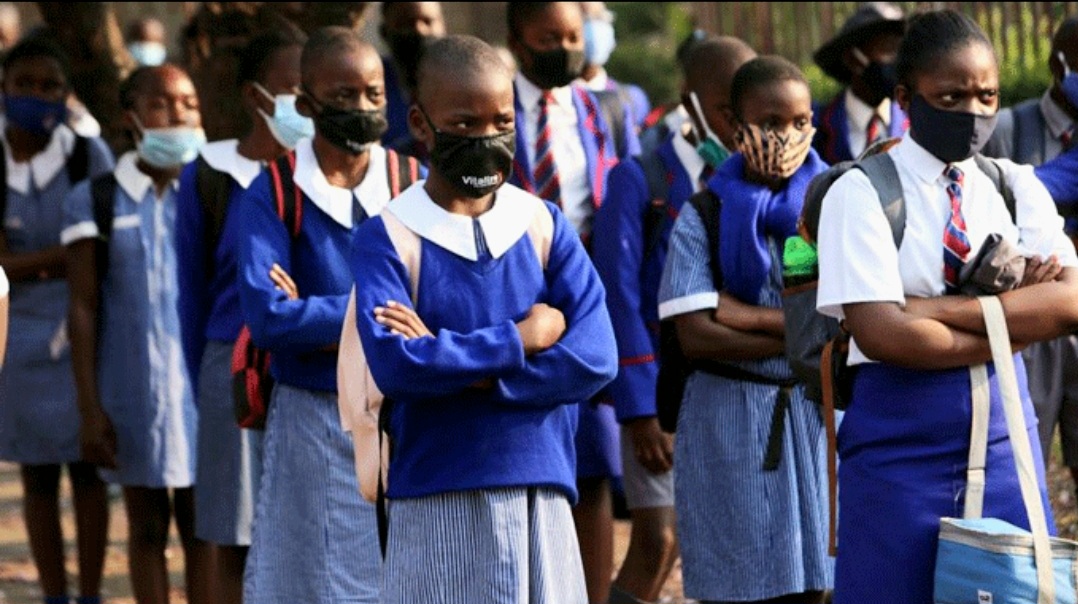
Excerpt: Zimbabwe’s constitutional promise of free basic education is facing renewed legal and political scrutiny after a directive from the Ministry of Primary and Secondary Education encouraging schools to use debt collectors to recover unpaid levies, raising questions about whether the policy aligns with the country’s supreme law.
By Etiwel Mutero
Zimbabwe’s Constitution is widely regarded as one of the most progressive legal instruments in the region, particularly on paper. It guarantees every citizen and permanent resident the right to basic State-funded education under Section 75(1)(a), while Section 27 obliges the State to take all practical measures to ensure that basic education is free and compulsory.
Yet, despite these constitutional guarantees, the lived reality in many public schools tells a different story. Financial barriers, levies, and enforcement mechanisms continue to shape access to education, raising persistent questions about whether constitutional promises are being fully realised.
The latest flashpoint comes from a recent directive attributed to the Ministry of Primary and Secondary Education, in which School Development Committees (SDCs) and School Development Associations (SDAs) were reportedly encouraged to engage debt collectors to recover unpaid school levies from parents.
The directive has triggered renewed legal debate over whether such enforcement mechanisms are compatible with constitutional protections on education and socio-economic rights.
Legal Foundation Versus Practice
At the centre of the controversy is Statutory Instrument 379 of 1998, which empowers school development bodies to impose levies and pursue legal action to recover unpaid contributions. Provisions within the instrument allow for civil enforcement against parents who fail to pay school-related charges.
While the instrument contains safeguards stating that a learner cannot be expelled solely for non-payment, critics argue that the broader enforcement framework effectively transforms access to basic education into a conditional, payment-driven system.
Section 26 of the instrument allows civil recovery of unpaid levies, while other provisions have been interpreted as allowing stringent enforcement measures that may include legal action against defaulting parents.
This has raised constitutional concerns, particularly around whether a subsidiary legal instrument can lawfully introduce mechanisms that, in practice, restrict access to a constitutionally guaranteed right.
The Constitutional Tension
Legal critics argue that S.I. 379 of 1998 may be operating beyond the scope of its parent Act and potentially in conflict with the Constitution, which places the obligation for basic education on the State.
The concern is not only about the legality of levies themselves, but also about the enforcement mechanisms now reportedly being encouraged, including the use of private debt collectors.
Such mechanisms, critics argue, risk shifting the burden of education financing from the State to households, including vulnerable families least able to afford it.
There are also concerns about proportionality, fairness, and administrative justice under Zimbabwe’s legal framework, which requires all public authorities to act reasonably, lawfully, and in a manner that does not undermine constitutional rights.
The Ministerial Directive Under Scrutiny
The controversy intensified following remarks attributed to the Minister of Primary and Secondary Education in Parliament, suggesting that schools may rely on debt collectors to recover outstanding levies.
Supporters of the approach argue it is intended to improve revenue collection and ensure schools remain functional amid funding gaps. However, critics see it as a policy shift that risks normalising aggressive enforcement of what is ultimately linked to a constitutional right.
The key legal question being raised is whether administrative policy can justify enforcement mechanisms that effectively commercialise access to basic education.
The Bigger Question: Who Pays for Basic Education?
At the heart of the debate is a structural funding challenge. Public schools continue to rely heavily on levies to cover operational costs, including infrastructure, learning materials, and basic utilities, amid constrained state funding.
This has created a hybrid system where education is formally a constitutional right, but practically supported through parental contributions enforced through quasi-legal mechanisms.
Critics argue that this arrangement risks creating inequality, where access to quality education is indirectly influenced by a family’s ability to pay.
Toward Judicial Clarity
Legal observers say the growing tension between constitutional guarantees and subsidiary education regulations may ultimately require judicial clarification.
Any court challenge would likely focus on whether specific provisions of S.I. 379 of 1998 are consistent with Section 75 of the Constitution and whether enforcement mechanisms such as debt collection align with constitutional protections for children’s rights and access to education.
Zimbabwe’s education system now sits at a critical legal and policy crossroads. On one hand is a constitutional promise of free basic education. On the other is a financing reality that increasingly relies on parental contributions enforced through legal and quasi-legal mechanisms.
The unresolved tension between these two frameworks continues to shape access, equity, and fairness in the education sector.
Until the legal and policy contradictions are fully addressed, the promise of universal, State-funded basic education risks remaining more constitutional ideal than practical reality.
Etiwel Mutero is a parent with school-going children, a teacher, archivist, librarian, and political commentator. You can contact him on +263773614293 or etiwelm02@gmail.com
Leave a Reply