
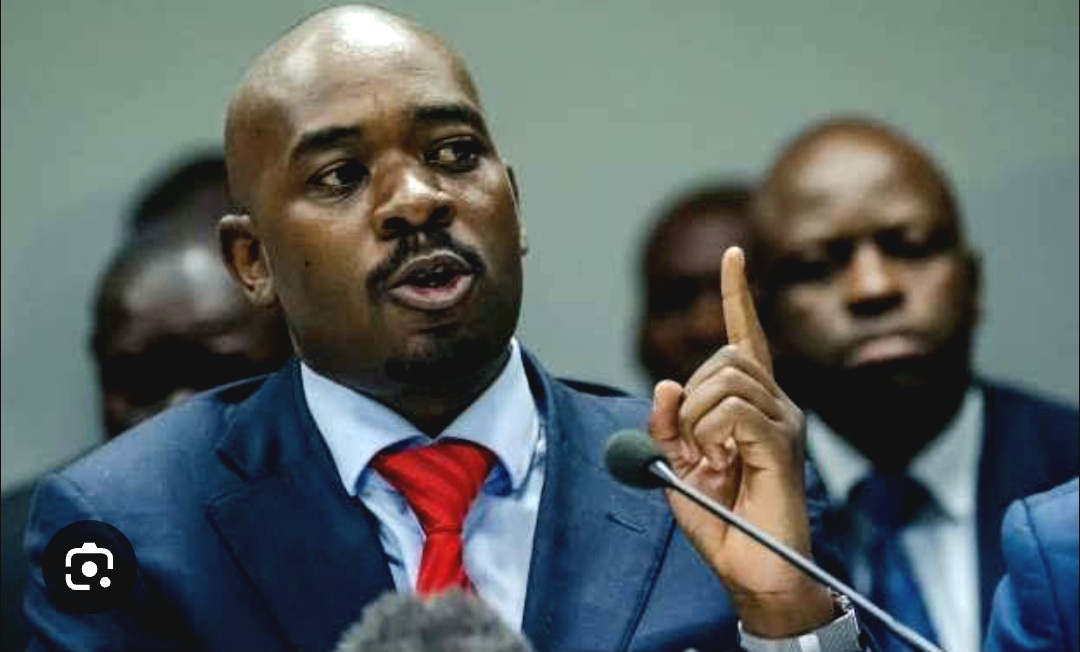
Harare, Zimbabwe – Former Citizens Coalition for Change (CCC) leader Advocate Nelson Chamisa has reignited Zimbabwe’s political debate with a bold declaration that change is both inevitable and unfinished, saying he remains determined to complete the mission he began decades ago in student activism.
By Advent Shoko
In a strongly worded social media post issued days before Zimbabwe marks 46 years of independence, Chamisa said the struggle for democratic transformation must continue despite mounting criticism and political headwinds. He said:
“THE ROAD AHEAD… It will be tough. It will be rough. But we will finish what we started. Good things never come easy. The struggle must be carried through.. firmly, deliberately and steadily, until its logical conclusion. Change must and will happen in Zimbabwe 🇿🇼 #IndependencePromise #NoToCAB3”
The remarks come at a politically charged moment, with growing national debate around Constitutional Amendment Bill No. 3 (CAB 3), a controversial proposal that critics say could extend parliamentary and presidential terms beyond 2028 and shift presidential election powers from citizens to Parliament.
For many supporters, Chamisa’s message signals a renewed push toward frontline opposition politics following his nearly two-year sabbatical after the disputed 2023 elections.
For critics, however, the statement has reopened old questions about his timing, legitimacy, and political strategy.
Chamisa is no stranger to Zimbabwe’s opposition trenches.
From student leadership in the late 1990s to his years in the Movement for Democratic Change (MDC), Parliament, and later the Government of National Unity (2009–2013) as ICT minister, he has remained one of the country’s most recognisable opposition figures.
He twice came closest to State House in the presidential elections of 2018 and 2023, both won by President amid sustained controversy and legal challenges.
After stepping back from active politics following the 2023 defeat, Chamisa formally resurfaced in January 2026 through what he called Agenda 2026, a citizens’ movement aimed at rebuilding the opposition base and challenging the country’s governance trajectory.
At the time, he said Zimbabwe was facing a “crisis of governance” marked by disputed elections, institutional decay, and constitutional instability.
His latest intervention appears directly linked to the national outcry over CAB 3.
Political observers say the proposed amendment has become a rallying point for opposition forces, civic groups, and constitutional lawyers who argue that it undermines democratic choice and citizen sovereignty.
Some of Chamisa’s critics have accused him of not taking a sufficiently aggressive stance against the bill, with sections of the opposition even alleging that his silence in previous weeks had weakened anti-CAB 3 mobilisation.
Chamisa has firmly rejected those claims.
In a recent response to critics, he described the accusations as part of a coordinated disinformation campaign.
“Zimbabwe faces a governance and constitutional crisis. The will of the citizens must be restored and respected.”
That response has done little to calm a deeply polarised opposition space.
Some detractors argue that his 2024–2025 sabbatical damaged both momentum and trust, with others going as far as branding him a destabilising figure within the opposition ecosystem.
Yet supporters insist his re-emergence could reinvigorate public resistance against constitutional changes viewed as extending the ruling party’s grip on power.
The timing of Chamisa’s message is politically symbolic.
As Zimbabwe prepares to commemorate independence, his statement taps into long-standing frustrations over governance, economic hardship, and the large Zimbabwean diaspora, many of whom critics describe as economic and political exiles.
Opposition voices continue to argue that the promise of independence remains incomplete so long as poverty, unemployment, and political exclusion persist.
Chamisa, for his part, is framing the moment as one of unfinished national business.
Leave a Reply