
By Advent Shoko
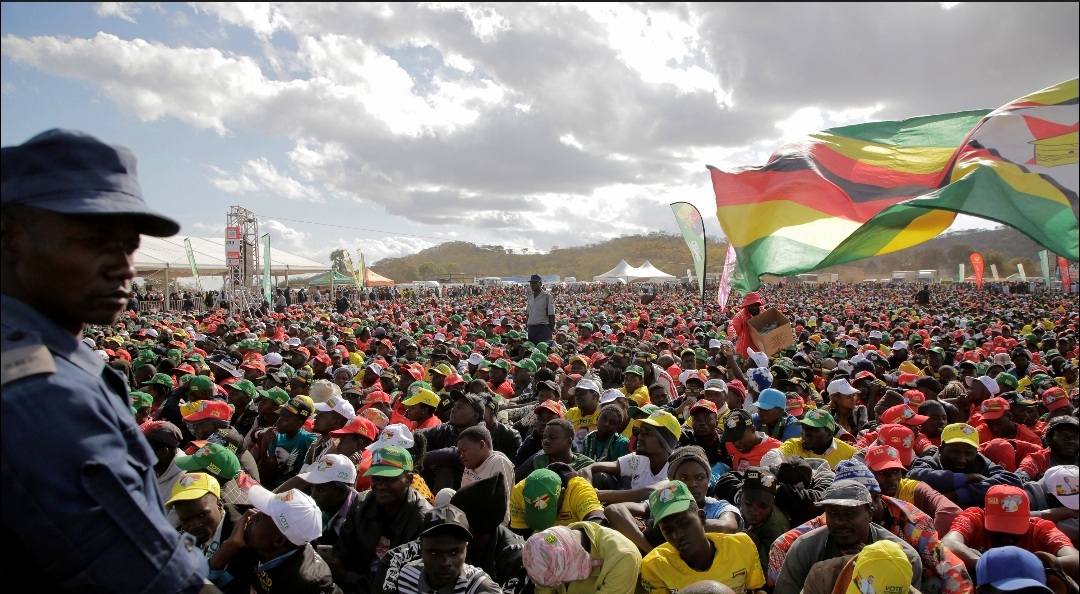
HARARE – Concerns are rising across Zimbabwe over proposed constitutional amendments that would allow Members of Parliament to elect the country’s president on behalf of the people. If passed, the move would fundamentally alter one of the nation’s most important democratic processes and further distance ordinary citizens from real political power.
Currently, Zimbabweans queue at polling stations to vote directly for the presidential candidate of their choice. But is that truly where power begins? A closer examination of party politics suggests the reality is far more complicated.
Since independence in 1980, ZANU PF has had only two leaders, Robert Mugabe and Emmerson Mnangagwa. At no point have ordinary party members been allowed to directly elect the party leader. Leadership is determined by party elites through congresses and internal processes, and whoever emerges automatically becomes the presidential candidate. In practice, it is political elites, not the masses, who decide who ultimately contests for the presidency.
Opposition parties are not fundamentally different. Both the Movement for Democratic Change (MDC) and the Citizens Coalition for Change (CCC) rely on elite-driven structures where leadership is decided by senior figures rather than grassroots supporters. Nelson Chamisa, for example, declared leadership of a new political movement upon returning to active politics, setting the establishment’s direction with minimal input from ordinary members. That was almost the case when he was theeader of the CCC which he ditched in January 2024. Across the political spectrum, voters are largely excluded from the most critical decision, who gets to run for president.
This raises a key question, when Zimbabweans vote in presidential elections, what are they actually choosing? Analysts argue that voters are, in effect, endorsing political parties rather than individual candidates. Once a party leader is chosen internally, the electorate is left with limited options. MPs and councillors from dominant parties often win seats regardless of personal competence, integrity, or performance. Their greatest threat comes not from opponents, but from internal party battles.
The consequences of this system are visible across the country. In rural areas where party loyalty is deeply entrenched, even highly qualified candidates can lose simply because they belong to the “wrong” party. Many observers point to Dr. Nkosana Moyo’s performance in the 2018 presidential election as an example. Despite presenting a detailed manifesto and a technocratic vision for Zimbabwe, he struggled to gain traction in a political environment dominated by ZANU PF and a rigid binary party system.
Voter testimonies further expose the disconnect between democratic theory and lived reality. One Zimbabwean voter who only wanted to be identified as Joze, admitted:
“I just went for the party logo and voted. I didn’t even know the person I was voting for.”
Yet, despite all these limitations, the current system retains one crucial democratic safety valve, voters can still rebel. In the run-up to the 2008 harmonised elections, some ZANU PF officials orchestrated a clandestine campaign dubbed Bhora Musango, literally meaning “kicking the ball into the forest instead of scoring.” The strategy encouraged ZANU PF supporters to vote for the party’s councillors and MPs while deliberately rejecting then-president Robert Mugabe on the presidential ballot.
A similar pattern emerged during the 2023 elections, when some provinces and polling stations recorded higher vote totals for ZANU PF parliamentary candidates than for President Emmerson Mnangagwa. This demonstrated that voters are capable of separating party loyalty at local level from dissatisfaction with national leadership.
You May Be Interested in This
It is against this backdrop that the post-2023 push around Vision 2030 must be understood. While officially framed as a development agenda, it became politically linked to President Mnangagwa’s controversial declaration, “2030 ndendichipo.” Although Mnangagwa denied intentions to extend his rule beyond 2028, ZANU PF provincial structures later endorsed the agenda, and in 2025 the party adopted a resolution backing his leadership into 2030, beyond constitutional limits. This decision was driven by party elites, not ordinary members.
Now, with reports that a draft constitutional amendment could allow Parliament to elect the president, the stakes are even higher. Such a system would eliminate the limited leverage voters still possess.
Political commentator Takudzwa Gwezuva warns that while parliamentary election of presidents exists elsewhere, Zimbabwe’s context makes it dangerous. He said:
“I think in theory there is nothing wrong with a system where Parliament elects the president. We see it in countries like South Africa, Germany, and India. But we must pause, reflect, and ask ourselves if this is really ideal for Zimbabwe right now.”
He stressed that those systems work because institutions are strong. Gwezuva said:
“Political parties there are well organised, leadership processes are clearer, and MPs are not just rubber stamps for party elites,”
Zimbabwe, he argued, operates differently. He said:
“Here, party discipline is very tight due to the whipping system. MPs almost always vote according to instructions from the top. So if you move the power to elect the president from the people to Parliament, you are not really giving it to Parliament. You are giving it to a small circle of party leaders.”
He warned that such a shift could encourage elite capture and corruption. He said:
“We end up with zvigananda (crooks) buying their way into office by bribing MPs. The real decisions would be made in back rooms, and Parliament would just rubber-stamp them.”
Despite flaws in the current system, Gwezuva said direct presidential elections still matter. He said:
“Whatever the problems in our elections, citizens still have a direct say in who becomes president. That gives the office legitimacy.”
He also questioned the timing of the proposed reforms. Gwezu a said:
“If constitutional changes are designed to benefit a particular leader or extend someone’s time in office, that undermines the spirit of the constitution. Constitutions are meant to serve everyone, not individuals.”
He concluded:
“In our current political context, this would concentrate power in the hands of elites and weaken the voice of ordinary citizens. That would be a step backwards for Zimbabwe’s democracy.”
Leave a Reply