
Silence, criticism, and a nation still divided over Geza’s final stand…
By Advent Shoko
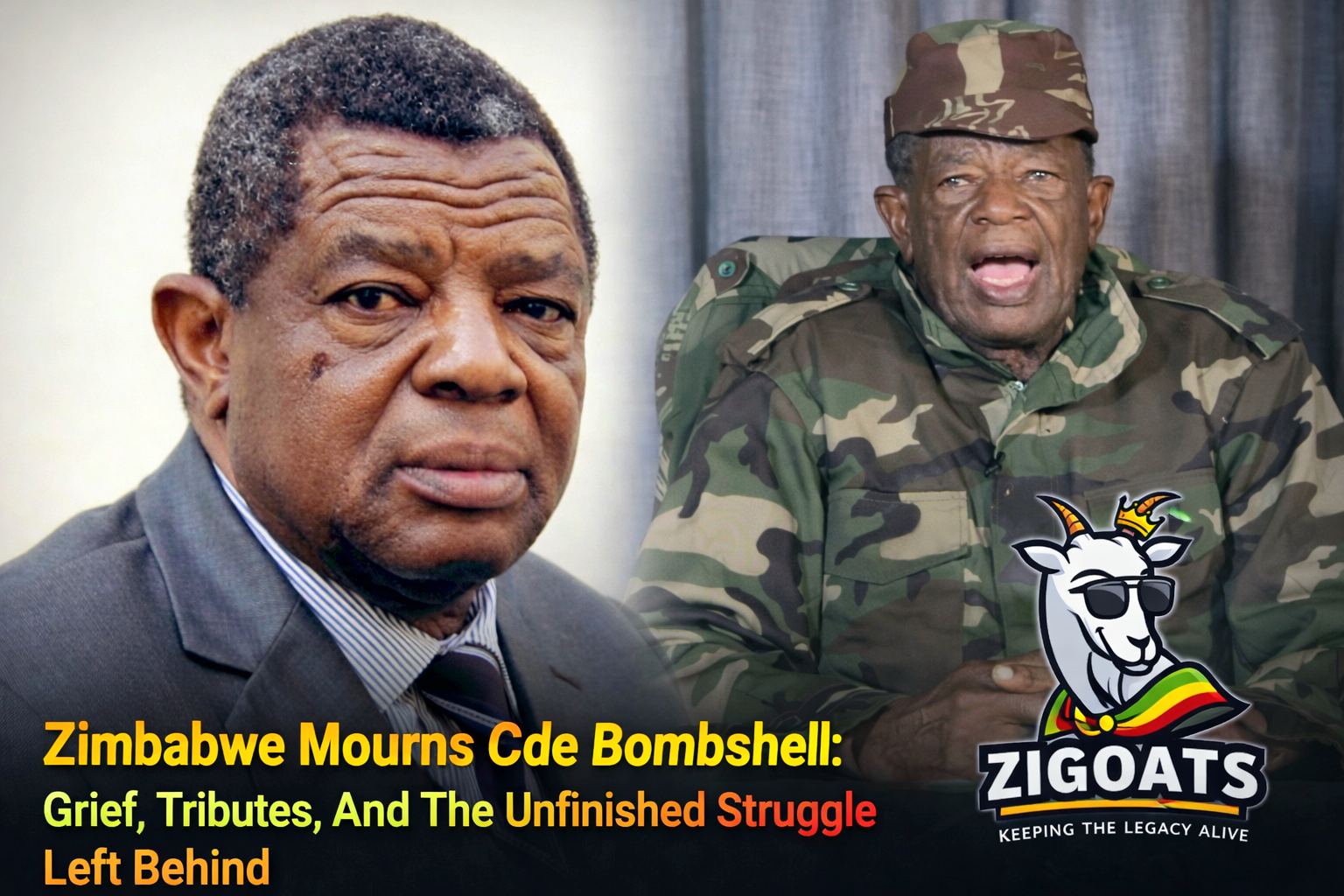
Nelson Chamisa has penned a eulogy for the late war veteran Blessed Runesu Geza, widely known as Cde Bombshell, drawing both reflection and criticism from sections of the public. The “long-awaited” tribute arrived barely a 24 hours after the announcement of Geza’s death, but not before the internet had already passed judgment.
Geza died on Friday morning at a cardiac clinic in South Africa after a prolonged battle with cancer, according to a family statement seen by ZiGoats. His death triggered an outpouring of tributes across political lines, and a sharp spotlight on who spoke, who delayed, and who said nothing at all.
When condolences flooded social media on Friday, pressure mounted on the former CCC leader. Critics pointed out that Chamisa had instead posted about the late founding Movement for Democratic Change (MDC) treasurer Roy Bennett who died in a helicopter crash in New Mexico in 2018, while remaining quiet on Geza. The silence was Read by many as political distance rather than personal grief. Eventually, Chamisa mourned Cde Geza publicly, posting a poetic and defiant eulogy that framed Geza as a flame that would not be extinguished. He said:
“You broke rank. You saw the light and lit the way…
The flame you kindled will forever glow and grow into a bonfire…
My condolences to the nation, the Geza family and friends.
Rest in Power, Cde Blessed (Bombshell) Geza.”
The words were powerful. The timing, however, split opinion.
Why Chamisa’s Message Mattered
Some Zimbabweans had been waiting for clarity. Chamisa had previously and publicly distanced himself from the national shutdowns and marches organised by Geza, including the much-publicised 17 October 2025 “One Million Man March.” Organisers had claimed that all “progressive forces,” including Chamisa, were on board, a claim he firmly rejected, stating he had neither been consulted nor informed.
That context explains why Chamisa mourning Cde Bombshell Geza became more than a condolence post. It became a political test. To some, the tribute rang hollow.
“You never acknowledged him when he begged for your attention…
You may think it’s wise, but aiwa, munobhowa baba.”
Others rushed to Chamisa’s defence, accusing critics of selective outrage.
“The same keyboard warriors who ignored Geza’s call to the streets now want to police condolences. Utter hypocrisy.”
Why Geza’s Protest Failed – And Why That Matters Now
The Geza-led march collapsed under a heavy security clampdown, with authorities warning they would “deal decisively” with any threat to public order. But the real reasons for its failure run deeper than roadblocks and riot police. Zimbabweans carry fresh memories of August 1, 2018 and January 2019, when soldiers fired live ammunition at unarmed civilians, killing some. Since then, fear has quietly settled into everyday life. Unlike in 2017, when the army stood aside as citizens marched against Robert Mugabe, there was no sense of protection this time. Anger still simmers, but fear now outweighs it.
That fear is reinforced by the police clearance system, a legal chokehold perfected by ZANU-PF. Without clearance, protests are illegal by default, and attempts to defy it often end in arrests or violence. Ironically, some now decrying repression once cheered it.
Geza also leaned on a familiar script, mass mobilisation paired with hoped-for military sympathy. But Mnangagwa learned from 2017. The security sector was reshuffled, loyalty tightened, and the system adapted. At the same time, bread-and-butter realities mattered. Zimbabweans protest hunger, not theory. Without a clear post-shutdown plan, broad political backing, or a single galvanising flashpoint, the call never became a national moment.
Leave a Reply