
By Advent Shoko
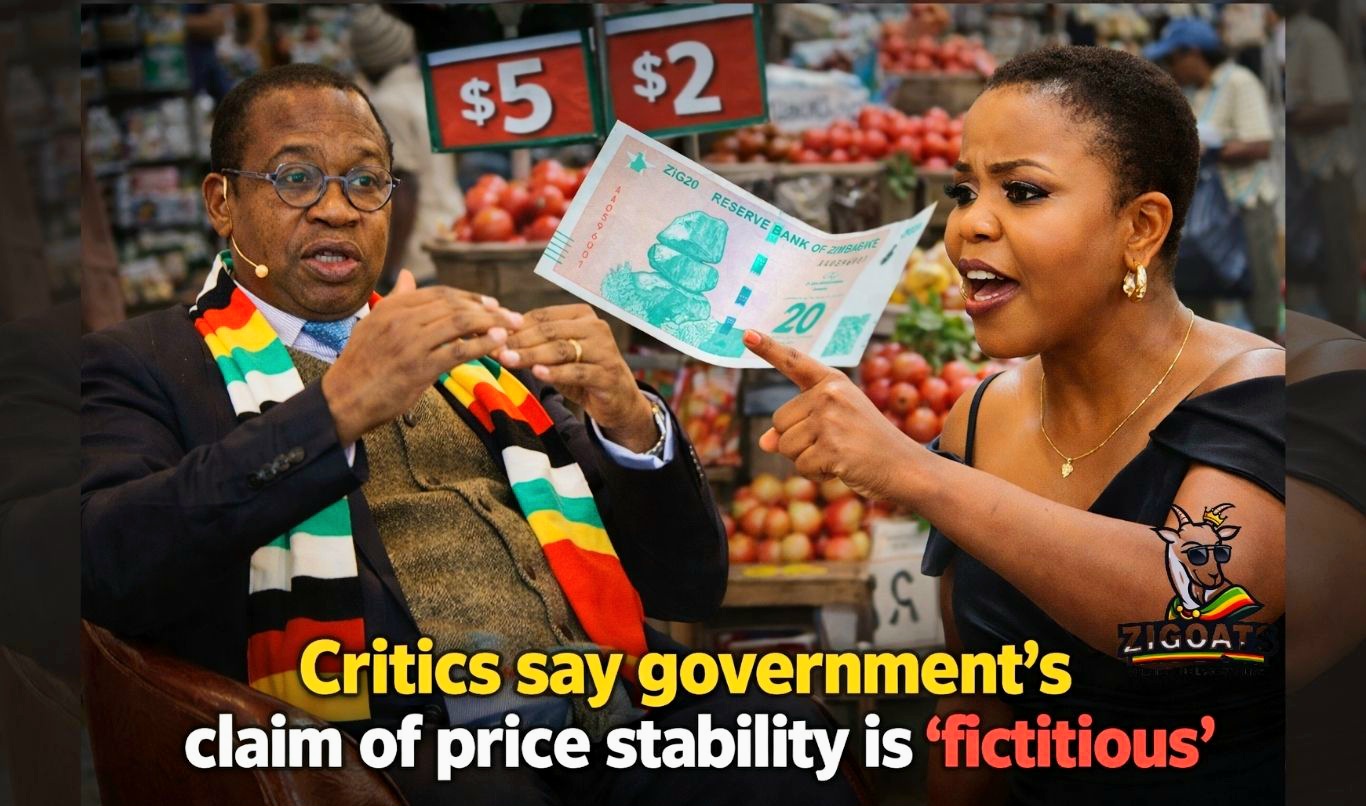
HARARE – Zimbabwe’s much‑publicised claim of price stability in early 2026 has been met with growing skepticism from critics who say the government’s narrative does not reflect what ordinary citizens are experiencing in their day‑to‑day lives. Former Mt Pleasant Member of Parliament Advocate Fadzayi Mahere has taken to social media to dismiss reports of price stability as “fictitious,” challenging Finance Minister Mthuli Ncube’s claims and spotlighting the lived economic hardships faced by millions.
Government Says Prices Stable, Critics Disagree
Official figures show Zimbabwe’s inflation has cooled dramatically, with annual local currency inflation dropping to 4.1% in January 2026, a level not seen since the late 1990s. Authorities attribute this to coordinated fiscal and monetary policies, tight control of money supply, and increased foreign reserves backing the Zimbabwe Gold (ZiG) currency.
Finance Minister Ncube has consistently projected that disciplined economic management could usher Zimbabwe into a period of sustained stability and even single‑digit inflation by early 2026, an unprecedented achievement since the introduction of the ZiG.
But Mahere challenges this picture. In a direct address to the minister, she wrote:
“The ‘price stability’ you are harping on about is a fiction. In January, you increased the rate of VAT on goods and services. This alone has driven the cost of goods and services up exponentially.”
She also criticised taxes on bank cards, interbank transactions and ATM withdrawals, arguing these levies have pushed up everyday costs rather than easing them.
Real Costs vs Official Numbers
Mahere goes beyond inflation statistics to make a broader point about economic well-being. She asked:
“Are you aware that teachers earn a paltry US$270 … and junior doctors earn … US$329? How can you talk of … progress when 63% of Zimbabweans cannot afford a balanced diet?”
She also highlighted poverty figures, noting 49% of Zimbabweans live in extreme poverty, with rural areas even worse off.
Her comments echo concerns raised by business lobbyists. The Zimbabwe National Chamber of Commerce (ZNCC) warned that recent VAT increases risk reversing gains in disinflation, since firms will likely pass higher tax costs onto consumers, further squeezing household budgets.
Macro Gains, Micro Pain
International institutions see a more nuanced picture. The World Bank’s Zimbabwe Economic Update 2025 recognises progress in moderating inflation and stabilising the exchange rate, projecting continued GDP growth of around 6.6% in 2025, supported by agriculture, mining and services. It also recommends further reforms to sustain macroeconomic stability, mobilise revenue and protect vulnerable households.
An IMF Article IV mission in 2025 acknowledged that disciplined policies helped stabilise the ZiG and reduce volatility in both official and parallel forex markets, but highlighted lingering policy challenges including fiscal pressures and debt constraints.
Economists warn that tight central bank control of the ZiG and exchange rate can sometimes mask underlying price pressures, leaving businesses with little room to raise wages or invest locally despite benign headline inflation.
What Ordinary Zimbabweans Feel
On the ground, many Zimbabweans say official statistics don’t capture everyday costs. Prices for essentials like food, transport and medical services remain high relative to incomes, and workers often report earning low wages that struggle to keep pace with rising living costs, a pattern Mahere sharply criticised. Critics also point to persistent reliance on foreign currency pricing and taxes that add to the cost of goods and services, reinforcing the disconnect between statistics and lived experience.
The debate over price stability in Zimbabwe is far from settled. While government figures point to improved inflation dynamics and cautious optimism, critics such as Mahere argue that the benefits are not translating into meaningful relief for ordinary citizens. The gap between headline macro indicators and the daily economic realities faced by households, especially the poor and informal sector workers, remains the central fulcrum of this controversy.
What remains clear is that numbers on paper are only half the story. For Zimbabwe’s policy makers, the challenge is to ensure that stability at the macro level, if sustained, ultimately filters down to stronger purchasing power, real wage growth and improved living standards for millions struggling at the household level.
Leave a Reply