
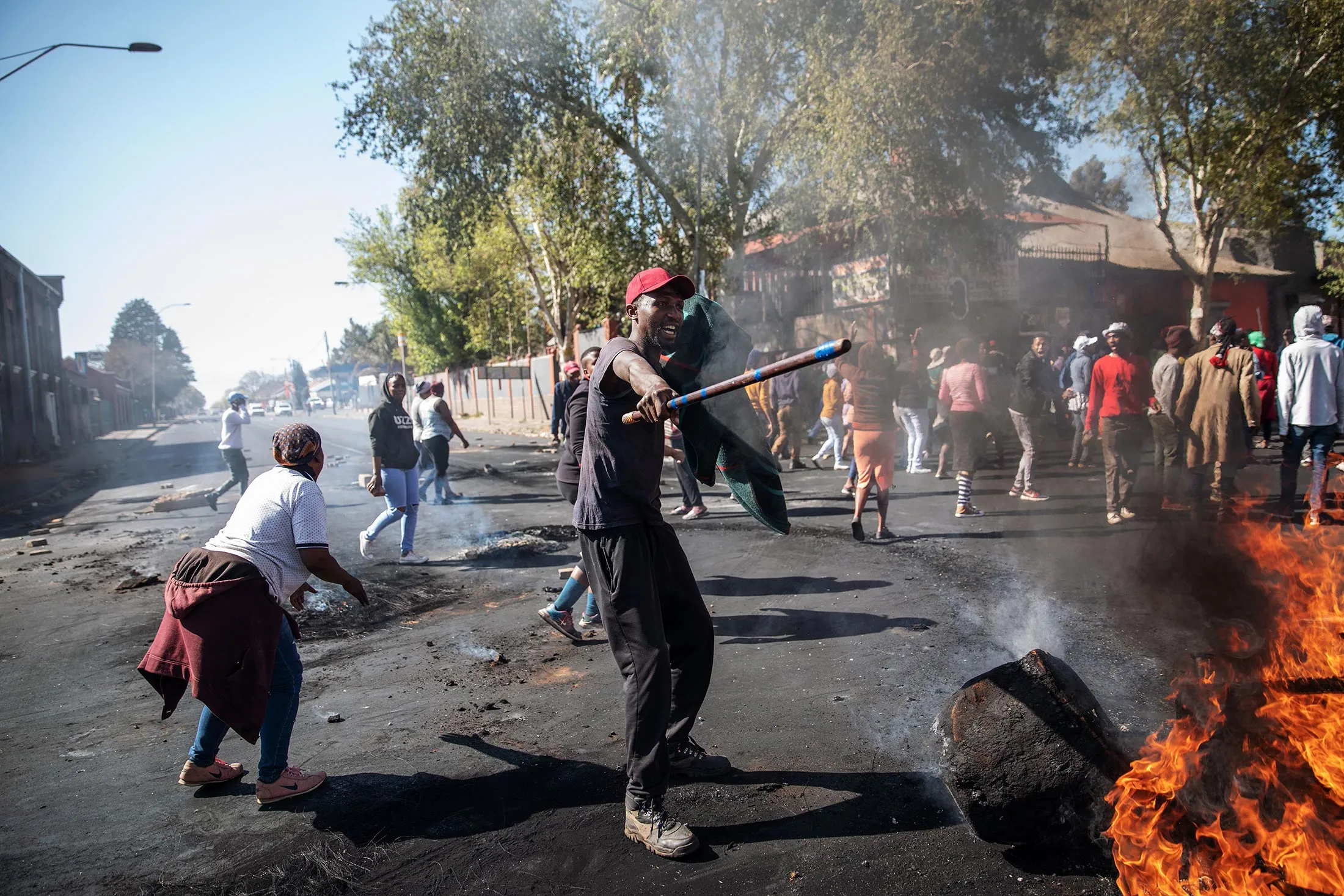
South Africa’s recurring waves of xenophobic violence are no longer just a law-and-order issue, they are a ticking social time bomb. A stark warning is now emerging: if the country continues down this path, it risks turning the violence inward, with devastating consequences.
By Advent Shoko
From the deadly May 2008 attacks that left over 60 people dead, to the 2015 unrest in Durban and Johannesburg, and the more recent incidents in 2026 targeting West Africans in Gauteng and KwaZulu-Natal, the pattern is chillingly consistent. Foreign nationals, especially Zimbabweans, Mozambicans, Nigerians, and Ghanaians, are blamed for “stealing jobs.” But analysts argue this narrative is dangerously misleading.
Social policy expert Kojo Asiamah Addo warns that xenophobia is “a gun pointed inward.” His message is blunt: once the last foreign-owned shop is looted, the violence will not stop, it will simply find new targets.
South Africa’s economic frustrations are real. With unemployment above 32% and youth unemployment exceeding 60%, communities are under pressure. Yet the root causes lie elsewhere. Skills shortages, weak education-to-employment pipelines, and policy failures, not migration, are the real drivers of economic stagnation.
Migrants often fill critical gaps in sectors like healthcare, construction, logistics, and informal retail. Removing them could trigger a labour vacuum, disrupt township economies, and accelerate urban decay. Worse still, it risks shrinking municipal revenues and destabilising already fragile communities.
Zimbabwe’s post-2000 economic collapse offers a sobering lesson. When skilled professionals left en masse, the economy did not “free up” opportunities for locals, it deteriorated across the board.
Migration remains a continental reality under frameworks supported by the African Union. South Africans themselves live and work across Africa. A retaliatory wave of expulsions would have far-reaching consequences.
Leave a Reply