
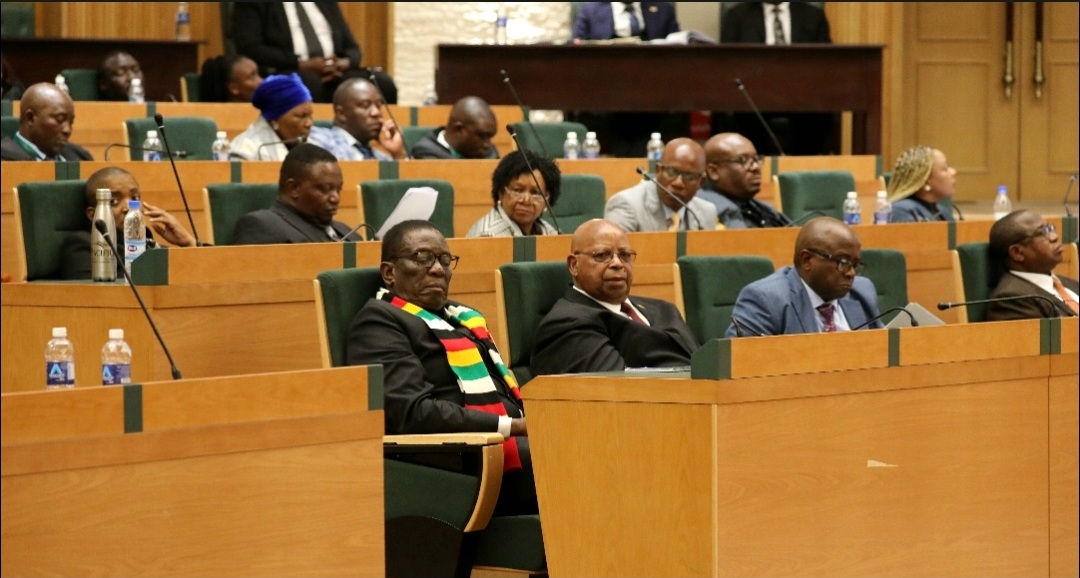
By Advent Shoko
HARARE – Zimbabwe may soon witness a fundamental shift in how it chooses its President, with leaked government documents showing plans to remove direct presidential elections and hand that power to Parliament.
According to a Memorandum to Cabinet on the Constitutional Amendment Bill, 2026, which is set to be tabled before Cabinet today, 10 February 2026, the Mnangagwa administration is proposing to amend the Constitution so that the Head of State is no longer elected by citizens through a national vote. Instead, Members of Parliament would elect the President through an internal parliamentary process.
You May Like This
The document states, verbatim:
“Clause 2 repeals section 92 of the Constitution and substitutes it with a parliamentary process for electing the President. It specifies that a candidate must secure a majority of votes, and if no one achieves an absolute majority, a run-off election will be held. The process is overseen by the Chief Justice or a designated judge to ensure it is conducted properly.”
It further notes that “the procedure for the election shall be in accordance with Standing Rules and Orders of Parliament.”
While the proposal is presented as administratively neat and legally supervised, its practical implications are far-reaching. Removing direct elections means Zimbabweans would no longer vote for their President, leaving that decision to Parliament, where party dominance often determines outcomes long before voting takes place. In a political system where one party has historically controlled the legislature, critics argue this would effectively turn the presidency into a parliamentary appointment rather than a national choice.
The government justifies the move by arguing that it promotes political stability, policy continuity, and efficiency, while aligning Zimbabwe with constitutional practices used elsewhere. Indeed, countries such as South Africa, Germany, and India elect their presidents indirectly through parliamentary or electoral college systems. However, those systems function within environments where legislatures are strongly independent, courts are deeply insulated from politics, and internal party democracy is robust. Analysts note that without these safeguards, indirect elections risk weakening accountability rather than strengthening governance.
Zimbabwe’s own constitutional history gives the proposal added weight. The last major restructuring of presidential power came in 1987, when the executive presidency was introduced, consolidating authority in a single office. This new proposal would mark another historic turn, not by reducing presidential power, but by changing how legitimacy is obtained, shifting it from the electorate to Parliament.
Supporters of direct elections argue that voting for President remains one of the most meaningful democratic acts available to citizens, especially in a system where other institutions are perceived as constrained. Removing that right, they warn, could deepen public disengagement and raise questions about the moral authority of future presidents, particularly in times of political contestation.
Government critic and journalist Jealousy Mbizvo Mawarire castigayed the move. In a strongly worded critique, Mawarire said:
The armed struggle was fought for universal suffrage, what they called ” one man (sic), one vote” but Ziyambi Ziyambi now wants to take away that right and replace it with “16 million people one parliamentary vote”.
We choose MPs to represent us in law making in the legislature, not that they take away our right to choose a president of our choice.
Other Proposed Amendments To The Constitution
- Extension of presidential and parliamentary terms from five to seven years
- Expansion of presidential appointments to the Senate
- Transfer of the voters’ roll from ZEC to the Registrar-General
- Creation of a separate Delimitation Commission
- Removal of public interviews for judicial appointments
- Changes to constitutional wording governing the Defence Forces
- Abolition of the Zimbabwe Gender Commission and merger of its functions into the Human Rights Commission
- Changes to qualification requirements for the Attorney-General
Whether the amendment will pass through Cabinet, Parliament, and the broader constitutional process remains uncertain. What is clear is that the proposal goes to the core of Zimbabwe’s democratic identity, reopening a long-standing debate about who should ultimately decide who governs the country, the people themselves, or their representatives in Parliament.
Leave a Reply