
By Advent Shoko
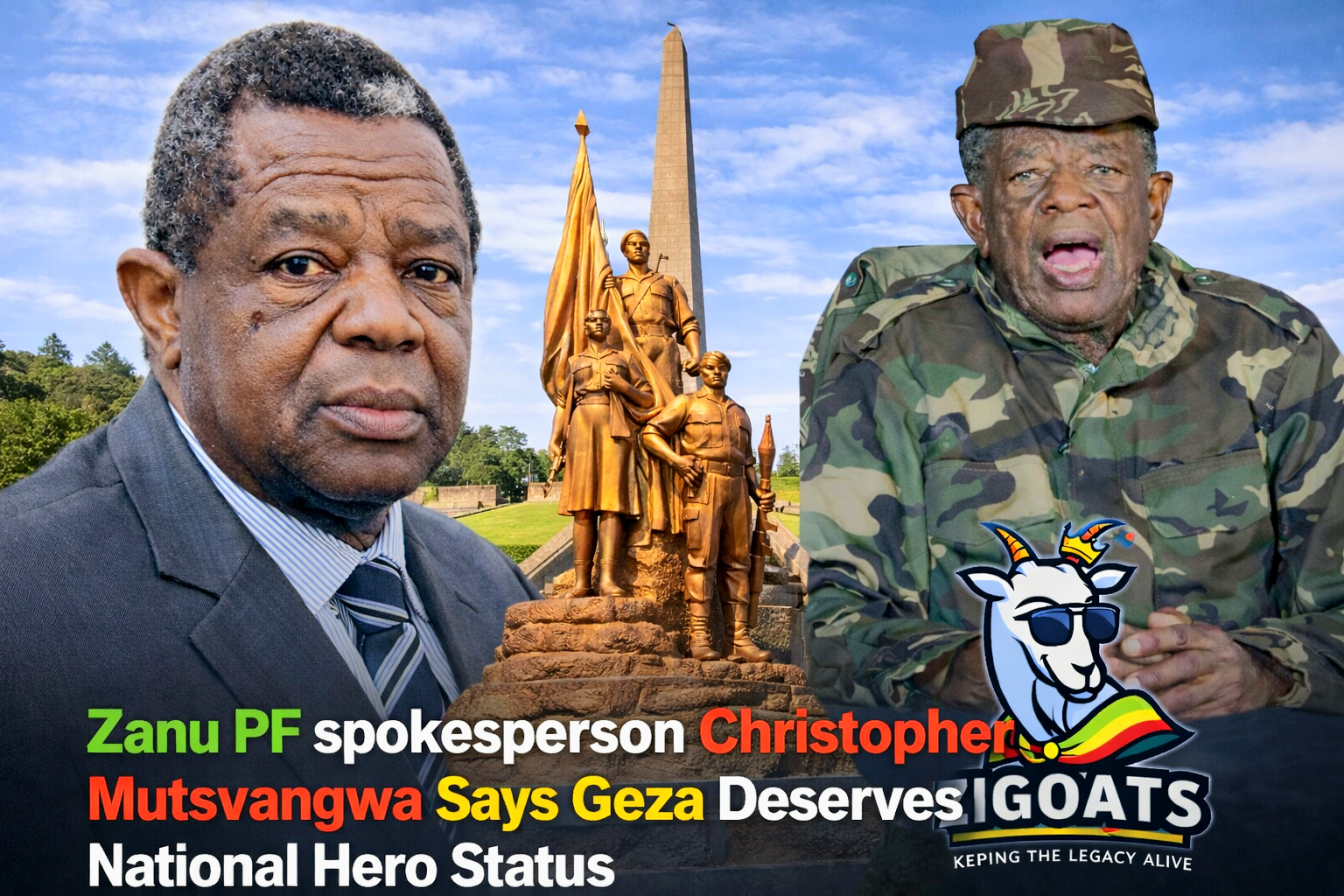
HARARE – ZANU PF spokesperson Christopher Mutsvangwa has publicly declared that war veteran Blessed Geza, also known as Cde Bombshell, deserves a national hero status and burial, despite his dramatic fallout with President Emmerson Mnangagwa and his death in exile in South Africa on 6 February 2026.
Geza, a former Member of Parliament and ZANU PF central committee member, died with treason charges hanging over his head after calling for nationwide protests last year aimed at forcing Mnangagwa out of office. The protests failed to remove the President but triggered serious political tremors, leaving more than a dozen activists, including Madzibaba Veshanduko, behind bars and forcing several others, including Geza, into exile.
You may be interested in this
Mutsvangwa’s comments are significant. They mark the first public reaction by a senior ZANU PF official since Geza’s death and crack open a long-standing, uncomfortable debate in Zimbabwe, who really qualifies to be called a national hero, and who decides?
Speaking to The Daily News, Mutsvangwa struck a conciliatory tone. He said,
“Both the party and war veterans feel that he is a comrade who faltered at the last mile. We blame this on the fact that Geza was no longer well.
He was thus not thinking properly, which made him vulnerable to people who want to steal the history of the people of Zimbabwe. We embrace him back. As ZANU PF and war veterans, we say your history will not change despite what happened recently.”
Mutsvangwa insisted that Geza “deserves a decent burial” and said war veterans would push for his liberation war credentials to be preserved.
“It cannot be taken away from him,” he said, adding that immediate support would be extended to Geza’s widow, Roseline Tawengwa.
He also expressed confidence that Mnangagwa would eventually approve a burial “befitting of a liberation war veteran.”
Yet history suggests the matter is far from straightforward.
Hero status, honour or political weapon?
In Zimbabwe, national hero status has rarely been about merit alone. For decades, it has functioned as a powerful political tool, used to reward loyalty, enforce discipline, and punish dissent.
Under former President Robert Mugabe, the designation of “National Hero” was tightly controlled by the ZANU PF Politburo. Liberation credentials mattered, but political obedience mattered more. Crossing the party leadership often came with a price, erasure from the official national story.
Zimbabwe’s history is littered with liberation icons who died without recognition after falling out with those in power. Among them was Edgar Tekere, a decorated freedom fighter and ZANU founding member, who famously described the National Heroes Acre as a burial ground for “thieves and killers”. Mugabe never forgave him for breaking ranks.
Others denied national hero status include:
Ndabaningi Sithole, founding president of ZANU, later sidelined and humiliated.
James Chikerema, a pioneering nationalist who opposed Mugabe’s ideology.
Gibson Sibanda, former trade unionist and MDC founding figure, Mugabe explicitly refused him hero status.
Welshman Mabhena, a veteran ZAPU nationalist and outspoken critic of corruption.
Thenjiwe Lesabe, a senior ZIPRA commander, downgraded to a provincial burial after leaving ZANU PF.
Patrick Kombayi, a liberation war hero turned opposition politician.
Others such as Michael Mawema, Sheba Tavarwisa, Henry Hamadziripi, and Noel Mukono were also buried outside the national shrine.
Ironically, critics have long pointed out that individuals linked to the Gukurahundi massacres were elevated to hero status, reinforcing claims that the shrine has often honoured loyalty over conscience.
Geza’s last stand
Geza was relatively unknown nationally until January 2025, when he stunned the political establishment by appearing on YouTube to announce that he and a group of war veterans were withdrawing support for Mnangagwa. He accused the President of corruption, misrule, and betraying the ideals of the liberation struggle.
From exile, Geza continued broadcasting, becoming a rallying figure for disgruntled war veterans and frustrated citizens alike. Mutsvangwa, however, claims Geza was manipulated. He alleged that figures linked to Mugabe, which he labelled “remnants of the vanquished Generation 40 (G40) faction,” hijacked Geza’s dissent. Mutsvangwa asked:
“Why go for somebody who fought a liberation war? They wanted to steal him from fellow comrades. It’s theft of history, and ZANU is totally against theft of history.”
An unresolved test for Mnangagwa
Whether President Mnangagwa will approve national hero status for Geza remains uncertain. The two men parted publicly and bitterly, and Geza’s mobilisation efforts came dangerously close to destabilising the state.
But Mutsvangwa’s remarks reopen an old wound inside ZANU PF, can the party honour liberation history without demanding political obedience?
For Zimbabweans watching closely, Geza’s death is no longer just about burial rites. It is a mirror held up to the country’s politics, exposing how history, loyalty, punishment, and power remain tightly entangled, even in death.
Whether Geza is declared a national hero or quietly buried elsewhere will say less about his past, and far more about Zimbabwe’s present.
Leave a Reply