
By Advent Shoko
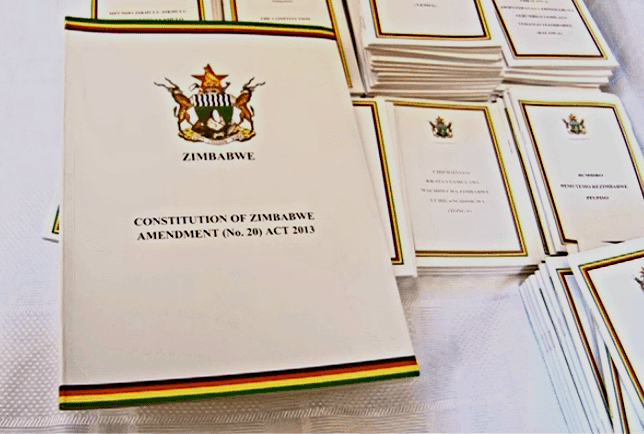
HARARE – Lawyers, activists and citizens across Zimbabwe are pushing back hard against proposed constitutional amendments presented to Cabinet on 10 February 2026. The Constitution of Zimbabwe (Amendment) Bill, 2026, tabled by Justice, Legal and Parliamentary Affairs Minister Ziyambi Ziyambi, reportedly aims to “modernise and streamline the constitutional architecture,” focusing on institutional efficiency, inclusivity and long-term national stability.
But many legal minds and civil society voices see something far more consequential at stake.
Among the most contentious proposals are extending the presidential term from five to seven years, allowing Members of Parliament (MPs) to elect the President, establishing a Delimitation Commission, aligning the Attorney General’s qualifications to those of a Supreme Court judge, and empowering the President to appoint an additional 10 Senators.
You May Like This
Critics say the changes in the proposed Constitutional Amendment Bill 2026 touch the very heart of democracy in Zimbabwe.
Prominent lawyer and opposition figure Fadzayi Mahere issued a blunt warning about the potential impact:
“If there’s ever been time all citizens who love Zimbabwe should unite, it’s now. Those planned Constitutional amendments are the biggest threat to the core and fabric of our society in this lifetime. We need new leaders.”
Mahere’s statement reflects deep fear among critics that the changes could entrench existing power structures rather than open democratic space.
Amplifying that concern, legal commentator Namatai Kwekweza framed the debate as about more than legal text, it’s about dignity and democratic voice:
“You can amend a constitution. You can manipulate a parliament. You can co-opt the youth. You can silence students. You can fracture solidarity. But you cannot amend the fundamental human desire for dignity, voice, and a future not dictated by the past. That desire is the true 2030 agenda.”
Kwekweza also stressed the importance of credible elections, insisting Zimbabweans should have their voices heard in 2028 under transparent conditions:
“Don’t take away our right to vote! Zimbabweans insist on credible elections in 2028 with reforms that ensure transparency… We are not defending a document. We are defending our future, our rights, and our dignity.”
For Lovemore Madhuku, the proposal signals a fundamental disrespect for the people’s will:
“The proposed constitutional amendments for [2030] are totally unacceptable! The movers of these proposals have no respect for the people. The NCA party and I will be counted among those who will be at the forefront of mobilising for the total rejection of these proposals.”
Madhuku’s words underscore the political mobilisation that legal voices are already planning in response.
Meanwhile, Agency Gumbo issued a call to a broad alliance of civic forces to defend the constitution:
“Sleeves are rolled up. We have no time for sideshows or endless debates which address all but the consequential issues of the day. We call on all political parties, unions, labour, vendors, professionals, academics, churches, the youth etc to join in the fight in defense of the motherland. For to defend the constitution is to defend the country.”
His remarks highlight an attempt to build a mass front against the amendments, beyond party lines.
Voices from the diaspora also weighed in. UK-based Brighton Mutebuka warned that the leaked proposals signal attempts to sidestep direct elections and solidify long-term executive control. Commenting on the provisions, Mutebuka said:
“a) It’s confirmation that ED is seeking a life presidency.
b) He never wants to directly face the electorate again… Choosing instead to rely on proxies.”
Mutebuka argued that returning control of voter registration to the Registrar-General’s office and increasing traditional leadership roles could create conditions ripe for manipulation:
“The return of control of the voter registration process to the RG’s Office simply maximises opportunities for rigging… The same applies to the increased role & power of Traditional Leaders in constitutional matters.”
He even suggested that the plan might pave the way for a future succession engineered by the current power centre, warning that “the enormous ‘War Chest’ that ED wields from the proceeds of ‘Zvigandanomics’ stands him in good stead.”
Closing the chorus of concern, Gift Ostallos Siziba emphasised the urgency of collective vigilance:
“Zimbabweans must now convene. It is clear that the current push by ZANU-PF to amputate the Constitution demands collective vigilance and a firm defence of our democratic gains. Silence is not an option when the supreme law of the land is at stake!”
Siziba’s remarks reflect widespread anxiety that constitutional change without broad public consent could weaken democratic safeguards and concentrate power in a narrow political elite.
As the Bill progresses through Cabinet and Parliament, legal experts say its finer details, including whether a public referendum will be required, will determine whether Zimbabweans continue to shape their democratic future or see that power increasingly transferred from the ballot box to party insiders.
Leave a Reply