
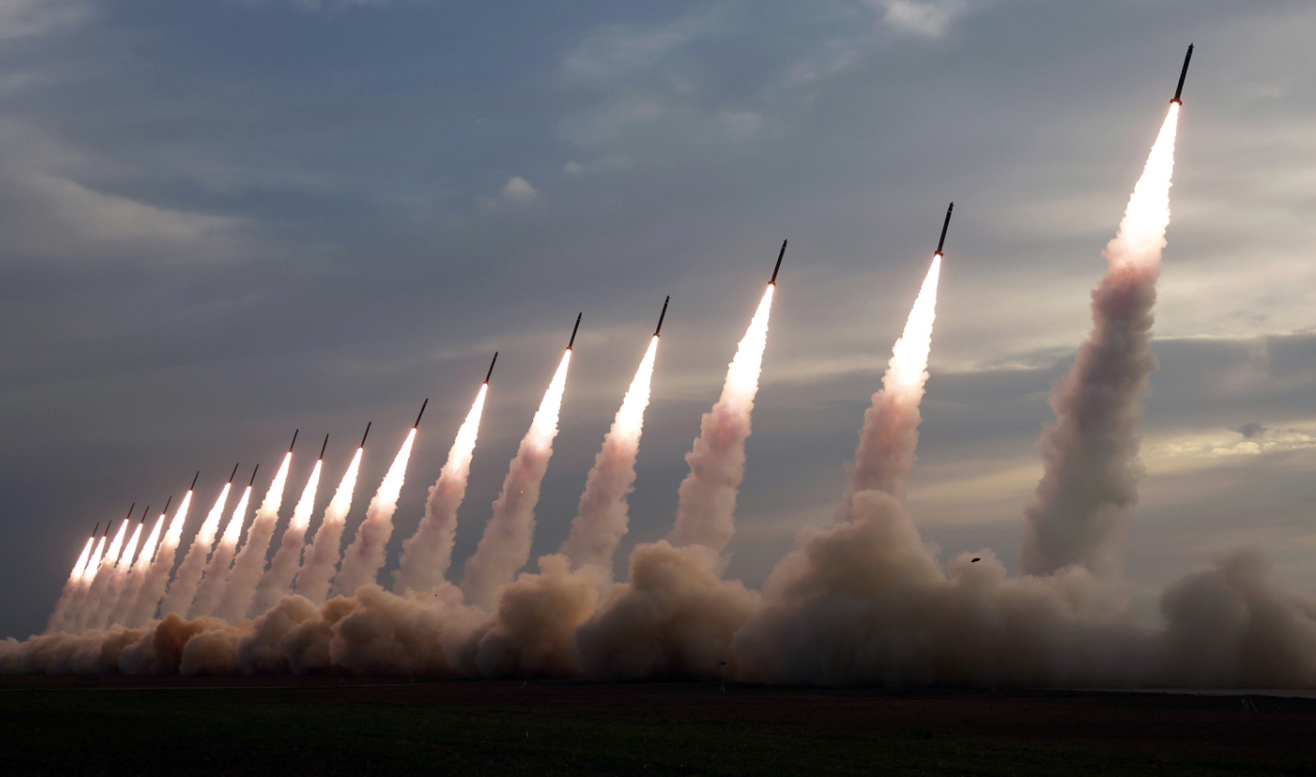
Iran says it will stop targeting neighbouring countries unless missiles or attacks against it are launched from their territory, a move seen as an attempt to prevent the rapidly expanding Middle East war from spiralling further across the region.
President Masoud Pezeshkian announced that Iran’s interim leadership council had approved a new policy aimed at easing tensions with countries around it as the war with the United States and Israel enters its second week. According to remarks carried by Iranian media, Pezeshkian said:
“Neighbouring countries will no longer be attacked unless an attack on Iran originates from them.”
The Iranian leader also apologised to nearby states that were hit by Iranian missiles and drones during the opening days of the conflict.
War Intensifies Across the Region
The announcement comes as the conflict involving Iran, Israel and the United States continues to escalate dramatically.
Overnight air raids rocked several Iranian cities, including the capital Tehran, as Israeli fighter jets carried out large-scale attacks on what they described as military targets linked to Iran’s Islamic Revolutionary Guard Corps (IRGC) and missile infrastructure.
Israeli military officials say dozens of aircraft dropped hundreds of munitions on sites believed to be linked to Iran’s ballistic missile programme and military command facilities.
The strikes are part of a broader campaign launched after Washington and Tel Aviv attacked Iran in late February 2026 with massive coordinated air and missile strikes to degrade Tehran’s military, nuclear and missile infrastructure and blunt what they see as a growing threat to their security.
They claim the campaign aims to prevent Iran from developing nuclear weapons, destroy its long‑range missile capabilities, and pressure the Iranian regime, including tacit support by US officials for leadership change in Tehran’s clerical hierarchy. The strikes began with joint attacks that targeted senior leadership and key military sites across Iranian cities and have since escalated into broader regional hostilities, triggering retaliation by Iran and its allies across the Middle East. Some Iranian schools have also been targeted and hit.
Iran, however, has rejected those accusations and insists it is defending itself against what it calls a coordinated US-Israeli military assault.
President Pezeshkian struck a defiant tone in recent remarks, insisting Iran would not back down despite pressure from Washington.
Tehran, he said, would “never surrender” even as US President Donald Trump reportedly demanded “unconditional surrender.”
Regional Tensions Rising
During the early days of the conflict, Iranian missiles and drones targeted several locations across the Gulf region, triggering air defence responses from countries including Saudi Arabia and others hosting US military facilities.
Those incidents raised fears that the war could quickly widen beyond Israel and Iran.
By announcing the new policy, Iran appears to be signalling that it does not intend to open new fronts with neighbouring states unless those countries directly launch attacks against Iranian territory. Pezeshkian reoterated:
“Neighbouring countries will no longer be attacked unless an attack on Iran originates from them.”
The statement is widely interpreted by analysts as an attempt by Tehran to calm regional nerves while keeping its military focus on the United States and Israel.
Civilians Caught In The Middle
Meanwhile, civilians across the region continue to bear the brunt of the escalating conflict.
Explosions have been reported across Tehran and other Iranian cities, while Israeli air raids have also intensified in Lebanon where clashes with Hezbollah are unfolding simultaneously.
Authorities say hundreds of homes and civilian structures have been damaged in recent strikes.
The widening conflict has also disrupted international travel and trade routes, with several airlines suspending flights to parts of the Gulf region as airspace security concerns grow.
Diplomatic Pressure Mounting
With the conflict showing little sign of slowing down, international calls for restraint are growing louder.
Regional organisations and global powers have urged all sides to avoid further escalation that could ignite a broader Middle East war. Pezeshkian said:
“Neighbouring countries will no longer be attacked unless an attack on Iran originates from them.”
For now, Iran’s message appears aimed at reassuring its neighbours while warning that any territory used to launch attacks against it will still be treated as a legitimate target.
Leave a Reply