
By Advent Shoko
Harare – The Zimbabwe Energy Regulatory Authority (ZERA) announced on 6 February 2026 the revised prices for fuel (petrol blend and diesel), liquified petroleum gas (LPG), and electricity, effective from 6 February to 4 March 2026. The price update applies nationwide and provides consumers and businesses with clarity on energy costs for the coming month.
ZERA said the pricing decision was informed by both local supply conditions and global energy market movements, including international crude oil prices, exchange rate dynamics, refinery margins, and regional energy trends. The authority noted that maintaining a balance between affordability and reliable energy supply remains a priority.
Current Energy Prices (6 Feb – 4 Mar 2026)
Fuel Prices
Petrol Blend (E20): $1.57 USD per litre | $40.58 ZWG per litre
Diesel (D50): $1.52 USD per litre | $39.27 ZWG per litre
LPG (Cooking Gas)
Liquified Petroleum Gas: $1.55 USD per kg | $39.98 ZWG per kg
Electricity
Electricity (50 Units/kWh): $4.26 USD per 50 units | $109.04 ZWG per 50 units
What the New fuel, Gas and electricity Prices Mean
Fuel: At $1.57 per litre for petrol blend and $1.52 per litre for diesel, Zimbabwe’s fuel costs remain significant for households and commercial users alike. Diesel is widely used for agriculture, freight transport, mining, and power generation (generators), making its pricing especially impactful on broader economic activity.
LPG: Liquified petroleum gas, a primary cooking fuel for many urban households, is now pegged at $1.55 per kg. This figure directly affects household food preparation costs and small-scale food vendors who rely on LPG rather than electricity or biomass fuels.
Electricity: The cost of $4.26 per 50 units places electricity expenses at the forefront of business and residential budgeting. Zimbabwe continues to grapple with generation and distribution challenges that influence both pricing and supply reliability.
Broader Context & Comparisons of Fuel, Gas & Electricity Prices
ZERA’s pricing aligns broadly with regional energy market movements. In neighbouring countries such as South Africa, Zambia, Mozambique, Botswana, and Malawi, fuel and electricity prices have also holding at elevated levels due to global fuel prices and currency trends. Zimbabwe, which imports a significant portion of its refined fuel and relies partly on regional power imports, remains sensitive to external market pressures.
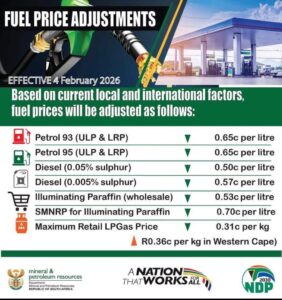
Energy analysts note that even modest shifts in global crude oil prices or FX rates can create significant local price adjustments because Zimbabwe’s energy sector is tightly linked to international supply chains.
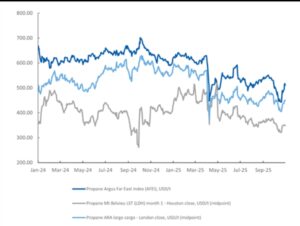
Global fuel prices are easing for now, with crude oil and petrol trending lower. Oversupply and steady production are pushing costs down, though politics and conflicts, like tensions around Iran, could still cause brief price spikes. Overall, consumers can expect cheaper fuel in the coming months.
Guidance for Consumers and Businesses
ZERA reminded the public that these prices are valid through 4 March 2026, and advised that careful planning is essential as energy remains a key driver of both household budgets and business costs. Key guidance includes:
- Plan fuel use, particularly for transport and logistics-dependent operations.
- Monitor household energy use, especially where LPG and electricity are primary sources.
Stay informed on any communication from ZERA regarding potential mid-cycle adjustments.
Leave a Reply