
By Advent Shoko
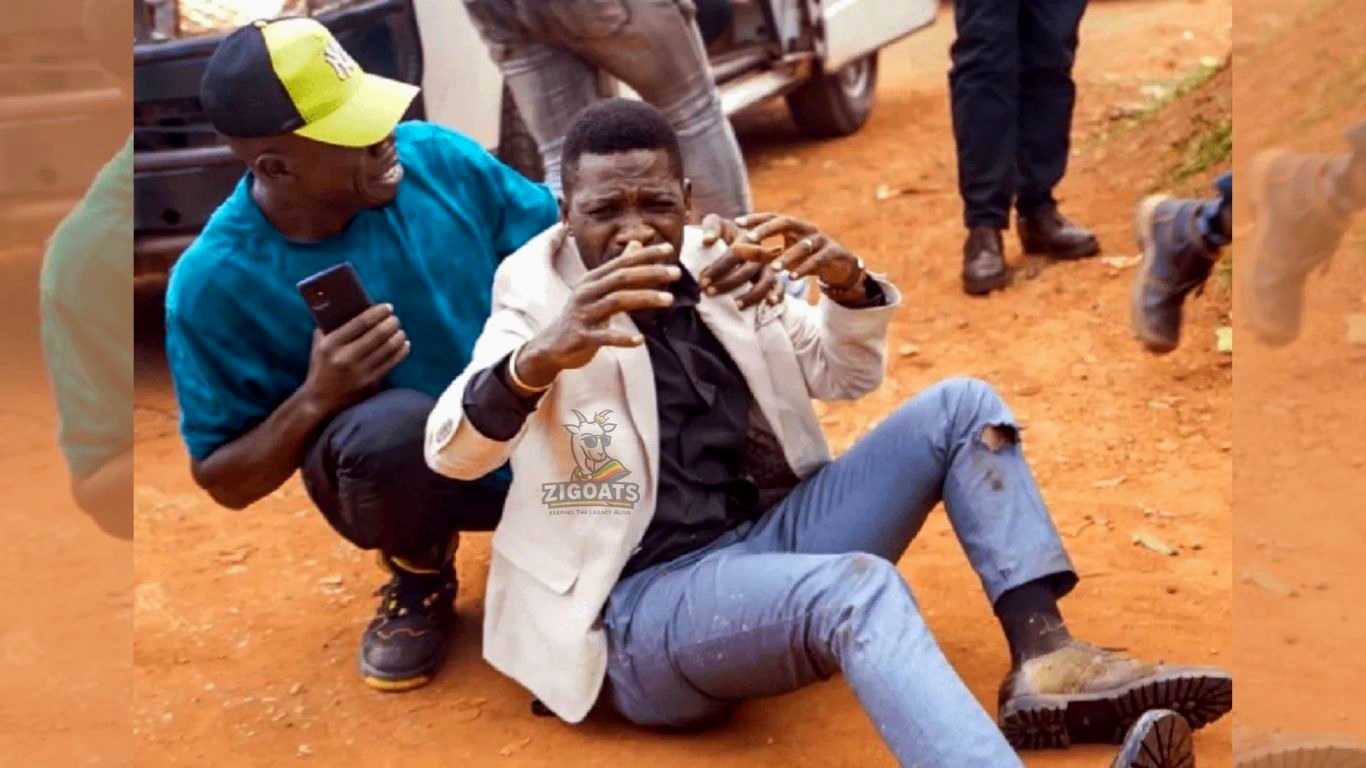
KAMPALA, Uganda – Chaos, controversy, and the same old script. Ugandan opposition heavyweight Bobi Wine, singer-turned-politician and front-runner challenger to President Yoweri Museveni, was arrested and placed under house arrest Friday, just a day after millions of Ugandans went to the polls in what was billed as a crucial presidential election. He was eventually “forcibly” removed from his home and taken to an “unknown destination” in an army helicopter.
Early results released by the Electoral Commission showed Museveni, now 81 and seeking his seventh term in power since 1986, rocketing ahead with about 76.25 % of the vote, while Wine trailed far behind on 19.85 %, with votes still being counted.
But this election, far from being a peaceful democratic moment, has unfolded amid violence, internet blackouts, ballot delays, and deep distrust in the process.
Another Arrest, Another Predictable Playbook
Just like in previous elections, Bobi Wine’s campaign has been disrupted by security force interference.
His National Unity Platform (NUP) party announced that military and police surrounded his home in Kampala, effectively cutting him off and preventing movement in or out of his compound. Local journalists reported heavy security outside his residence, though outward calm prevailed. Wine’s supporters took to social media, accusing the government of yet another arbitrary arrest and intimidation tactic.
This pattern is not new: Wine has frequently been detained, harassed, and restricted during past election cycles, moves critics say are designed to weaken his campaign and discourage his followers.
Amid Tallies, Tension and Technical Troubles
Thursday’s election was anything but smooth:
- Many polling stations opened hours late due to logistical delays.
- Biometric voter-verification machines malfunctioned, forcing some areas back to manual voting.
- The government shut down public internet access nationwide, a move watchdogs say stifled transparency.
Wine described the process as being conducted “in the dark,” claiming it created fertile ground for manipulation.
Violence and Deaths Cloud the Election Mood
The election has not been peaceful.
At least seven people were killed overnight in clashes in the town of Butambala, where party supporters and security forces clashed following the vote.
Security forces claim they acted in self-defense after machete-armed opponents attacked a police station, while opposition lawmakers said the deaths resulted from security brutality, accounts that remain unverified.
Wine Rejects Results, Calls Them “Fake”
Even before full results were out, Bobi Wine denounced the provisional figures as “fake results,” accusing the Electoral Commission of failing to explain where its tallies came from and of sidelining his agents at tallying centres. He posted on social media:
“Ignore the fake results … the people of Uganda will have the final say on this nonsense.”
A Broader Question: Why Do Opposition Leaders Continue to Run?
Some observers, both inside and outside Africa, are openly questioning why opposition leaders like Wine, or others such as Zimbabwe’s Nelson Chamisa, continue to participate in elections widely seen as tilted in favour of incumbent. Critics argue that contests with little chance of success only legitimise flawed processes, effectively giving the appearance of choice while outcomes are all but decided. One commentator bluntly captured this sentiment on social platforms:
“At this point I’m starting to suspect some opposition parties like Bobi Wine and Nelson Chamisa are paid or controlled by these dictators. Surely how do you go into an election with no chance of a win with blatant rigging? The only thing you’re doing is legitimizing the fraud.”
Why Nelson Chamisa Was Mentioned
Nelson Chamisa’s name appears in the quote not randomly, but because his political trajectory mirrors Bobi Wine’s in several key ways, making him a reference point in wider African opposition debates.
Chamisa, Zimbabwe’s long-time opposition leader and former head of the MDC Alliance, contested multiple elections against the ruling ZANU-PF establishment under President Emmerson Mnangagwa, amid persistent allegations of state capture of electoral institutions, voter intimidation, and result manipulation.
Whether this reflection mirrors a growing public mood remains to be seen, but it highlights a deepening frustration with electoral politics in parts of Africa where incumbents wield vast state power with little effective checks.
What Happens Next?
Final results are due soon, officially within 48 hours of polling. Wine has signaled legal challenges and protests, though the climate is heavily militarised. Regional and international actors will be watching closely, as Uganda’s election could set the tone for democratic norms across East Africa. For now, Uganda stands at a tense crossroads, a nation yearning for change but struggling under the weight of entrenched power and political strife.
Leave a Reply