
By Advent Shoko
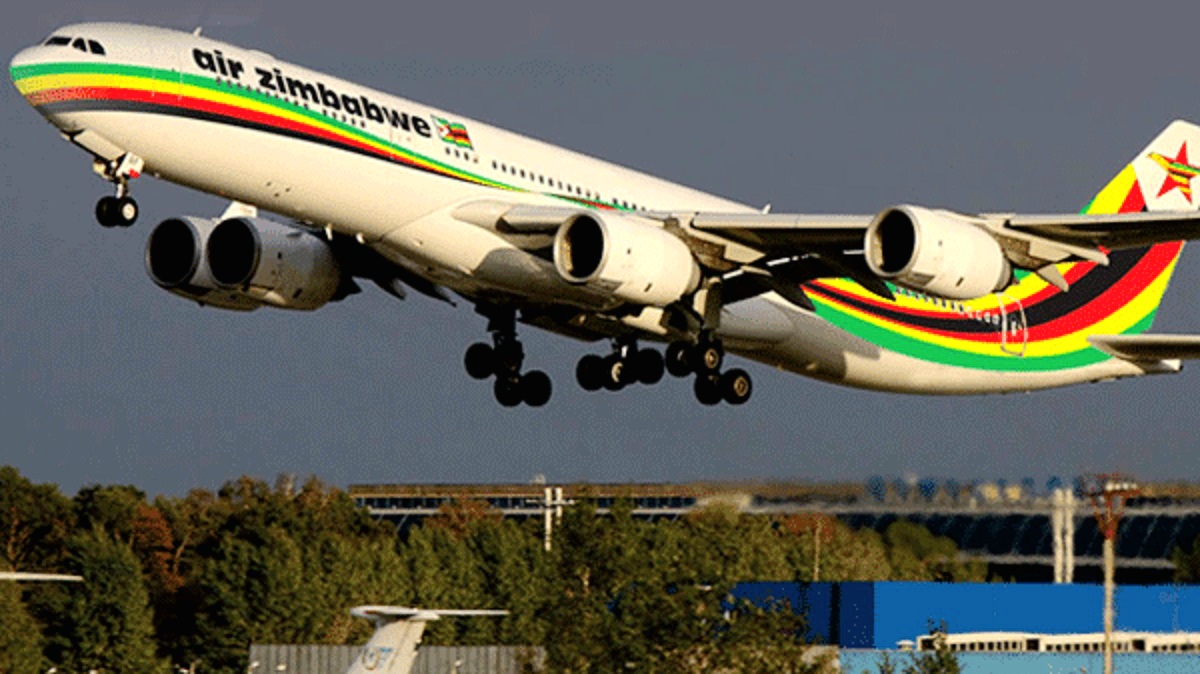
HARARE – Air Zimbabwe is preparing to resume its long-awaited Harare-London flights by June 2026, but legal experts warn that international creditors and historic debt claims could ground the national carrier before it ever leaves the runway. The Mutapa Investment Fund (MIF), which took control of several state-owned enterprises in 2024, is spearheading a US$775 million fleet renewal strategy designed to bring the airline back onto long-haul routes and restore direct access to key markets.
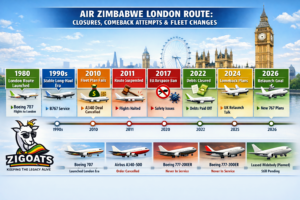
MIF Chief Executive Officer Dr. John Mangudya recently told a public lecture in Harare that the London route, dormant since December 2011, is expected to restart mid-year. He stressed the route’s economic importance, highlighting faster horticultural exports into the United Kingdom and increased diaspora travel. The turnaround plan includes selling two unused Boeing 777 aircraft and leasing a suitable wide-body jet to operate the service, while proceeds from asset sales will support the acquisition of smaller aircraft for domestic and regional routes.
Despite the ambition, Air Zimbabwe’s operational base remains thin. The airline currently relies mainly on two Embraer ERJ-145 regional jets, while some Boeing 737s and 767s remain grounded. Earlier attempts to revive the London route in 2016, 2017 and subsequent years failed amid safety restrictions in European airspace, financial instability and management challenges. Industry observers say the airline must first demonstrate consistent regional performance before sustaining a demanding intercontinental service.
It is within this fragile recovery context that legal concerns are emerging. Prominent lawyer Advocate Fadzayi Mahere warned that unresolved international judgments could expose state-linked assets to enforcement action abroad.
“I hope they take legal advice before running with this. The last thing they’d want would be for those planes to be attached in London to execute against judgments registered in English courts against the State. Pay your international creditors please.”
Mahere’s caution refers to longstanding international compensation and commercial claims involving the Zimbabwean state. Some of these disputes have resulted in judgments being registered in foreign jurisdictions. Legal analysts note that, depending on ownership structures and financing arrangements, aircraft operated by a state-owned airline could become targets for attachment by creditors seeking to enforce court rulings.
Air Zimbabwe’s financial structure is itself undergoing major restructuring. The Mutapa Investment Fund has assumed legacy liabilities estimated between US$300 million and US$380 million in a bid to clean up the airline’s balance sheet and make it more attractive to investors and partners. In July 2025, the carrier cleared about US$1 million owed to international service providers, allowing it to reconnect with global ticketing and settlement systems. However, a US$38 million legal dispute over the ownership of two Airbus A320 aircraft remains unresolved, underscoring the complexity of the airline’s debt history.
With MIF oversight and renewed government backing, Air Zimbabwe’s leadership insists the London return is achievable. Yet aviation analysts say the relaunch represents more than the restoration of a single route. It is a high-stakes test of Zimbabwe’s ability to manage international debt obligations, legal exposure and operational readiness at the same time.
If successful, direct Harare-London flights could unlock valuable export capacity and strengthen links with the diaspora market. If missteps occur, however, the consequences could extend beyond aviation, affecting investor confidence in the broader restructuring of state enterprises.
Leave a Reply