
By Advent Shoko
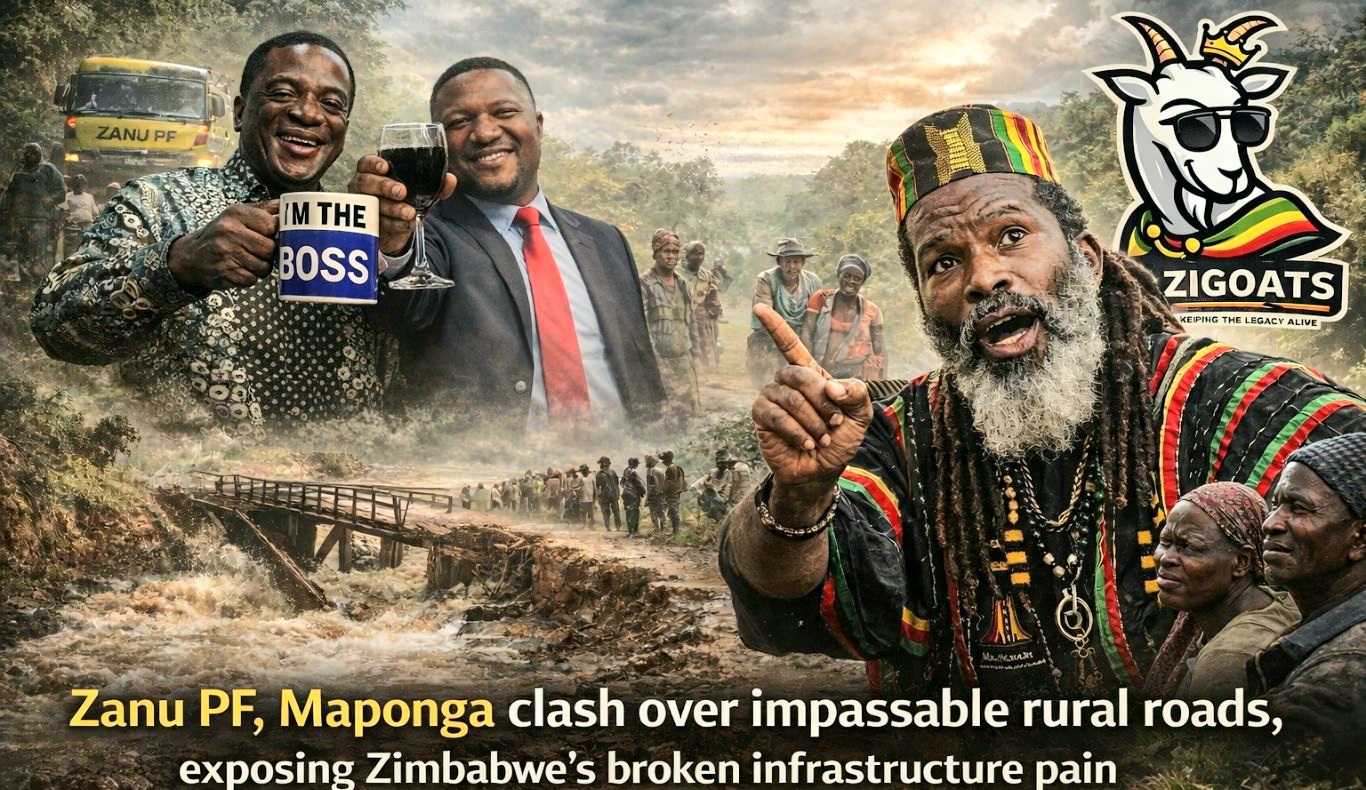
When villagers fail to cross a flooded river on Christmas Day, they don’t think about the Constitution. They think about survival. They think about the clinic on the other side. The market. School. Family. So when former SDA Bishop Joshua Maponga blasted Bikita South MP Dr Energy Mutodi over impassable crossings and collapsing roads, he was speaking a language every rural Zimbabwean understands: frustration.
ZANU PF’s response was swift and scathing, but also revealing.
“MPs are lawmakers, not road developers.”
That line is legally correct. Members of Parliament craft laws, represent citizens, and hold ministries to account. They do not control road construction budgets. They do not hire contractors. They do not run bridge projects. Road rehabilitation sits with rural district councils, ZINARA, and the Ministry of Transport, under the broader direction of central government.
- Seke Road Rehabilitation: Harare-Chitungwiza Corridor Gets New Deal
- Zinara Gives Update On Bulawayo-Victoria Falls Road Rehabilitation: What Motorists Need To Know
But here’s where politics collides with lived reality.
During elections, candidates do not campaign saying, “I will advocate for policy alignment and inter-ministerial coordination.” They say, “Tichagadzirisa mugwagwa. We will fix the road.” Communities vote based on those promises. Expectations are not born from ignorance, they are born from campaign platforms. When delivery time comes, technical explanations about “mandates” sound like excuses.
That is the emotional fault line exposed in Masvingo.
Zimbabwe’s road crisis makes the tension worse. The country has about 100,000 kilometres of roads, most of them rural. The majority are gravel or earth, easily washed away by rains. Only a small fraction of the network has seen meaningful rehabilitation in recent years. For villagers, this is not a statistic. It is a child missing school. A pregnant woman failing to reach a clinic. Crops rotting because trucks cannot pass.
So where does responsibility really sit?
Local authorities are supposed to maintain feeder roads. ZINARA disburses funds collected from fuel levies and tollgates. The Ministry of Transport handles major highways and bridges. The President sets national infrastructure priorities under Vision 2030 and the National Development Strategies. MPs, including Energy Mutodi, must sit in Parliament approving budgets and QUESTIONING MINISTERS on why roads remain death traps.
In theory, it is a neat chain of accountability.
In practice, it is a maze.
Councils say they have no money. Ministries say allocations are too small. Contractors win tenders and sometimes abandon sites. Emergency patchworks appear when VIP visits are scheduled, reinforcing the public belief that roads only matter when power is passing through. Meanwhile, the Constituency Development Fund given to MPs is too small for major road works, yet large enough to make communities believe their MP “has money for development.”
This gap between political promise and institutional reality is where public anger grows.
Maponga’s attack and ZANU PF’s defence are not just a local spat. They are a mirror reflecting a national governance dilemma: citizens experience government as one entity, but government operates in silos. When a bridge collapses, people do not blame “jurisdictional overlap.” They blame leadership.
And that is the uncomfortable truth, while MPs may not be road engineers, they are political figures with influence, access, and voices loud enough to pressure ministries, escalate local crises, and fight for their constituencies inside national power corridors. Voters measure effort, not just job descriptions.
At the end of the day, constitutional arguments do not help a bus cross a flooded river.
Zimbabweans are not asking for a lesson in separation of powers. They are asking for roads that work, bridges that hold, and leaders, at every level, who stop explaining responsibility and start delivering results.
Leave a Reply