
By Advent Shoko
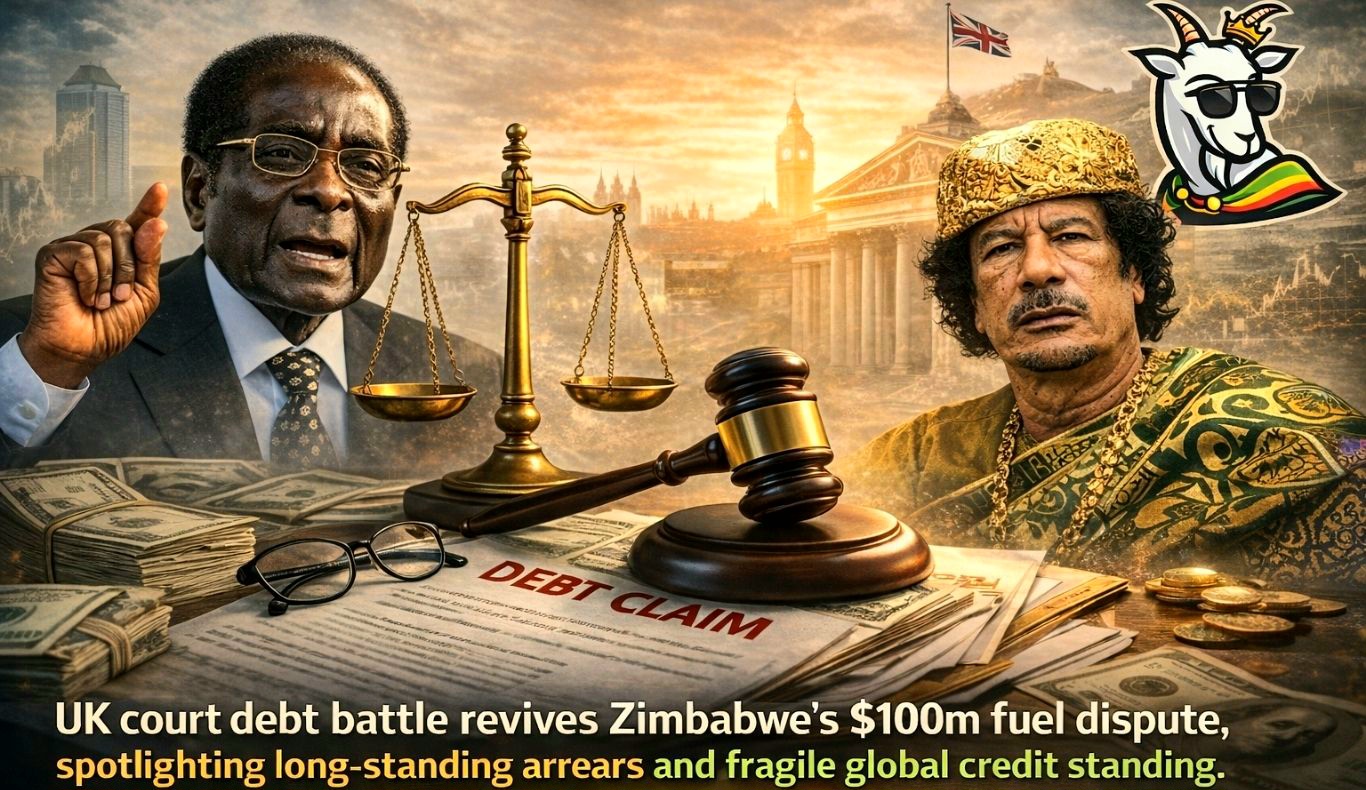
HARARE – Zimbabwe has been hit with a stark reminder of its long-running debt struggles after a UK High Court ruled that the country must defend a claim by Libya’s central bank seeking repayment of more than US$100 million, tied to fuel financing from more than two decades ago. The case, filed in November 2025, adds a fresh legal headache to an already complex web of sovereign and commercial debt disputes that have hobbled Zimbabwe’s economic and financial credibility.
The lawsuit was brought by Libyan Foreign Bank (LFB), a unit of the Central Bank of Libya, in the Commercial Division of the UK High Court. LFB alleges that Zimbabwe’s national oil company, the National Oil Infrastructure Company of Zimbabwe (NOICZIM), entered into a US$90 million credit facility agreement in 2001 to finance fuel imports from Dutch firm Oilinvest BV. Zimbabwe drew down nearly half of that sum over the next two years, but has since repaid only US$5.5 million in four instalments between 2013 and 2023. With interest and penalties added, the outstanding balance now tops US$100 million, LFB claims.
UK Justice Richard Jacobs has given Zimbabwe until the end of January 2026 to file a formal statement of defence. The government, led by Finance Minister Mthuli Ncube, initially raised jurisdictional objections but ultimately accepted the case can proceed in the British court, a move that signals limited room for contesting venue issues rather than the underlying debt.
A Long History Of Unresolved Debt
The Libya lawsuit highlights a deeper structural problem: Zimbabwe has been largely shut out of international capital markets for decades due to persistent arrears and defaulted payments. The country’s external debt stock has ballooned to at least US$23.4 billion, with arrears owed to multilateral lenders like the World Bank, African Development Bank, and other private creditors spanning more than 25 years.
This exclusion isn’t merely technical. Arrears to key lenders like the World Bank have meant Zimbabwe cannot access fresh financing from major development institutions. Estimates show Zimbabwe owes around US$1.5 billion to the World Bank alone, with roughly US$1.3 billion in arrears that have blocked new lending and portend structural economic stagnation.
The Libyan case is only one of several outstanding commercial claims. In recent years, Zimbabwe has been in talks with commodity trader Trafigura Group over unpaid fuel import bills, suggesting repayment through deliveries of gold and nickel valued at US$226 million, reflecting the nation’s strained foreign currency position and creative but complex debt resolutions.
Why It Matters – Geopolitics And Finance Collide
While US$100 million may seem modest against Zimbabwe’s $21 billion debt mountain, the implications stretch far beyond the figure. A UK court ruling against the government-backed Libya oil credit facility sets legal precedent, signalling to international lenders that sovereign guarantees can be enforced abroad.
The case also sends a message about Zimbabwe’s creditworthiness. How the government chooses to contest or settle this claim will influence future negotiations with private creditors and impact investor confidence, potentially shaping access to finance for years to come.
Finally, the foreign currency squeeze remains pressing. With limited concessional loans and fragile export revenues, even modest debt obligations strain Zimbabwe’s ability to stabilise the economy and fund vital development projects, keeping fiscal decisions tightly constrained.
Leave a Reply