
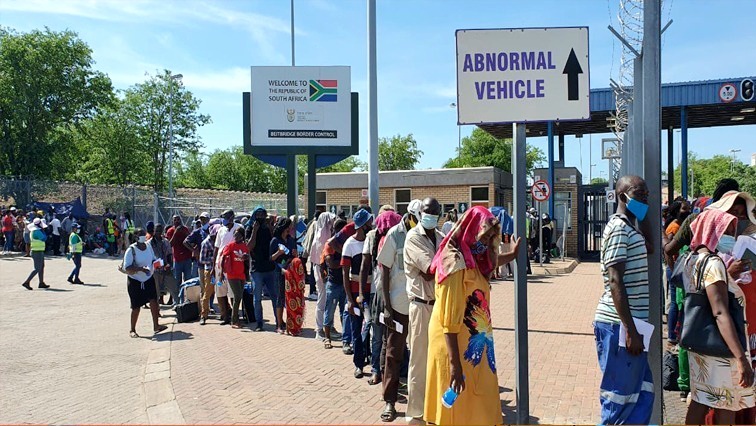
Beitbridge Border Post, southern Africa’s busiest land crossing, is once again under intense pressure as an estimated 25 000 people cross into South Africa daily, marking the peak of post-festive regional migration and travel flows.
For travellers, policymakers and regional planners, the scenes unfolding at Beitbridge are neither new nor unexpected, but their scale remains striking. The border has become a barometer of southern Africa’s migration realities, economic dependencies, and policy gaps.
A REGIONAL GATEWAY, NOT JUST A ZIMBABWE–SOUTH AFRICA BORDER
While Beitbridge physically links Zimbabwe and South Africa, functionally it serves the entire southern and eastern African migration corridor. Travellers from as far north as Cameroon, the Democratic Republic of Congo, Kenya, Tanzania and Malawi funnel through Zimbabwe en route to South Africa, the region’s largest economic hub.
Zimbabwe’s geographic position makes it the unavoidable transit state for cross-border labour migration into the south. During peak periods, particularly November to January, the corridor becomes saturated as migrant workers return home for Christmas, New Year celebrations, family obligations, and documentation renewals and back.
POST-FESTIVE RETURN DRIVES THE CURRENT SPIKE
The current surge is driven largely by return migration. South Africa’s economic shutdown over the festive season reduces job opportunities, making it impractical for many migrants to remain idle. The holiday period is instead used to:
- Reconnect with families
- Renew passports, visas and identity documents
- Attend funerals, weddings and religious gatherings
Once January arrives, the flow reverses, and Beitbridge becomes the choke point.
Crucially, the sustained influx into South Africa is driven less by seasonal travel alone and more by deepening economic hardships, political instability, and governance challenges across parts of the continent. The figure of 25 000 daily crossings reflects only travellers using designated and official ports of entry, primarily Beitbridge. A significant, though unquantified, number of migrants continue to use porous and informal crossing points along the Limpopo River, often compelled by documentation barriers, cost constraints, or desperation. For policymakers, this dual reality underscores that border management is inseparable from broader regional economic reform, political stability, and legal migration pathways.
BMA CONFIRMS RECORD DAILY PROCESSING
South Africa’s Border Management Authority (BMA) has confirmed sustained high volumes at Beitbridge.
Speaking on site, BMA Commissioner Dr Michael Masiapato said authorities were processing numbers consistent with peak-season averages.
“We have already processed over 30 buses since this morning. Others are still on the way. By midday, around 15,000 people had already been processed, and we expect the daily total to reach about 25,000,” Masiapato said.
On the preceding weekend alone, officials processed nearly 100 buses and more than 22,000 travellers in a single day, the highest daily figure recorded so far in the post-festive period.
INFRASTRUCTURE IMPROVED, PRESSURE REMAINS
Zimbabwe’s recent rehabilitation and modernisation of the Beitbridge Border Post has significantly improved processing capacity, reducing historic bottlenecks that once stretched queues for kilometres. However, even expanded infrastructure struggles under seasonal surges of this magnitude.
For policymakers, the lesson is clear: infrastructure upgrades alone cannot solve migration congestion without coordinated regional travel planning, staggered return policies, and harmonised border management systems.
WHAT TRAVELLERS NEED TO KNOW
Authorities have reiterated warnings to travellers about prohibited items, which continue to slow processing times. Confiscated goods include:
- Fresh agricultural produce (mangoes, watermelons)
- Unauthorised medicines
- Skin-lightening products and restricted cosmetics
Such items are seized and destroyed, often after long waits, an avoidable frustration for travellers already fatigued by queues.
Travellers are also advised to:
- Ensure documents are valid before travel
- Use registered transport operators
- Avoid peak weekend crossings where possible
A POLICY MIRROR FOR SOUTHERN AFRICA
Beyond travel inconvenience, Beitbridge tells a deeper story about regional labour markets, inequality and mobility governance. The daily movement of tens of thousands underscores:
- South Africa’s continued role as a labour magnet
- Limited job creation across the region
- The absence of a coordinated SADC labour migration framework
For policymakers, Beitbridge is not just a border, it is a policy mirror, reflecting unresolved questions about free movement, documentation, and migrant protection.
WHAT LIES AHEAD
While mid-week volumes may fluctuate, authorities expect another sharp spike toward the weekend, as workers rush back before employment cycles resume fully.
For now, one reality remains unchanged:
- Beitbridge is the artery of southern Africa’s migration economy, and it is pumping at full capacity.
Leave a Reply