
By Advent Shoko
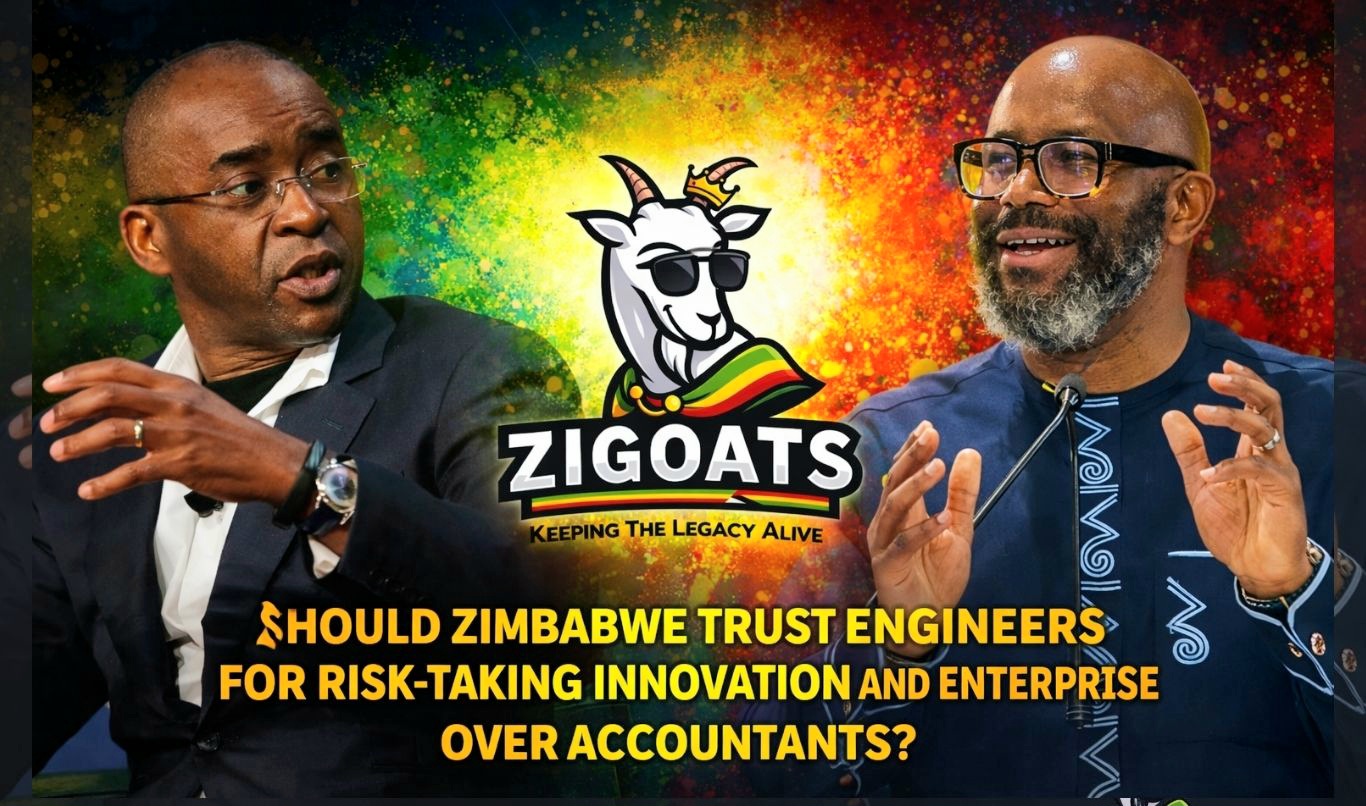
HARARE – The appointment of Zimbabwean Ralph Mupita to the board of Aliko Dangote’s fertiliser powerhouse has ignited a fresh debate in Zimbabwe’s business community: Should Zimbabwe embrace engineers and technically oriented professionals as its primary drivers of innovation, risk-taking, and enterprise, instead of the traditional dominance of chartered accountants and lawyers? The question resonates because Mupita, an engineer-turned-MTN Group CEO, now joins Africa’s biggest industrial listing ambitions on Dangote Fertiliser, challenging long-held assumptions about leadership pedigree in high-stakes corporate and economic development.
For decades, Zimbabwe’s boardrooms and policy corridors have been heavily populated by chartered accountants (CAs) and lawyers, a pattern mirrored in many Southern African corporates. These professions are celebrated for precision, compliance, and risk mitigation, vital skills in any organisation. But critics argue that this risk-averse culture may have inadvertently steered capital toward lower-risk sectors like property development and finance, while productive risk and industrial innovation remain undercapitalised.
One respected business analyst, speaking on condition of anonymity, put it bluntly:
“Ralph Mupita is an engineer, and Strive Masiyiwa is also an engineer. If Zimbabwe were to move away from the dominance of chartered accountants and lawyers in executive management and boardrooms, we might see less ongoing capital being channelled into low-risk property development. With more engineers and other technically oriented professionals in leadership, there could be a stronger appetite for productive risk-taking, innovation, and enterprise.”
The argument is not anti-CA or anti-lawyer. Instead, it calls for diversity of professional thinking at the top. The analyst added:
“Leadership is much more about scanning the environment, sense-making, and taking that daring risk for a sweet ripe fruit on a hanging tree branch. CAs and lawyers are picking up fruits on the ground that have already fallen from a tree.”
This metaphor encapsulates a widely discussed tension: optimisation versus exploration.
- Check Here If You Applied For New, Lost Or Found Zimbabwean Passports
- Ralph Mupita: The Zimbabwean Man Aliko Dangote Trusted For The Job
Why This Matters Now
Ralph Mupita’s trajectory represents a compelling case study. A qualified engineer by training, Mupita transitioned into finance and corporate leadership, culminating in his role at MTN Group, where he played a key role in MTN Nigeria’s 2019 stock exchange listing, a marquee African financial milestone. MTN Nigeria’s revenues have since more than quadrupled, underlining what proponents of technically grounded leadership describe as “innovation through disciplined execution.”
Similarly, Strive Masiyiwa, Zimbabwe’s most globally prominent entrepreneur, also an engineer by training, built Econet Wireless into one of Africa’s largest telecom empires, long before diversified venture arms and private equity took hold. Masiyiwa’s leadership style, characterised by strategic risk, early technological adoption, and bold market entry, contrasts with the cautious capital allocation often credited to traditional financial leadership.
Masiyiwa’s success has frequently been framed as an outlier, but its inclusion in this debate reflects broader continental trends: African markets increasingly value tech-savvy executives who combine analytical precision with entrepreneurial boldness. In fields from mobile money and digital platforms to renewable energy and manufacturing, engineers and tech founders are behind some of the most disruptive growth stories.
The Counterarguments
Not everyone agrees that Zimbabwe should pivot its leadership bias. Critics argue that engineers, prized for technical problem-solving, may lack grounding in corporate governance, regulatory compliance, and financial prudence that CAs and lawyers bring. They warn that too much risk-seeking without adequate controls can lead to capital misallocation and failure, especially in economies still grappling with currency instability and weak investment climates.
Veteran accountants and corporate lawyers, for their part, point out that the challenges Zimbabwe faces, including high public debt, inflation volatility, and currency risk, require disciplined financial stewardship and legal foresight. A senior chartered accountant working in Harare’s financial sector spoke to ZiGoats:
“Innovation must be balanced with sustainability. Bold ideas without solid risk frameworks can do more harm than good.”
Leadership Diversity & The Future Of Zimbabwe’s Economic Direction
If Zimbabwe seriously rethinks who gets to lead its institutions, the ripple effects would stretch from government offices to boardrooms and lecture halls. Public policy could begin to reflect stronger technical grounding, with ministries such as Industry and Commerce placing greater weight on STEM-informed leadership when shaping industrial strategy, innovation policy, and infrastructure planning. In the corporate world, governance models might evolve to deliberately balance financial oversight with engineering, production, and systems expertise, ensuring boards are not only good at protecting value but also at creating it. At the same time, universities and training institutions would be pushed to modernise leadership pipelines, blending engineering, design thinking, and entrepreneurial problem-solving with traditional business education so that future executives are as comfortable with innovation as they are with spreadsheets.
This conversation is not happening in isolation. Across Africa, a quiet shift has been underway for years, particularly in sectors that have driven the continent’s fastest growth. Telecommunications, fintech, renewable energy, agritech, and large-scale infrastructure have often been shaped by leaders with technical or engineering foundations, supported by strong financial and legal teams rather than dominated by them. Major industrialists such as Aliko Dangote have long built leadership benches that mix disciplines, recognising that scaling factories, supply chains, and complex operations requires more than compliance and cost control. The emerging lesson is not that one profession is superior, but that economies grow faster when leadership reflects professional pluralism instead of rigid professional hierarchies.
For Zimbabwe, the stakes are high. Reviving industry, building competitive value chains, and unlocking new high-growth sectors will demand leaders who are comfortable with uncertainty, technology, and calculated risk. Accountants and lawyers will always remain critical for governance, regulation, and financial discipline, but they may not be enough on their own to drive industrial reinvention. The deeper issue is whether the country can widen its leadership lens and reshape its risk culture to reward innovation and enterprise alongside prudence. If policymakers, investors, and boards begin to act on that shift, rather than just debate it, Zimbabwe’s next economic chapter could be defined less by preservation of capital and more by the bold creation of it.
Leave a Reply