
By Advent Shoko
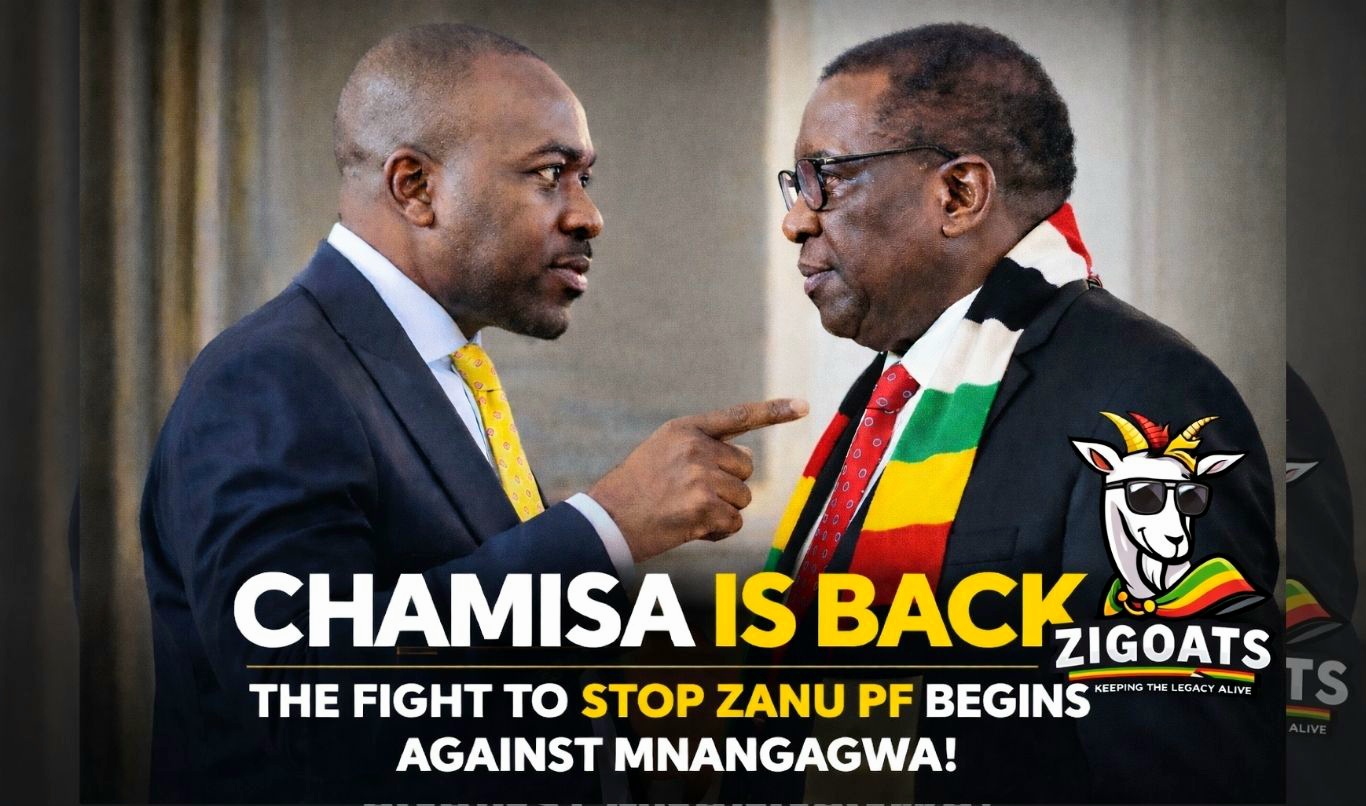
HARARE – Former Citizens Coalition for Change (CCC) leader Nelson Chamisa’s abrupt return to active politics after almost two years away has sparked fierce debate and accusations that he may be playing into the hands of ZANU-PF, critics say, as the nation braces for intensifying political battles over the constitution and President Emmerson Mnangagwa’s rumoured plans to extend his rule beyond 2028.
- Full Text: Chamisa Unveils “Agenda 2026” And Calls For A Fresh National Reset
- Nelson Chamisa Back in Active Politics After Two-Year Sabbatical
Chamisa, who shocked the political scene by leaving the CCC in January 2024, a party he helped build only to see it fragmented and legally hollowed out after internal recalls and leadership disputes, has framed his comeback as a call for national renewal, unity and “Agenda 2026”: a citizen-driven movement centred on governance reform, citizen empowerment and constitutionalism.
But Not Everyone Sees It That Way. Some Accuse Chamisa Of Being A ZANU PF Agent
Some now accuse Chamisa of returning at a politically sensitive moment in a way that could weaken ongoing efforts to resist constitutional changes linked to Mnangagwa’s reported 2030 ambitions. One of the loudest and most detailed critics has been activist Jealousy Mbizvo Mawarire, who has openly questioned both Chamisa’s timing and his controversial assertion that “there is no constitution to defend.” Mawarire asked:
“Isn’t it suspicious that days after Senator Jameson Timba launched his non-partisan group to defend the constitution from mutilation by Zanu-PF through the illegal so-called ‘resolution number 1’, which seeks to illegally extend Mnangagwa’s term beyond the 2028 constitutional limit, Nelson Chamisa comes in and declares that ‘there is no constitution’ to defend in Zimbabwe? Is Chamisa trying to stall efforts to fight the 2030 agenda? If so, for whose benefit? Whose bidding is he doing?”
Mawarire argues that Chamisa’s constitutional stance creates a logical and political contradiction. He said:
“What is even more bizarre is that Chamisa goes on to declare that his fight is about stolen elections. Elections held in a country without a constitution cannot be stolen because not having a constitution suggests an absence of rules governing those elections… in the absence of rules, there is no electoral fraud.”
In Mawarire’s view, this weakens Chamisa’s long-standing argument that elections in 2018 and 2023 were rigged.
“Chamisa, as a lawyer, should have been alive to the fact that there can’t be electoral fraud… if there was no legal framework to guide the administration of those elections as suggested by his ‘no constitution’ claim.”
He goes further, suggesting the former opposition leader’s messaging is not accidental.
“His ‘no constitution to defend’ declaration is meant to pour cold water on efforts by the likes of Timba to fight Mnangagwa’s 2030 agenda. The question then is why? That’s the ‘$64 million dollar question’ that people have.”
That remark appears to reference long-circulating but unproven political rumours alleging Chamisa may have been compromised after the 2023 elections, claims for which no public evidence has been produced. Still, the phrase underscores the deep suspicion among some opposition activists.
Mawarire also linked Chamisa’s current position to his past criticism of street protests.
“It’s not just the claim that there is no constitution to defend that is bizarre… the claim that demonstrations are useless is also as suspicious as they come.”
He added:
“History is littered with Trojan horses, the question here is whose Trojan horse is he?”
Analysts say such language reflects growing fractures inside Zimbabwe’s opposition politics, where strategy disagreements, reform from within versus direct constitutional defence and protest, are now being interpreted through a lens of mistrust.
The political context amplifies these tensions: ZANU-PF’s internal push to extend President Mnangagwa’s term to 2030 has dominated headlines and drawn sharp criticism from rival parties and civil groups, who argue any extension without a referendum would violate the 2013 Constitution.
Supporters of Chamisa insist his “Agenda 2026” is not about abandoning constitutionalism but about rebuilding citizen power from the ground up, saying the current system is too captured to reform through traditional opposition tactics alone. Critics counter that abandoning the constitutional defence narrative at this moment risks fragmenting resistance just as it begins to consolidate.
Whether Chamisa’s return ultimately reshapes or splinters the opposition landscape remains uncertain. What is clear is that his re-entry has reignited not just political energy, but deep suspicion, sharp ideological divides, and a renewed battle over what the real frontline in Zimbabwe’s democracy fight should be.
Leave a Reply