
By Advent Shoko
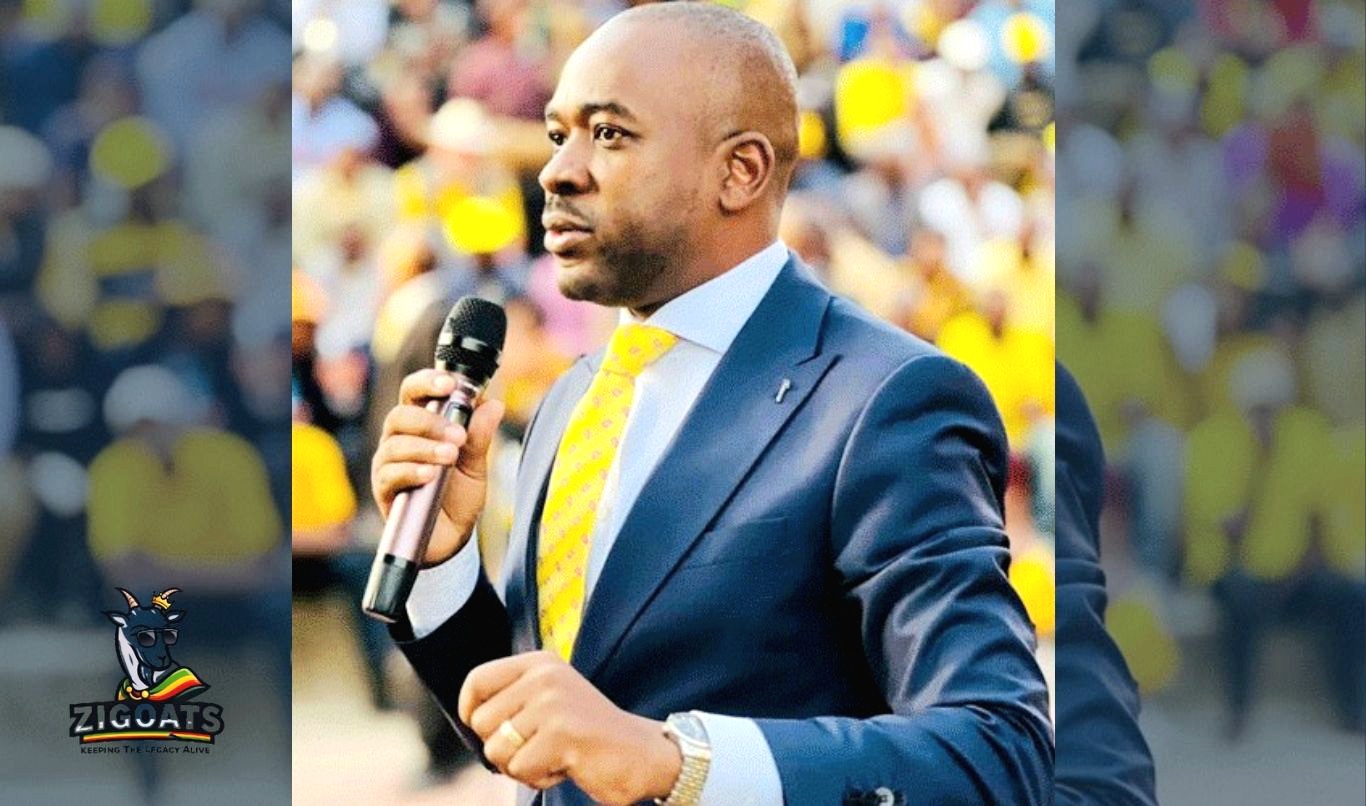
HARARE – After two years in political limbo, former opposition heavyweight Nelson Chamisa has publicly declared he is returning to active politics, injecting fresh energy, and fresh controversy, into Zimbabwe’s fraught political landscape as the country edges closer to the 2028 general elections. This announcement, made at a packed press briefing in Harare, comes after a prolonged period of political quiet and deep fragmentation within the opposition, leaving space widely perceived as a vacuum in national contestation.
Chamisa’s statement on his comeback was striking in its future-focused tone, almost as if urging Zimbabweans to quickly forget past schisms and losses. He said he was returning not to revive old party structures, but to launch a new citizens’ movement that he says will unite Zimbabweans around common cause, purpose and national revival, a departure from conventional party politics.
“I am back for the citizens, for the future,” Chamisa declared, emphasising that this wasn’t simply a relaunch of a political party, but a movement that transcends traditional political boundaries, a narrative aimed at winning hearts as much as votes.
From CCC Turmoil to a New Political Era
Chamisa’s absence was rooted in the chaotic aftermath of the disputed 2023 harmonised elections, in which he was the main challenger to incumbent President Emmerson Mnangagwa. Both local and international observers raised concerns about electoral irregularities and delays, and Chamisa himself called the results a “gigantic fraud”.
In early 2024, Chamisa stunned the political world by relinquishing leadership of the Citizens Coalition for Change (CCC), which he had built out of the Movement for Democratic Change (MDC). His departure followed internal strife sparked by self-declared secretary-general Sengezo Tshabangu, who initiated mass recalls of CCC legislators and councillors allied to Chamisa. Those recalls, upheld by the courts and backed by parliamentary actions, decimated CCC’s parliamentary presence and handed the ruling ZANU-PF party a significant majority, fundamentally altering the opposition landscape.
Chamisa described the CCC at the time as “hijacked” and contaminated by elements working with ZANU-PF, prompting him to step away from formal party leadership. His critics argue this retreat created a political vacuum, allowing ZANU-PF to consolidate power with little organised opposition pushing back at a national level.
A Strategic, Not Apologetic, Comeback
What’s noteworthy about Chamisa’s return statement is what it didn’t address: it was largely silent on the past controversies and factional implosion that dogged his tenure with CCC, including disagreements with key figures like Tendai Biti and Welshman Ncube, both of whom played historic roles in Zimbabwe’s opposition movements but were absent from this relaunch narrative. This omission has fuelled speculation that Chamisa wants the public’s focus strictly on the future, not past missteps.
Some opposition voices have gone even further, accusing Chamisa of operating as a “ZANU-PF project” or being compromised by ruling party incentives to weaken genuine opposition efforts. Allegations that he may have accepted perks or deals to ease pressure on Mnangagwa’s government, including backing off earlier promises to pursue election recourse through SADC, the African Union and other international platforms, swirl in political commentary, though they remain unproven and politically charged.
Even as Chamisa positions his return as a forward-looking reset, detractors within Zimbabwe’s broader opposition ecosystem warn that without clear organizational structures, accountability, and inclusive leadership, new movements risk repeating the same pitfalls that beset CCC, namely fragmentation, personality-driven politics, and strategic drift.
Political Context: Zimbabwe’s Opposition Landscape
Chamisa is not alone in this fluid sphere. The opposition has splintered into various factions, with other leaders like Jameson Timba launching platforms such as Defend the Constitution that operate outside Chamisa’s orbit. These developments reflect profound unease among activists and politicians about representation and strategy.
Meanwhile, ZANU-PF continues to dominate formal state structures. Debates around constitutional amendments and potential term-extension plans, often framed by Chamisa’s critics as weakening democratic safeguards, have only heightened polarization. Chamisa himself has previously condemned President Mnangagwa’s governance, citing economic hardship, high taxes, corruption and mismanagement as key issues confronting ordinary Zimbabweans.
What This Means Ahead of 2028
For observers, Chamisa’s return is as much about symbolism as strategy. His rhetoric of a future-focused movement seeks to tap into national discontent with the status quo, while his calculated silence on past controversies may be intended to reframe the narrative before the next election cycle begins in earnest.
Whether this move can translate into a coherent, sustainable political force capable of challenging ZANU-PF’s entrenched dominance, or whether it simply reignites old debates under a new banner, remains the critical question on Zimbabwe’s political horizon.
Leave a Reply