
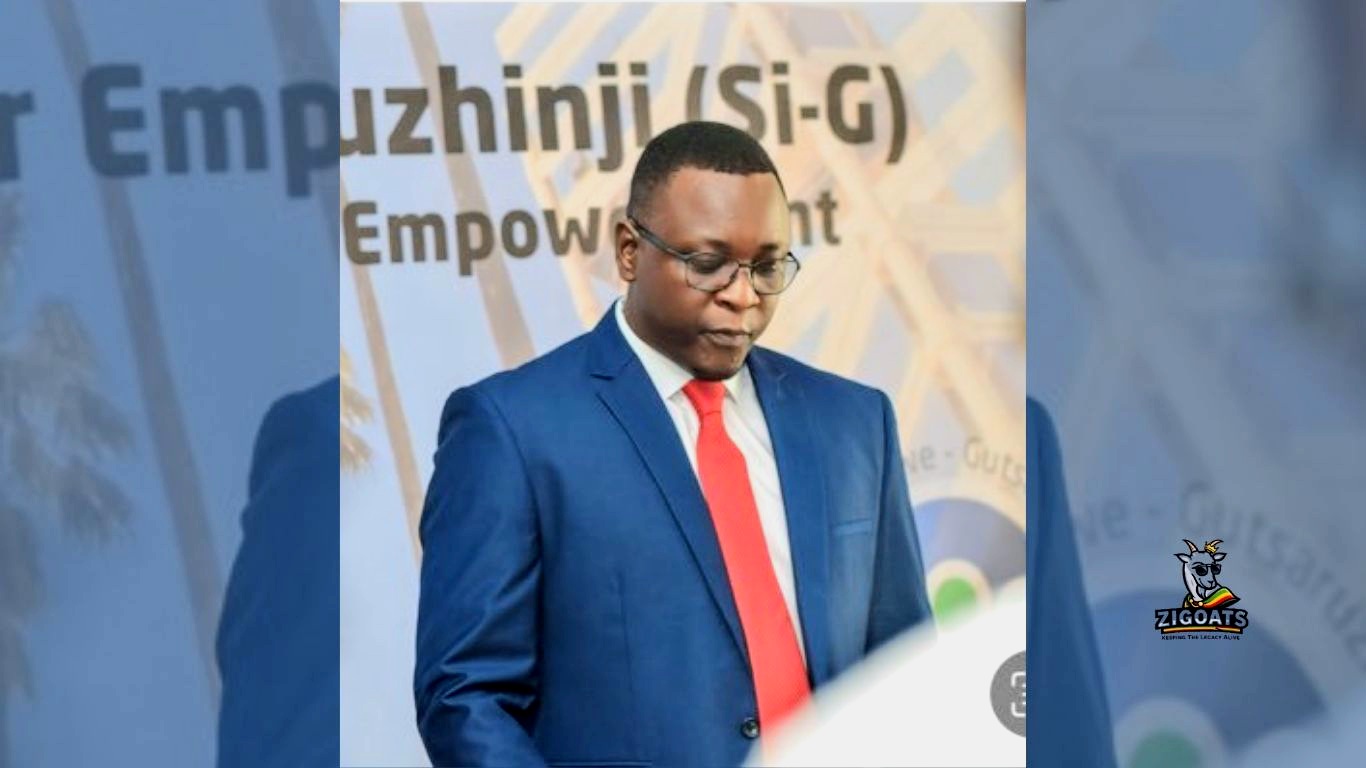
Musengezi’s new party enters a crowded and chaotic opposition arena…
By Advent Shoko
Sybeth Musengezi, the activist best known for legally challenging President Emmerson “ED” Mnangagwa’s rise to power in 2017, has thrown his hat into the political ring again. This time, he’s launched a full‑fledged political party, Suthisa ilizwe, Gutsaruzhinji (SI‑G), signaling a fresh chapter in Zimbabwe’s deeply entrenched political landscape.
In a letter dated 16 January 2026 to the Zimbabwe Electoral Commission (ZEC), Musengezi requested official recognition for his newly formed party SI‑G under the Electoral Act and inclusion on ZEC’s political parties’ database ahead of future elections. Posting on X (formerly Twitter), he wrote that they had “transformed our empowerment movement … into a fully fledged political party” and said engagement with the ruling ZANU‑PF had yielded nothing but slogans and looting, prompting them to “fight for our people in the political ring.” This launch is as much a critique of the status quo as it is a political strategy to tap into growing frustration with the ruling elite.
To understand what this might mean, it helps to look at where Zimbabwe’s politics currently stand, and how power has been held since independence.
ZANU‑PF: From Liberation Movement to Power Machine
Since winning independence in 1980, ZANU‑PF has dominated Zimbabwe’s political arena. Originally a liberation movement that helped end white minority rule, it has hardened into a political machine that has retained control of the state for over four decades. Its hold has not been merely electoral. Over the years, allegations of political repression, state capture and manipulation of state institutions have dogged its rule, particularly under President Emmerson Mnangagwa, who replaced long‑time leader Robert Mugabe in a military‑backed transition in 2017.
Despite constant claims to democratic legitimacy, critics argue ZANU‑PF’s grip on power has only tightened. In late 2025, the party moved to amend the constitution to potentially extend Mnangagwa’s presidency to 2030, a move that has been challenged by the opposition as unconstitutional and symptomatic of entrenched authoritarian instincts.
These maneuvers show a party comfortable in power and willing to leverage constitutional tweaks and parliamentary dominance to secure a political future beyond accepted term limits. Meanwhile, internal ZANU‑PF factional struggles, particularly between Mnangagwa loyalists and allies of Vice President Constantino Chiwenga, suggest that the real battle for political power often happens within the ruling party rather than at the ballot box.
- Bobi Wine Arrested Again as Museveni Leads Uganda 2026 Elections
- Zimbabwe JSC Confirms Chief Justice Malaba’s Retirement – Why It Matters
- Mnangagwa Claims Reconciliation With Mugabe Before Death: Inside Zimbabwe’s Political Rift
Zimbabwe’s Opposition: A Fragmented Battlefield
Musengezi’s new party enters a crowded and chaotic opposition arena. The 2023 elections saw ZANU‑PF retain a majority in parliament and the presidency in a vote widely criticised for falling short of democratic norms. The main opposition, the Citizens Coalition for Change (CCC) led by Nelson Chamisa, won significant support but also faced legal and institutional obstacles, including court rulings that barred many of its candidates from key by‑elections, a move widely seen as benefiting the ruling party.
Across Zimbabwe’s political scene, there are dozens of registered political parties. Yet most struggle to make an impact beyond anecdotal social media buzz or sporadic local election participation. According to public commentary and civil society groups, upwards of 20 opposition parties have participated in various by‑elections since the last general election, but few have traction or clear identity beyond opposing ZANU‑PF.
That lack of ideological cohesion has long bedeviled the opposition. Analysts argue that Zimbabwe’s opposition movements are united mainly by a desire to remove ZANU‑PF rather than by a shared vision for the country’s future. Without a compelling, coherent ideology, they remain vulnerable to internal splits, co‑optation and infiltration.
ZANU‑PF’s Tactics: Strength in Continuity and Control
For ZANU‑PF, retaining power has involved more than elections. The party has been accused of using state institutions to its advantage: courts have been a flashpoint; police have at times restricted opposition rallies; and control over rural and informal networks has helped sustain its dominance. A detailed study of the 2023 election suggests that state apparatus was used to limit opposition campaigning and create an environment of fear or confusion around voting, including alleged bans on hundreds of opposition rallies.
This pattern of institutional control and incremental legal adjustments, like attempting to extend presidential terms, reflects a regime adept at maintaining command without always courting legitimacy. Yet even within this dominance, dissent simmers, especially among youth and urban populations disillusioned with economic stagnation and political repression.
Can a New Party Change Zimbabwe’s Political Equation?
Musengezi’s SI‑G faces a tall order. The political terrain in Zimbabwe rewards entrenched parties with deep networks and resources. Opposition forces have historically struggled with fragmentation, inconsistent leadership, limited funding and cracking internal alliances. The quest to “remove ZANU‑PF” has been a unifying slogan across movements, but without a compelling roadmap for governance, economic policy, or social reform, electoral unity has often dissolved into factionalism.
Whether SI‑G can avoid the pitfalls that ensnared previous opposition efforts will hinge on its ability to articulate an idea bigger than resistance, a positive vision that resonates with both urban and rural Zimbabweans.
Sybeth Musengezi’s call to “organize ourselves, educate the masses and work towards mobilisation for the next election” underscores a familiar truth: for opposition parties to challenge ZANU‑PF’s hegemony, they must start now, not during election season. His emphasis on unity and long‑term preparation echoes frustrations widely expressed by political commentators and civil society alike.
Zimbabwe’s politics have always been complex, shaped by liberation history, institutional entrenchment and a public yearning for change. Whether Musengezi’s party can galvanise that change remains to be seen, but his move adds another layer to a political narrative that continues to evolve, however slowly.
Leave a Reply