
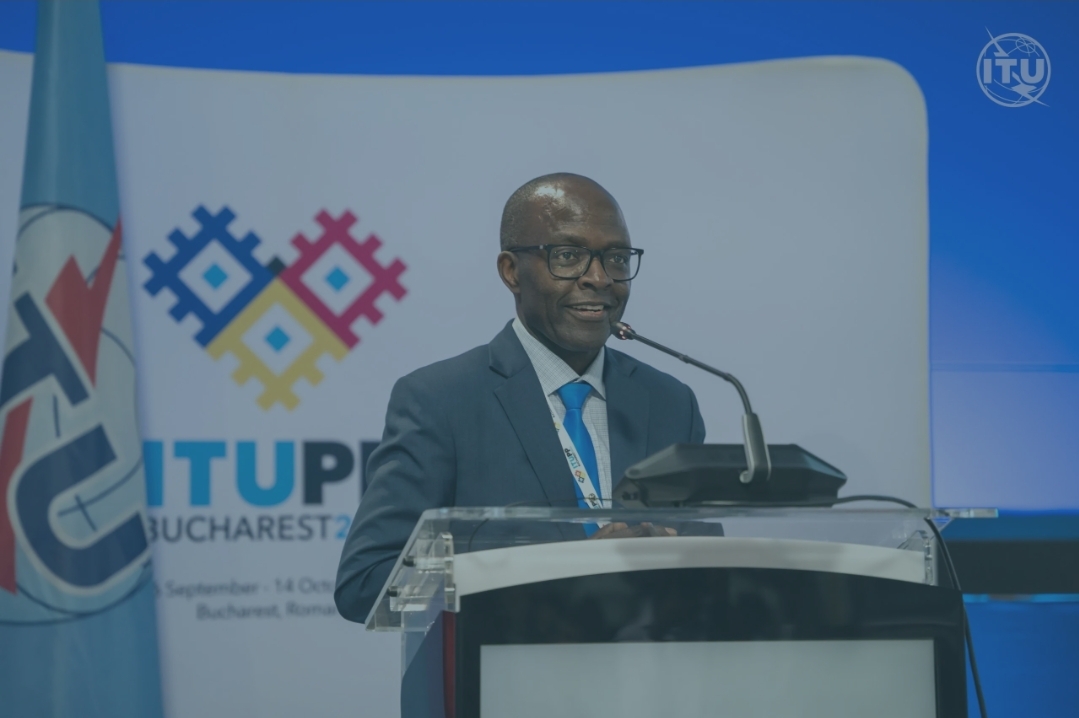
By Advent Shoko | ZiGoats
When I first encountered Dr Cosmas Luckyson Zavazava, I was not looking at the man who would eventually lead one of the most important development arms of the United Nations (UN) agency responsible for global digital cooperation.
I was simply part of a team.
In 2017, I joined the Zavazava Team Campaign, working alongside technocrats, diplomats and bureaucrats who were selling a Zimbabwean vision for the International Telecommunication Union (ITU).
I remember one meeting in Harare when Dr Zavazava attended in person. At the time, I understood the broad argument, but I cannot say I fully grasped the scale of his vision.
That changed after meeting him.
What became clearer was that his ambition was not simply to win an international position. It was to use ICTs to transform societies, particularly those still being left behind by the digital revolution.
Nearly a decade later, the record provides useful context.
From Campaign Vision To Global Mandate
Zavazava won the BDT election at the ITU’s 2022 Plenipotentiary Conference in Bucharest, defeating a field of six candidates with 101 votes, against the required majority of 83. He took office on 1 January 2023.
The victory was significant for Zimbabwe and Africa.
But the more important question now is what happened after the election.
The ITU describes Zavazava as a telecommunications professional with more than 30 years of experience, including more than two decades in the organisation’s Development Sector. Before becoming BDT Director, he served as Chief of Partnerships for Digital Development and earlier led projects and knowledge management.
His experience spans connectivity, digital skills, emergency telecommunications, e-waste, climate-related ICT initiatives, youth, gender and programmes supporting people with special needs.
That background matters because BDT is not merely about telecommunications infrastructure. It is about making technology useful for development.
And that has been the thread running through Zavazava’s career.
The Vision Is Simple
In his 2022 acceptance speech, Zavazava put his philosophy plainly:
“My vision is very simple: meaningful connectivity, meaningful skills development and bridging the skills gap – because this is what faces most of the developing countries – but also digital transformation.”
That statement has remained remarkably consistent.
In 2024, while presenting the ITU’s global connectivity figures, he again emphasised the human purpose of technology.
“We embrace new technologies as they come. But it is not only about technology, it is what technology can do for the people.”
He went further:
“We should look at technology with a human face.”
This is arguably the strongest argument for his re-election.
From Connecting People To Equipping Them
Under Zavazava, the BDT has continued to push programmes that move beyond simply putting people online.
The Digital Transformation Centres (DTC) Initiative, developed with partners including Cisco, has become a major vehicle for digital skills development. By 2025, the initiative had trained more than 500,000 people, while Zavazava reported in 2026 that the number had passed 714,000.
The emphasis is important: connectivity without skills can leave people connected but economically excluded.
His tenure has also seen work on Africa’s connectivity infrastructure. In 2025, Zavazava highlighted the launch of the Africa Broadband Mapping project, initially covering 11 countries, designed to identify infrastructure gaps and help inform connectivity investment.
The ITU has also developed the Connectivity Planning Platform, a data-driven tool designed to help governments, regulators and operators make evidence-based decisions on broadband and last-mile connectivity, including fibre, cellular, microwave and satellite options.
These are practical interventions rather than abstract promises.
A People-Centred ITU
Zavazava’s wider record also shows a strong partnership approach.
In 2023, under his leadership, ITU and Indonesia’s Indosat strengthened cooperation around digital skills and the DTC Initiative.
The BDT has also worked with partners on universal and meaningful connectivity, including a €3 million, three-year project with the European Commission launched in 2023.
His outlook increasingly extends into emerging technologies, cybersecurity, artificial intelligence and the wider digital economy.
But his central question remains remarkably human: who benefits?
As he said in 2024:
“We must intensify our efforts to connect the world, not to leave anyone behind.”
That is the Zavazava proposition in one sentence. It resonates with President Emmerson Mnangagwa’s development mantra which is centred on “Leaving No-one and No place behind.”
Why His Second Term Matters
Zavazava is now seeking a second and final term as BDT Director. The ITU has officially listed him as Zimbabwe’s candidate, alongside Estonia’s Dr Nele Leosk.
The election will take place during PP-26 in Doha, Qatar, from 9 to 27 November 2026. The conference will elect the ITU’s senior leadership for the next four years.
Zimbabwe has already rallied behind his candidacy, with President Emmerson Mnangagwa publicly backing his re-election campaign.
For me, however, this campaign is more personal.
I joined the campaign in 2017 believing in a Zimbabwean candidate with a big idea. Nearly a decade later, the interesting part is that the idea has become a body of work.
Zavazava is not asking the ITU membership to elect an untested technocrat.
He is asking them to renew the mandate of someone who has already spent a term building partnerships, expanding digital skills programmes, advancing connectivity planning and pushing the principle that technology must ultimately improve people’s lives.
His challenge now is to finish what he started.
And perhaps that is the strongest case for giving him four more years.
The world does not simply need more technology.
It needs technology that reaches more people, costs less, creates opportunity, builds skills and leaves fewer people behind.
That is the vision I first encountered in Harare in 2017.
Today, it is a vision being tested on a global stage.
Leave a Reply