
Honest Governance Or Dodging Accountability?
By Advent Shoko
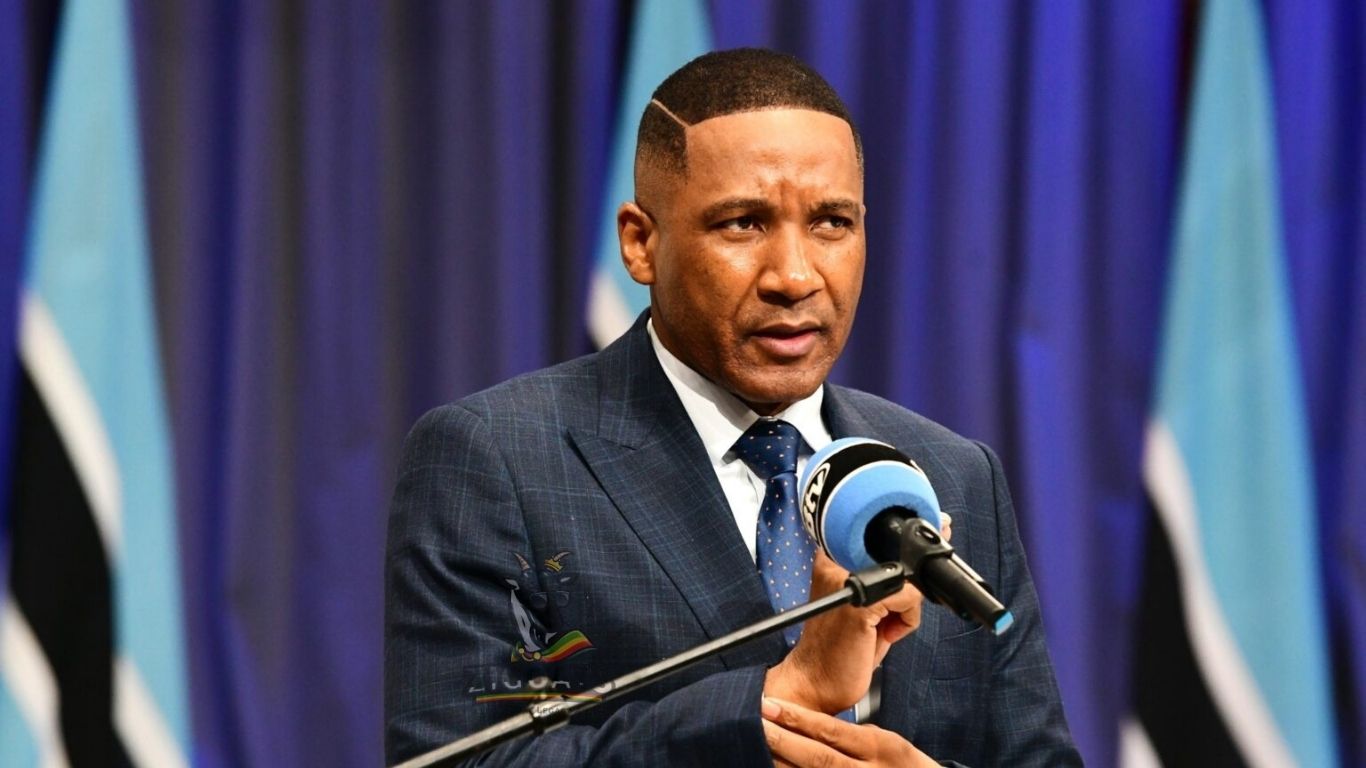
When Botswana’s President Duma Boko, a Harvard-trained lawyer who stormed into office in November 2024 and ended 58 years of uninterrupted one-party rule, declared that election promises are not legal contracts, he likely intended a legal clarification. What followed, however, was a political firestorm.
Fourteen months into his presidency, the remark landed hard in a country that voted for change on the back of bold commitments: jobs for the youth, a serious anti-corruption reset, economic diversification beyond diamonds, and a more accountable state. Online platforms lit up, with many Batswana accusing the President of backtracking, semantic gymnastics and weakening the moral bond between leaders and voters. Others, fewer but vocal, defended the statement as blunt honesty about how governance actually works.
The controversy cuts to the heart of modern democratic politics: are campaign promises merely aspirations, or are they a binding social contract sealed by the ballot?
- Museveni Secures Seventh Term in Uganda Election Marked by Repression
- Bobi Wine Arrested Again as Museveni Leads Uganda 2026 Elections
Before the election, Boko and the Umbrella for Democratic Change (UDC) ran a campaign anchored on reform. Youth unemployment was high, the diamond sector was under strain, and many citizens felt that economic growth had not translated into improved living standards for ordinary households. The message was simple and powerful: the old order had run its course, and Botswana needed a new political and economic direction.
The manifesto promised job creation through economic diversification, tougher action on corruption, institutional reforms, and a governance style that put citizens first rather than party machinery. For many young voters and urban professionals, this was not abstract rhetoric. It was a lifeline.
In office, Boko inherited a state facing structural economic pressures, including fluctuating diamond revenues, limited industrial depth, and a global economy that was far less forgiving than in Botswana’s earlier boom years. His administration moved to reframe national conversations around fiscal realism, governance constraints and the limits of executive power. Supporters argue this was necessary ground-clearing after decades of political continuity that masked deep-seated problems.
Yet critics say delivery has lagged behind expectation. Job creation has not moved fast enough to absorb restless youth, living costs remain high for many households, and visible anti-corruption breakthroughs have been slower and more cautious than the campaign tone suggested. While Botswana remains more stable and better governed than many of its regional peers, comparisons with the period before Boko are now sharper. For voters who expected quick, tangible improvements, the pace feels underwhelming.
That context explains why the “not a legal contract” remark struck a nerve. Legally, Boko is correct. Campaign promises are not enforceable agreements in court. Politically, however, voters are not lawyers. They hear a different message: if promises are not binding, then what exactly did we vote for?
Opposition voices, civil society figures and online commentators framed the statement as a betrayal of the social contract, the unwritten agreement that voters give power in exchange for good-faith effort to deliver what was promised. In that reading, the issue is not legality but accountability. Once leaders begin emphasising what they are not legally obliged to do, trust erodes fast.
There is also a symbolic problem. Boko’s rise was powered by a hunger for accountability after nearly six decades of one-party dominance. Any language that appears to soften that accountability risks undermining the very change his election represented.
Still, a more charitable interpretation exists. Some analysts argue that Boko was signalling a shift away from populist politics towards institutional governance, where policy is shaped by budgets, laws and trade-offs rather than campaign slogans. From this view, the statement was not an escape clause but a warning: governing is harder than campaigning, and not everything promised can be delivered on a fixed timetable.
What has not helped is the absence of a clear official follow-up. Without a detailed explanation or recommitment to key manifesto goals, the remark has been left to circulate on social media, gathering anger and suspicion. In politics, silence often speaks louder than clarification.
The deeper question now facing Botswana is whether Boko can translate his reformist credentials and legal precision into visible improvements in everyday life. Elections may not create legal contracts, but they do create expectations. And expectations, once broken, are costly to rebuild.
Botswana remains a democracy with strong institutions, a respected constitution and a politically engaged citizenry. That is precisely why this moment matters. For President Boko, the challenge is not to win a legal argument, but to reassure voters that their faith was not misplaced, that while promises may not be enforceable in court, they still matter in practice.
In the end, politics is not judged by definitions, but by outcomes.
Leave a Reply