
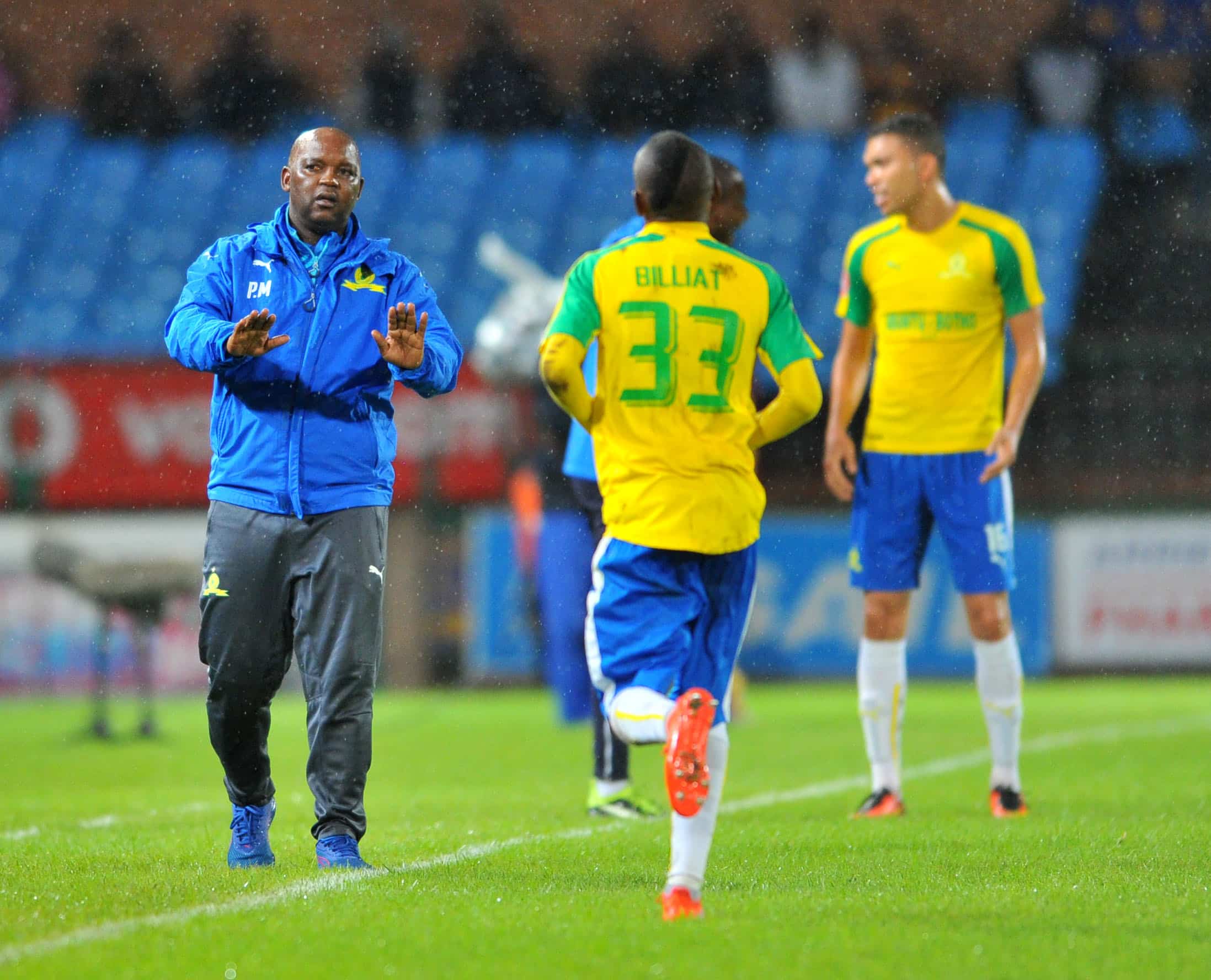
By Advent Shoko
JOHANNESBURG, South Africa — South Africa’s Economic Freedom Fighters (EFF) has accused the South African Football Association (SAFA) of undervaluing newly appointed Bafana Bafana coach Pitso Mosimane, questioning why a South African coach with three CAF Champions League titles would allegedly be offered less than a white foreign coach who previously held the national team job.
The EFF said the reported remuneration package offered to Mosimane does not match his record, experience or standing in African football.
The party’s criticism comes as Mosimane prepares for a second spell in charge of Bafana Bafana following Hugo Broos’ departure after the 2026 FIFA World Cup.
Zigoats.com reported on Aug. 8 that Mosimane was set to return as South Africa coach after Broos stepped down following Bafana’s elimination in the World Cup round of 32. SAFA president Danny Jordaan confirmed Mosimane was the association’s choice, although final details were still being completed at the time.
EFF questions Mosimane’s valuation
In a statement issued on Saturday, Aug. 15, the EFF said it was difficult to understand how SAFA could arrive at a lower valuation for Mosimane than the remuneration reportedly paid to a previous foreign coach.
“The question that SAFA must answer is simple: Why is a South African coach with three CAF Champions League titles being offered substantially less than a white foreign coach?”
The EFF said reports indicated that SAFA subsequently improved its initial offer, but argued that the revised proposal still left Mosimane earning substantially less than his predecessor.
For the party, the dispute is about more than salary.
It says the reported gap raises broader questions about how Black professional expertise is valued in South African institutions.
“This disparity raises serious concerns about the continued racialised valuation of Black expertise in South Africa,” the EFF said.
The party accused SAFA of reproducing a system in which Black professionals are expected to achieve more while receiving less recognition and financial reward.
Mosimane’s record speaks for itself
Mosimane is not returning to Bafana as an untested coach.
He previously managed South Africa from 2010 to 2012. His biggest achievements, however, came after leaving the national team.
He guided Mamelodi Sundowns to their first CAF Champions League title in 2016 before moving to Egyptian giants Al Ahly, where he won the competition twice in succession in 2020 and 2021.
That gave Mosimane three CAF Champions League titles, one with Sundowns and two with Al Ahly. CAF itself has described him as a coach who had already won the continent’s premier club competition three times.
His 2021 triumph also came against South African opposition, with Al Ahly beating Kaizer Chiefs 3-0 in the final to retain the continental crown.
The record places Mosimane among the most successful coaches in CAF Champions League history.
He also won CAF Super Cups and domestic league and cup honours during his spells with Sundowns and Al Ahly. His wider coaching career has taken him beyond South Africa to Egypt, Saudi Arabia, the United Arab Emirates and Iran.
From Broos to Mosimane
Mosimane’s return comes after the end of the Broos era.
The Belgian coach transformed Bafana’s fortunes during his tenure, helping South Africa qualify for the 2026 World Cup and reach the knockout stage for the first time in the country’s history.
South Africa ultimately lost 1-0 to Canada in the round of 32.
Broos had previously indicated that he intended to retire after the World Cup, while uncertainty over his contract created weeks of speculation about who would lead Bafana into the next international cycle.
Mosimane had already emerged as a leading candidate before Broos’ departure.
In July, he confirmed that SAFA had spoken to him and other coaches as part of a succession process.
“What’s your plan? How do we take Bafana to a better level?” Mosimane said, describing the questions put to him by the federation.
His appointment therefore represents both a return and a second chance.
Mosimane first took charge of Bafana after the 2010 World Cup but left the job in 2012 following a difficult qualifying campaign. His career subsequently moved to another level, particularly at Sundowns and Al Ahly.
EFF demands answers from SAFA
The EFF says SAFA must explain the basis on which Mosimane’s remuneration was calculated.
The party has called for the association to review the offer and make the comparison with previous Bafana coaches public.
“SAFA must also account publicly for the disparity between the remuneration offered to Mosimane and that paid to previous Bafana Bafana coaches,” the EFF said.
The party argues that South Africa cannot simultaneously promote transformation while allegedly attaching a lower value to a Black South African coach whose achievements compare favourably with the best coaches on the continent.
“It cannot be that when a European coach occupies the Bafana Bafana job, SAFA finds the resources to recognise and remunerate that expertise at a premium, but when a Black South African coach with an extraordinary record is considered for the same position, his value suddenly drops dramatically.”
Some reports say Hugo Broos earned R16. 8 million per year while Mosimane is set to get R10 million. However, SAFA has not, in the material available for this report, publicly disclosed the salary figures behind the reported Mosimane offer or provided a detailed explanation for the alleged difference.
That leaves the central question raised by the EFF hanging over Mosimane’s return: does SAFA value one of Africa’s most decorated coaches according to his record, or according to the identity of the coach sitting on the Bafana bench?
For Mosimane, the bigger challenge will now be on the pitch.
He returns to a Bafana side that has just experienced its best World Cup campaign in history and will be expected to build on that progress while preparing for the next Africa Cup of Nations (AFCON) qualifying campaign.
For SAFA, however, the salary controversy could become an early test of how seriously it takes the long-running debate over the value of local coaching talent.
Leave a Reply