
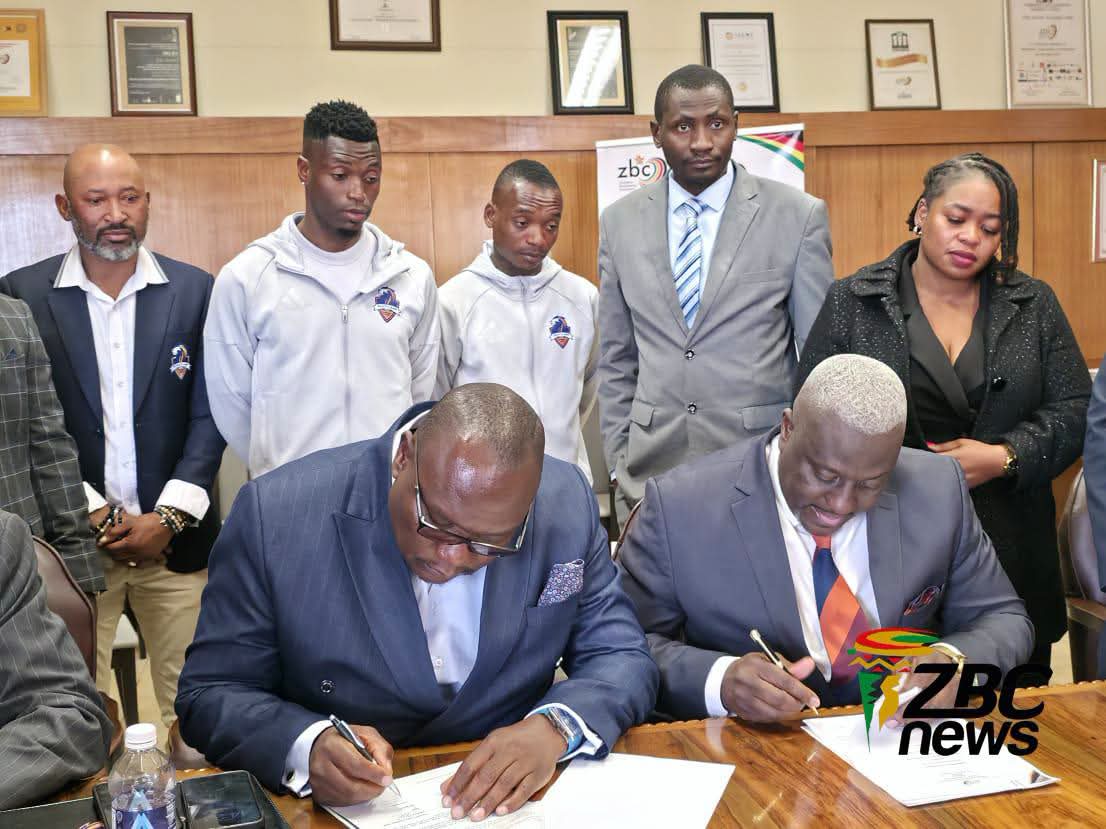
HARARE – Zimbabwe Broadcasting Corporation (ZBC) has signed a Memorandum of Understanding (MoU) with Castle Lager Premier Soccer League champions Scottland FC, a move that has sparked fierce debate among football fans over whether a national broadcaster should partner directly with an individual club.
The agreement will see ZBC broadcast more Scottland FC content and matches, including the highly anticipated Toyota Cup clash against South African giants Kaizer Chiefs on July 26. The broadcaster also announced plans to air Scottland’s maiden CAF Champions League campaign, subject to competition broadcasting rights.
While many supporters welcomed the deal as a major boost for local football exposure, others questioned whether such partnerships should instead be negotiated through the Premier Soccer League (PSL) or the Zimbabwe Football Association (ZIFA) to ensure all clubs benefit equally.
What the Deal Means
According to ZBC, the partnership is aimed at bringing football closer to Zimbabwean viewers by increasing access to Scottland FC matches and exclusive club content.
The Toyota Cup fixture against Kaizer Chiefs is expected to attract significant attention, while the possibility of watching Scottland’s CAF Champions League matches on free-to-air television has excited many football followers.
The agreement comes as Scottland continues to position itself as one of Zimbabwe’s fastest-growing football brands following its league triumph.
Fans Split Over Partnership
The announcement quickly divided opinion across social media.
Critics argued that a public broadcaster should negotiate broadcasting agreements with the PSL or ZIFA rather than individual clubs.
“How can a national broadcaster enter into a partnership with a club instead of partnering with ZIFA or the PSL? Does that mean only Scottland matches will be shown on ZBC?” one supporter questioned.
Another fan added:
“These kinds of agreements are supposed to be entered into between the broadcaster and the Premier Soccer League, not individual clubs.”
Others warned that the arrangement could create an uneven playing field if every club begins pursuing separate television deals.
“Let’s hope the whole football ecosystem benefits, not Scottland alone, because Scottland is nothing without the rest of the football landscape,” another supporter said.
Some also questioned who sanctioned the Toyota Cup fixture and whether the arrangement aligned with football governance structures.
Supporters Back Scottland
Not everyone shared those concerns.
Many fans praised Scottland for taking the initiative where they believe football authorities have struggled to commercialise the local game.
“Scott came to uplift Zimbabwean football. Well done to Mr Scott and his staff. This is indeed a good move,” one supporter wrote.
Another defended the club’s approach, saying:
“Waiting for the PSL to secure these opportunities is like roasting maize using a torch.”
Some supporters also argued that there is nothing preventing individual clubs from negotiating commercial partnerships provided they comply with football regulations.
“At least people will watch CAF football on ZBC. What is bad about that?” another fan asked.
Others pointed to examples from international football, saying broadcasters regularly secure rights to produce club-specific content alongside league competitions.
Bigger Questions for Zimbabwean Football
Beyond Scottland, the debate has raised broader questions about the commercial future of Zimbabwean football.
With many local clubs struggling to attract sponsorship and television coverage, some analysts believe clubs must increasingly create their own commercial opportunities rather than waiting for league-wide deals.
However, others insist national broadcasters should prioritise agreements that benefit the entire league to ensure fair exposure for all clubs.
As Zimbabwe prepares for Scottland’s Toyota Cup showdown and CAF Champions League campaign, the new partnership has already achieved one thinggetting the football community talking.
Whether it becomes a blueprint for other clubs or remains a unique arrangement could shape the future of football broadcasting in Zimbabwe.
Leave a Reply