
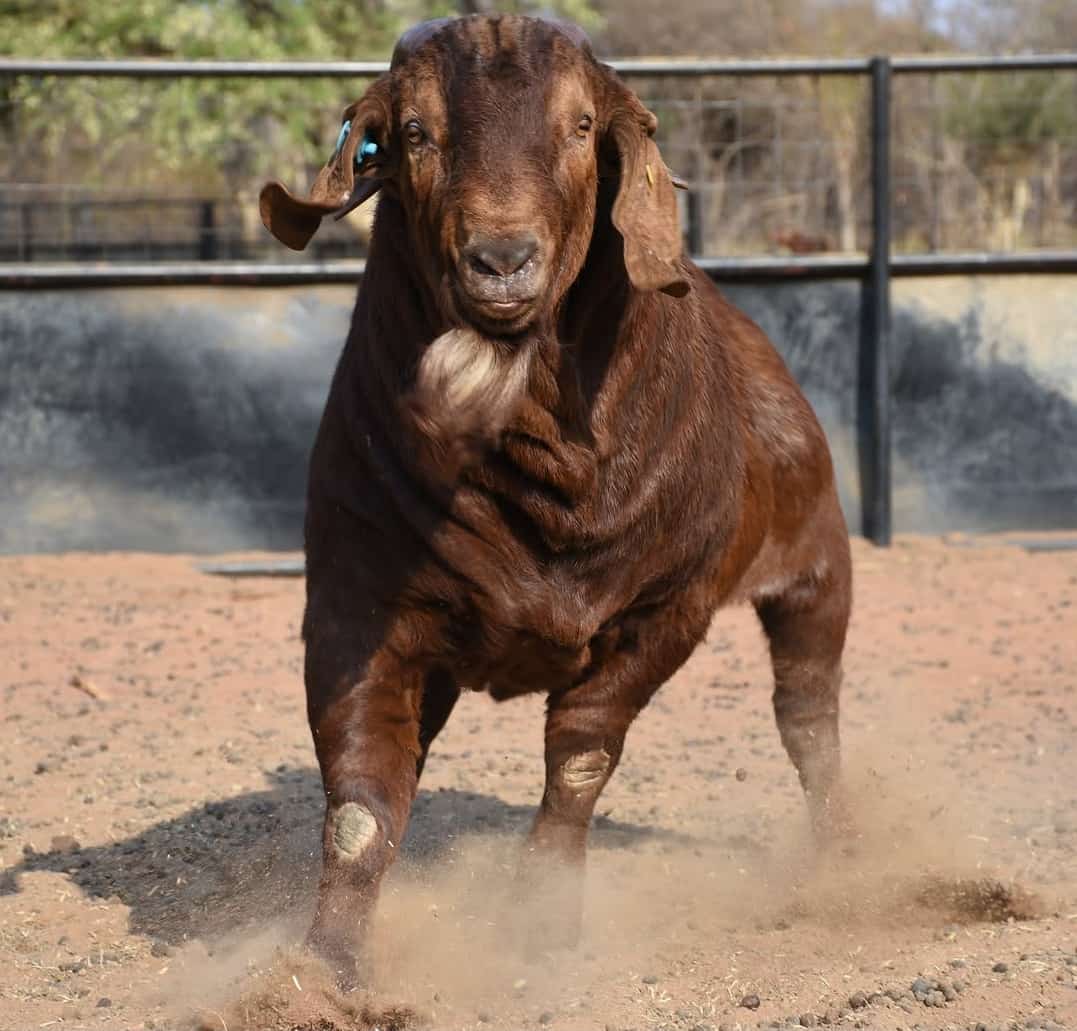
Zimbabwean investigative journalist and commercial Boer goat breeder Hopewell Chin’ono has shared detailed advice for farmers looking to import Boer goats from South Africa, arguing that quality genetics, not just price, should guide every purchasing decision.
By Advent Shoko
Drawing on more than a decade of experience in the industry, Chin’ono said many aspiring farmers make the mistake of asking only one question: “How much is a Boer goat?”
According to him, the answer depends entirely on the animal’s quality, breeding potential and genetics.
“A Grade 2 goat and a Grade 9 show-quality stud animal are worlds apart in value. One is bought mainly for meat, while the other may be purchased to improve an entire breeding programme and can cost many times more,” Chin’ono said.
Quality determines the price
Chin’ono explained that Boer goats are graded from Grade 2 to Grade 9 based on genetics, conformation, bloodlines and breeding quality.
At the top are Grade 9 animals, regarded as outstanding show and export-quality breeding stock, while Grade 2 animals are mainly suited for meat production.
He said this explains why Boer goats can sell for vastly different prices.
“Before asking the price of a Boer goat, the first question should be: What grade of Boer goat are you looking for? And what is your budget?” he said.
According to Chin’ono, buyers in South Africa can pay anything from around R10,000 for lower-grade breeding stock to R500,000 for elite animals.
Why Zimbabwe imports Boer goats
Responding to critics who question why Zimbabwe imports Boer goats instead of relying solely on local livestock, Chin’ono said South Africa remains the global home of the breed and offers superior genetics.
“We buy from South Africa because the best Boer goat genetics are found there. The Boer goat is indigenous to South Africa, and the breed was developed there,” he said.
He argued that Zimbabwe’s stud livestock sector suffered major setbacks after the land reform programme, leaving the country without enough quality breeding stock to satisfy growing demand.
“What we are doing now is rebuilding that industry,” Chin’ono said.
Bigger goats, bigger returns
Chin’ono said importing quality breeding stock is about improving productivity rather than replacing indigenous goats.
He noted that an average indigenous Zimbabwean goat weighs about 20 kilograms, while a mature Boer buck can reach 120 kilograms.
Crossbreeding, he said, can produce offspring weighing between 60 and 70 kilograms, significantly increasing farmers’ earnings because goat meat is sold by weight.
“By introducing superior genetics from South Africa, we are helping Zimbabwean farmers produce larger animals and earn more money from every goat they sell,” he said.
He added that stronger genetics also help build a commercial goat industry capable of supplying supermarkets, butcheries, hotels and export markets consistently.
Importing goats into Zimbabwe
Chin’ono also outlined the paperwork required to legally import Boer goats from South Africa into Zimbabwe.
He stressed that live goats enter Zimbabwe duty-free, although importers must still produce the necessary commercial and veterinary documentation.
Among the key requirements are:
- Veterinary Services Import Permit.
- Ministry of Agriculture import certificate.
- Agricultural Marketing Authority (AMA) certificate.
- South African Veterinary Health Certificate.
- Certificate of Origin.
- Commercial invoice or receipt.
- Quarantine and veterinary clearance documents.
He advised farmers to secure Zimbabwean import permits before buying animals and to confirm that imports are still permitted from the South African province where the goats originate, as disease outbreaks can trigger temporary restrictions.
Quarantine and testing are essential
According to Chin’ono, Boer goats normally spend about 30 days in quarantine in South Africa before export.
Male breeding goats must also undergo semen testing before shipment.
“The key to a smooth import process is to make sure that all veterinary requirements, testing and quarantine procedures are completed before the goats are transported to Zimbabwe,” he said.
He added that each animal carries a unique identification number to ensure traceability throughout the export process.
Buy only from reputable breeders
Chin’ono encouraged Zimbabwean farmers to verify breeders through the Boer Goat Breeders’ Association of South Africa, saying registered members follow recognised breeding and ethical standards.
He also urged buyers to request breeding records, vaccination histories and registration papers before committing to expensive purchases.
“Quality is everything. A good goat may cost more initially, but in the long run, it will pay for itself many times over,” he said.
Building a commercial goat industry
Chin’ono dismissed claims that importing Boer goats destroys jobs in Zimbabwe, arguing the opposite is true.
He said superior genetics help create employment across the livestock value chain, from breeding and transport to veterinary services, feed production and meat marketing.
“You create employment by introducing superior genetics, improving productivity and building a commercial industry around those improvements,” he said.
Reflecting on his own business, Chin’ono said cross-border trade has been central to his success.
“I have made millions of rands buying Boer goats in South Africa and selling them in Zimbabwe since 2015. A businessman understands that opportunities do not respect borders,” he said.
As Zimbabwe seeks to strengthen livestock production and improve food security, Chin’ono believes quality breeding stock and proper import procedures will remain critical to developing a sustainable commercial goat industry.
His message to farmers is simple: don’t buy goats based on price alone. Invest in proven genetics, follow the legal import process and treat quality breeding stock as a long-term investment rather than a short-term expense.
Leave a Reply