
By Advent Shoko
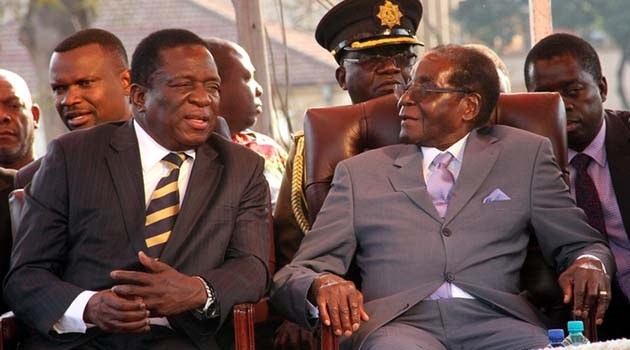
HARARE – President Emmerson Mnangagwa has claimed that he and the late former President Robert Mugabe reconciled before Mugabe’s death, closing one of Zimbabwe’s most dramatic and consequential political feuds, a rupture that reshaped the country’s leadership, power structure and historical memory.
Speaking in a revealing exchange with ZBC reporter Ruben Barwe, Mnangagwa said Mugabe personally apologised to him for the events that led to his dismissal as vice president in 2017, acknowledging that he had been “misinformed” and “manipulated by third hands”. Mnangagwa said:
“I think he was misinformed. Later on we discussed it… He told me he was sorry. I said, Mr President, we’ve come from far. Let’s move on. Let’s forget.”
It is Mnangagwa’s version of reconciliation, offered years after Mugabe’s dramatic fall from power and death in exile-like isolation, and it immediately reopens old questions: Was there closure, or is this a political retelling? Was reconciliation real, or retrospective?
FROM COMRADES TO CASUALTIES OF POWER
Mnangagwa and Mugabe’s relationship stretches back to the liberation war, where both men emerged as hardened revolutionaries in ZANU. Mugabe became the face of independence in 1980; Mnangagwa became the loyal enforcer, strategist and survivor, rising through the security apparatus and Cabinet, earning a reputation as both indispensable and feared.
For decades, their alliance held. But power inside ZANU-PF was never static. By the mid-2010s, succession battles intensified, pitting Mnangagwa against a younger faction aligned to then First Lady Grace Mugabe. In November 2017, Mugabe fired Mnangagwa, accusing him of disloyalty, a move that detonated the ruling party and triggered the military intervention that ended Mugabe’s 37-year rule.
Mnangagwa fled briefly, returned within days, and was sworn in as president after Mugabe resigned under pressure. Supporters called it a “correction”. Critics called it a coup dressed in constitutional language.
AFTER THE FALL: SILENCE, BITTERNESS AND BURIAL WARS
After his ouster, Mugabe remained publicly defiant, refusing to endorse Mnangagwa and maintaining strained relations with the new administration. He even endorsed opposition leader Nelson Chamisa ahead of the 2023 harmonised elections. That bitterness spilled into death. When Mugabe died in 2019, the question of his burial became political theatre, with the State pushing for burial at the National Heroes Acre and the Mugabe family resisting, citing unresolved grievances and distrust.
The standoff exposed how deep the scars of 2017 still ran.
Against that backdrop, Mnangagwa’s claim of full reconciliation is striking. Mnangagwa told Barwe:
“He died when we were totally reconciled. We opened up totally.”
He added that relations with the former First Lady and even long-time rival Joice Mujuru were now cordial, dismissing public perceptions of lasting hostility as exaggerated.
RECONCILIATION OR RECONSTRUCTION OF HISTORY?
What makes Mnangagwa’s account politically significant is not just what he says, but when he says it. Years after Mugabe’s death, with no rebuttal possible, the narrative shifts from confrontation to closure, from rupture to forgiveness.
To supporters, it presents Mnangagwa as magnanimous, respectful of liberation comradeship, and eager to stabilise Zimbabwe’s historical memory. To sceptics, it risks sounding like a post-facto softening of a brutal power transition, where apologies were never publicly heard and wounds were never openly healed.
Zimbabwe’s history is crowded with unresolved reckonings. The Mugabe–Mnangagwa fallout is not merely personal; it sits at the heart of debates about legitimacy, military influence, democracy and succession politics.
THE UNFINISHED BUSINESS OF LEGACY
Whether Mnangagwa and Mugabe truly reconciled may never be independently verified. What is clear is that the struggle between the two men, comrades turned rivals, permanently altered Zimbabwe’s trajectory.
Mnangagwa’s claim of reconciliation now enters the historical record as his truth, shaping how future generations may understand the end of the Mugabe era. But history in Zimbabwe has always been contested terrain, written not only by victors, but by those who survive long enough to tell their side.
And in that sense, the Mugabe–Mnangagwa story remains unfinished, suspended between memory, power and the politics of who gets the final word.
Leave a Reply