
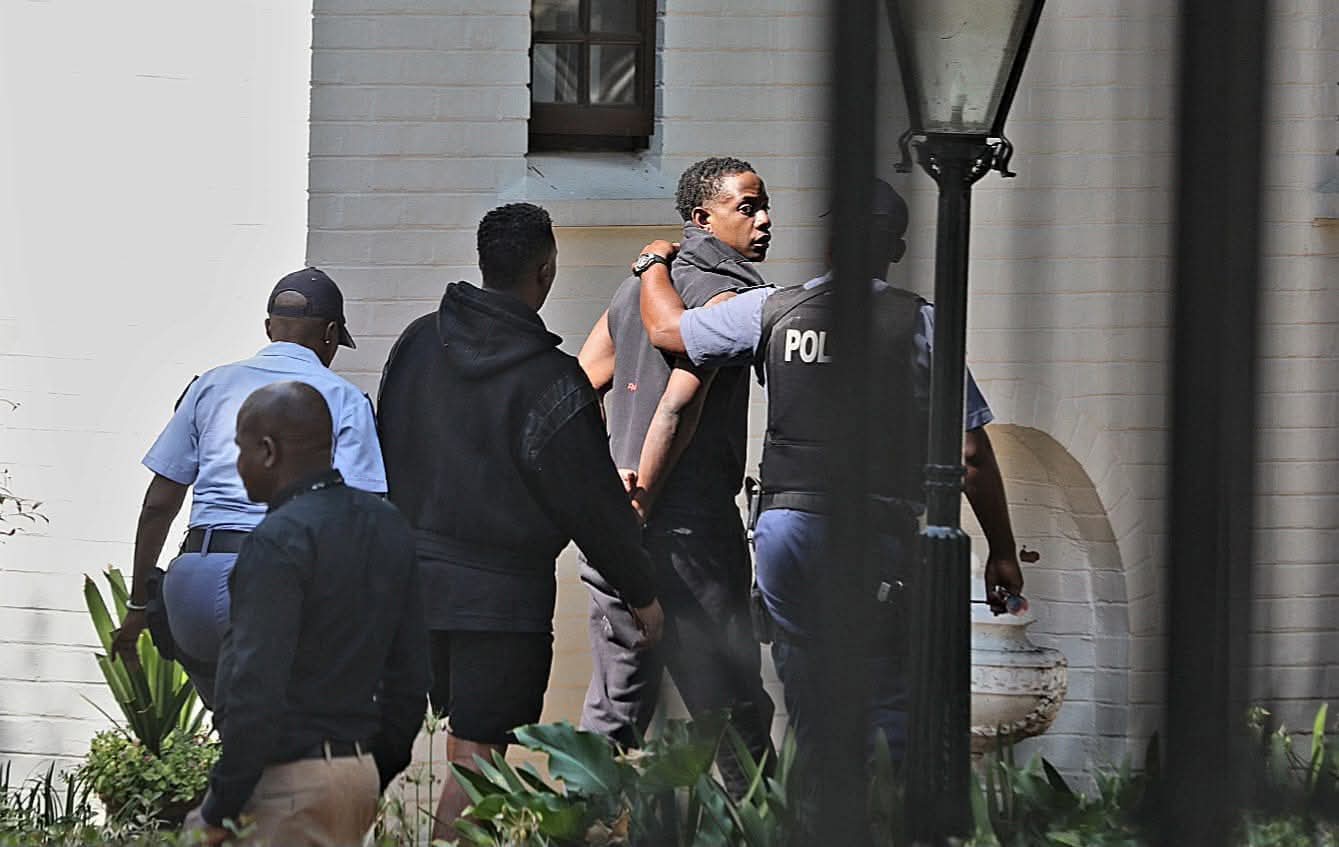
A significant turn has emerged in a high-profile shooting case unfolding in South Africa, as Bellarmine Mugabe and his co-accused have formally entered guilty pleas before the Alexandra Regional Court.
By Advent Shoko
Mugabe, who had initially faced more serious charges, pleaded guilty to pointing a firearm and contravening South Africa’s immigration laws, marking a strategic legal shift that could influence sentencing outcomes.
His co-accused, Tobias Matonhodze, delivered a far more comprehensive admission of guilt. He pleaded guilty to attempted murder, defeating the ends of justice, illegal immigration, and possession of ammunition, placing him at the centre of the prosecution’s case.
Case background
The charges stem from a February shooting incident at a private residence in Hyde Park, an affluent suburb of Johannesburg. The victim, an employee at the Mugabe household, was reportedly caught up in a violent altercation that escalated into gunfire.
While full details of the incident remain before the court, prosecutors have maintained that the shooting was both deliberate and unlawful, forming the basis of the attempted murder charge against Matonhodze.
Legal implications
Guilty pleas in cases of this nature often signal an attempt by the accused to mitigate harsher penalties, especially where evidence against them is strong. For Mugabe, the decision to plead guilty to lesser charges may reduce custodial exposure, though immigration violations remain a serious concern under South African law.
For Matonhodze, however, the admission to attempted murder significantly raises the stakes. Courts in South Africa treat such offences with severity, particularly where firearms are involved and public safety is compromised.
What comes next
The matter now proceeds to sentencing, where the court will weigh aggravating and mitigating factors, including the nature of the offence, intent, and the personal circumstances of the accused.
This case underscores ongoing concerns around firearm-related violence and immigration compliance, while also highlighting how plea decisions can reshape the trajectory of criminal proceedings in South Africa’s justice system.
Leave a Reply