
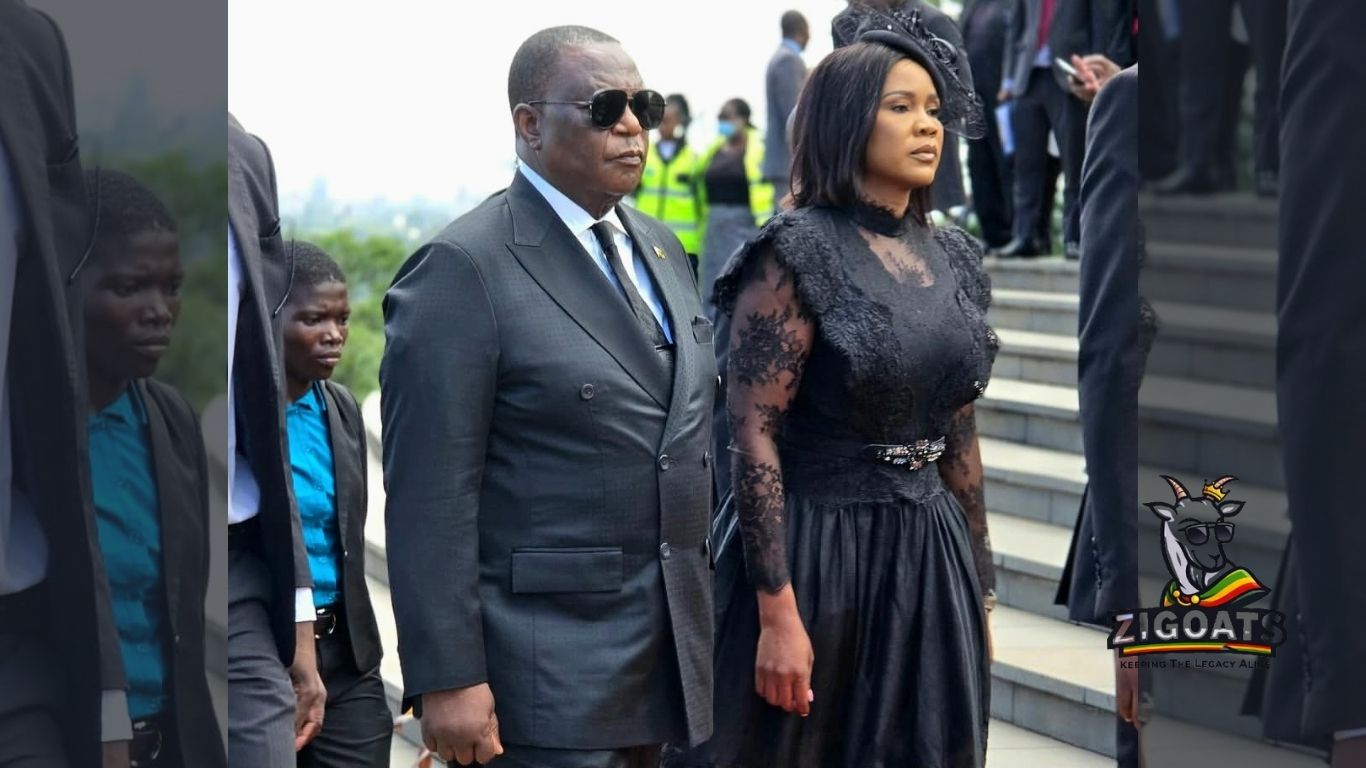
The Government of Zimbabwe has issued a strong public warning over a growing scam involving individuals impersonating Vice President Constantino Chiwenga and his wife, Miniyothabo Baloyi Chiwenga, in a coordinated attempt to defraud unsuspecting citizens and foreign nationals.
In a statement released on March 17, 2026, the Department of Presidential Communications said the imposters are using foreign-registered phone numbers, particularly from Nigeria and South Africa, to contact targets with the intention of soliciting money, services, or sensitive personal information.
Authorities described the scheme as a serious abuse of public office identity, warning that the fraudsters are deliberately exploiting the authority and public profile of the Vice President’s Office to gain trust and manipulate victims.
“We urge those affected to be vigilant and verify any communication purporting to be from the Vice President’s Office, or from his wife.”
The government emphasised that all official communication involving the Vice President, his office, or his household follows formal, traceable channels handled by authorised personnel. Any unsolicited contact claiming otherwise should be treated as fraudulent.
You May Like This
In a critical clarification, officials also stated that neither the Honourable Vice President nor his spouse maintain accounts on the social media platform X (formerly Twitter). Any accounts claiming association with them or projecting their views are fake and should be disregarded.
Investigations have identified several numbers linked to the scam, including +234 8083483315, +234 7038120794, and +277 25956982, which authorities say have already been used to impersonate the Vice President and his spouse.
Government agencies are now working with telecommunications regulators in both Nigeria and South Africa to trace and prosecute those behind the scheme, in what officials describe as a cross-border cybercrime operation.
The public has been urged to report any suspicious communication to the Zimbabwe Republic Police (ZRP), the Office of the President and Cabinet, or the Vice President’s Office using official contact channels.
Analysts say the case highlights growing risks associated with digital impersonation and cyber-enabled fraud in governance spaces, where public trust can be exploited by criminal networks. As Zimbabwe continues to digitise communication channels, authorities face increasing pressure to strengthen verification systems and public awareness to counter emerging threats.
Officials reiterated their commitment to protecting citizens from fraud and maintaining the integrity of public institutions, warning that vigilance remains the first line of defence against increasingly sophisticated scams.
Leave a Reply