
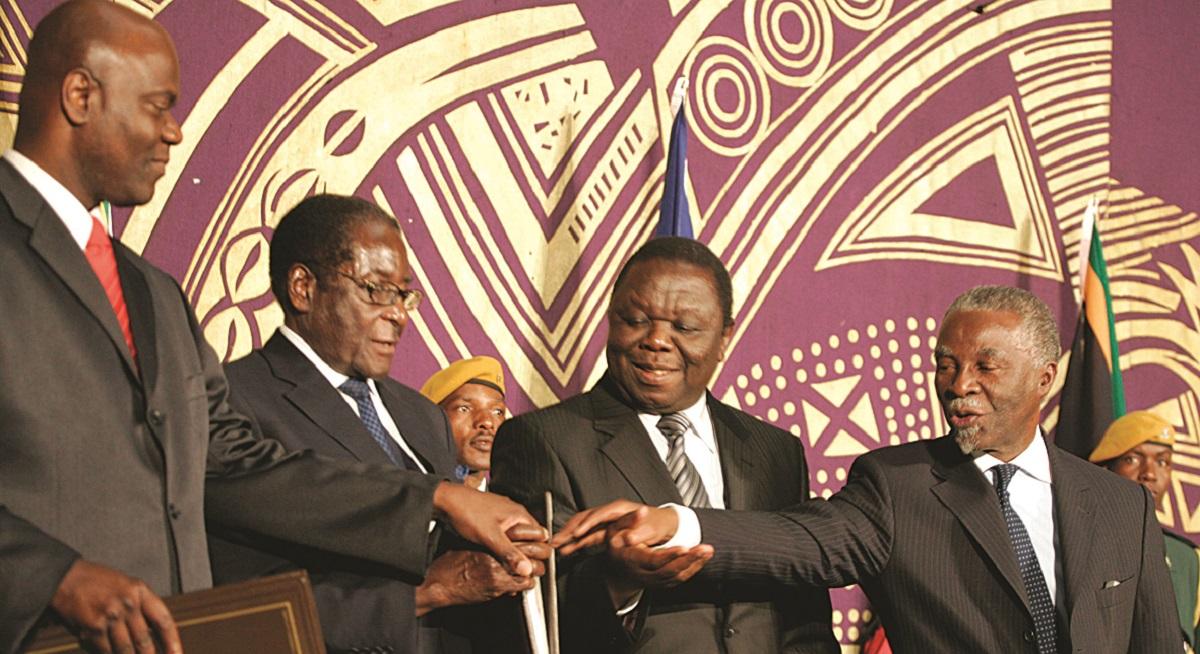
The former President of South Africa, Thabo Mbeki, says his country’s prolonged economic decline is linked to changes in leadership since 2008, a period that marked the end of strong growth and the beginning of stagnation that still affects households today. His comments came during a keynote address at the Nelson Mandela Children’s Fund’s 30th anniversary, where he warned that falling productivity and weak growth have real consequences for families and children.
Mbeki, who served as Deputy President under Nelson Mandela and then as President from 1999 until his resignation in September 2008, oversaw a period of notable economic expansion. GDP per capita grew rapidly in the early 2000s, unemployment declined, and economic policies emphasised fiscal discipline and investment.
Reflecting on the slowdown, Mbeki said:
“The first place to look, in explaining this dramatic fall-off in productivity growth, might be to ask whether there was a reversal of the things that had supported the initial strong performance. Indeed, the most significant change was not the global financial crisis, which South Africa weathered remarkably well, but a change in the country’s president.”
However, the global financial crisis of 2008–2009, triggered by the collapse of markets in the United States and Europe, plunged many economies into recession, including South Africa’s for the first time since the end of apartheid. GDP contracted sharply in late 2008 and into early 2009 as export demand fell and investment dried up. Zimbabwe, the United States, and other countries were also affected by the global downturn, although they didn’t have leadership change.
You May Like This
In the wake of domestic political shifts, Mbeki was replaced by Kgalema Motlanthe as interim president in September 2008, followed by Jacob Zuma in 2009 after general elections. Zuma’s presidency (2009–2018) coincided with slower growth, rising debt, and challenges including corruption and policy uncertainty that dampened investor confidence and economic recovery.
Critics of Mbeki’s view point out that the global recession, structural inequality, load shedding, and policy drift under subsequent administrations also played major roles in South Africa’s sagging economy. But Mbeki insists that the loss of institutional continuity after 2008, at a time when global headwinds demanded clear economic direction, contributed to the long period of underperformance.
Leave a Reply