
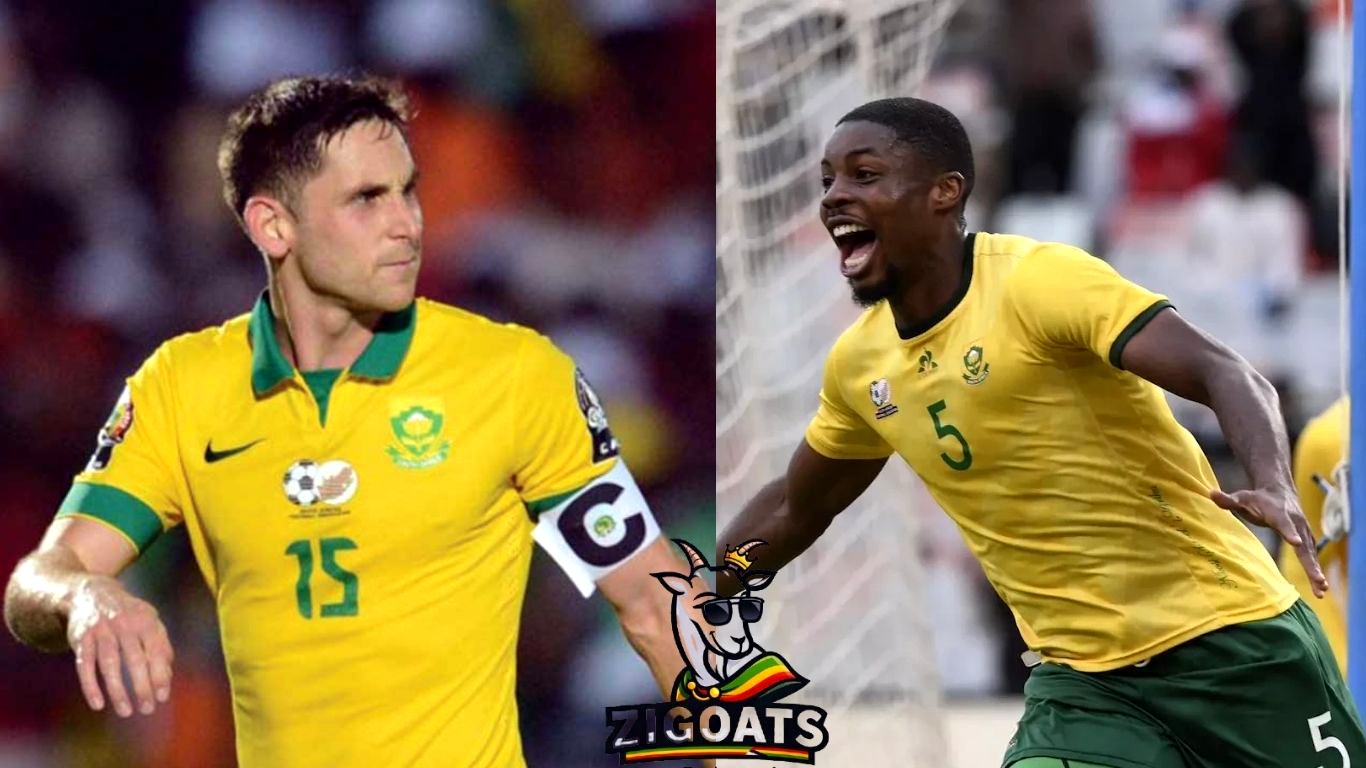
Debate is raging across South African football circles after fans and analysts accused the public of applying different standards to two Bafana Bafana players, Dean Furman and Ime Okon, when it comes to nationality and identity.
At the centre of the discussion is a sensitive question: why was one player embraced without hesitation, while the other faces constant scrutiny about whether he truly belongs?
Furman’s Unquestioned Acceptance
Former Bafana Bafana captain Dean Furman, born in South Africa to British parents, enjoyed a celebrated international career representing the national team.
The experienced midfielder earned 58 caps for South Africa and wore the captain’s armband with pride. Over the years he built a reputation as a respected leader both at club level and internationally.
Furman developed through youth systems at Chelsea and Rangers before building a strong professional career that included spells with Doncaster Rovers, Oldham Athletic and SuperSport United.
Today, at 37, he still plays in England for Warrington Rylands while also working as a player services executive for the Professional Footballers’ Association and a financial adviser for athletes.
Yet during his entire Bafana Bafana career, his nationality was rarely questioned, even though both his parents are British.
You May Like This
Okon’s Identity Questioned
In contrast, young defender Ime Okon has found himself at the centre of a very different conversation.
The 22-year-old centre-back, born in Johannesburg to a Nigerian father and South African mother, currently plays for Hannover 96 in Germany’s 2. Bundesliga and represents Bafana Bafana.
Okon joined the German club in 2025 after impressing at SuperSport United, where he made 57 appearances before moving to Europe.
Despite being South African by birth and choosing to represent the country internationally, some social media users continue to label him “Nigerian”, questioning his place in the national team. Bafana Bafana head coach Hugo Broos has named him in the preliminary World Cup 2026 preparations. The call up infuriated some fans who thought players who are “more South African” should have been called in his place.
That contrast has sparked widespread criticism online.
Social Media Calls Out Double Standards
One South African user on X summed up the frustration many fans feel about the debate.
“Furman his parents were both from United Kingdom. We praised him, gave him an armband and cheered ‘mlungu’ every time he touched the ball. If we can do that for a white man, why can’t we do the same for a brother?”
The comment quickly went viral, with many agreeing that the comparison exposes uncomfortable questions about race, identity and belonging in South African sport.
Echoes of a Wider National Debate
The issue goes beyond football. South Africa has repeatedly grappled with tensions around nationality, migration and identity.
A recent example involved Chidimma Adetshina, the Soweto-born law student whose participation in the 2024 Miss South Africa pageant triggered controversy because of her Nigerian heritage.
She later withdrew from the competition and eventually went on to win Miss Universe Nigeria before finishing as first runner-up at the Miss Universe 2024 pageant.
Malema’s Warning on African Unity
Political voices have also weighed in on similar issues in the past. Julius Malema, leader of the Economic Freedom Fighters (EFF), has repeatedly argued that hostility toward other Africans reflects deeper psychological and historical problems. Malema said in one of his speeches on the issue:
“Xenophobia is a betrayal of African unity.”
He argues that colonial history and apartheid created an inferiority complex that sometimes causes Africans to turn against one another instead of building continental solidarity.
A Question of Identity and Belonging
For many observers, the debate surrounding Furman and Okon highlights a broader conversation about what it truly means to be South African.
Both players represent the same national jersey. Both have committed themselves to the country’s football ambitions.
Yet the contrasting public reactions raise a deeper cultural question: are South Africans judging identity differently depending on race or origin?
Leave a Reply