
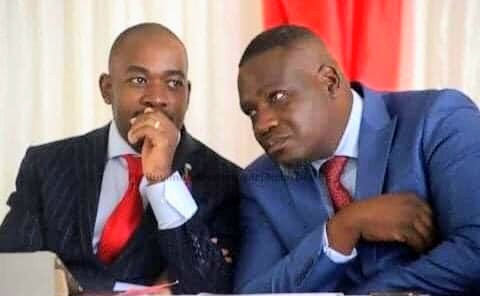
Hwende Suggests Constitutional Amendments Could Be a Reform Window
Kuwadzana East MP Chalton Hwende has touched a nerve in Zimbabwean politics by suggesting that the controversial Constitutional Amendment Bill No. 3 of 2026 could open a window for long-standing electoral reforms citizens have been demanding.
The Bill, recently gazetted and awaiting tabling in Parliament, proposes sweeping amendments to Zimbabwe’s 2013 Constitution. Among the most consequential provisions are:
- Extending the presidential term from five to seven years
- Aligning the electoral calendar with the longer tenure
- Altering the method of electing the President
- Restructuring succession mechanisms
- Abolishing the Gender Commission and the National Peace and Reconciliation Commission
One of the most contentious proposals would shift the election of the President from direct popular vote to Members of Parliament, a move critics say undermines the “one man, one vote” principle that underpins the current constitutional order. If passed, the amendments could effectively extend President Emmerson Mnangagwa’s tenure to 2030.
Hwende’s Position: “There Are Three Main Views”
On his social media, Hwende said he had studied the Bill and would begin consultations with his constituency.
“Yesterday, the Speaker of Parliament of Zimbabwe gazetted the Constitutional Bill seeking to amend our Constitution. I have gone through the bill, and as an elected member of Parliament, I will today begin consultations with my constituency and the general public.
At 6 PM today (Tuesday 17 February 2026), I will chair our Constituency Executive Committee meeting, where we will outline a schedule for consultations across the constituency. We have 90 days for this process.
In my view, there are three main positions emerging:
1. Those who support the amendments in toto.
2. Those who are against any constitutional changes.
3. Those who see this as an opportunity to push for the inclusion of constitutional reforms that citizens have been demanding to level the political playing field.”
It is this third category, framing the Constitutional Amendment Bill process as a potential reform window in Zimbabwe, that has ignited fierce debate online.
Optics and Irony: CCC’s Reform Blueprint vs Proposed Constitutional Changes
Hwende’s post also included an image from the Citizens Coalition for Change (CCC) titled “Seven Electoral Reform Pillars.” The foreword stresses the centrality of voting in Zimbabwe’s democracy:
“The liberation struggle in Zimbabwe was a collective quest to create a nation founded upon the people’s sovereignty and the time-tested principle of one-man, one-vote. Our forebears sacrificed life and limb to birth this great nation where the right of every citizen to vote and self-determine is guaranteed and secured. The right to vote is so fundamental and so precious that without it, a people cannot truly be free and independent. A vote is the basis of any social contract; the source of authority for any person to govern in a modern democratic society.”
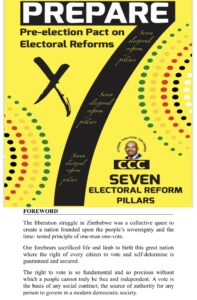
Critics say supporting or entertaining constitutional amendments that may transfer presidential elections from the masses to MPs sits uneasily alongside a reform blueprint that elevates voting as sacred. Supporters argue that the consultation process could allow citizens to defend and entrench democratic principles.
The contrast highlights the tension at the heart of Zimbabwe’s constitutional debate: is this a dilution of citizen power or a platform to strengthen it?
Critics: “Is This Conditioning the Public?”
Analysts and citizens have accused Hwende of softening resistance to what many perceive as a Bill primarily designed to extend political terms. One critic wrote:
“The electoral reforms listed are so vague that Zanu PF can easily argue that all requirements are already in place. You are trying to condition us to accept your preferred outcome.”
Added another:
“After those rituals you call public consultations, you then vote for the extension of your terms, claiming that’s what your constituency wants.”
A third comment read:
“Consulting with your constituency and the general public? Don’t waste our time; connive on how to prolong ill-gotten loot.”
One observer argued:
“People genuinely interested in reforms see this process for what it is, a trap 🪤. The current government is not to be trusted at all unless nezvigananda.”
Hwende responded directly:
“Number 1 is the position of ZANU PF, a political party controlling both Houses of Parliament. To say less than 100 people support that is a mistake. We must acknowledge that there are people who support them.”
Political Backdrop: Trust Deficit and 2023 Fallout
Hwende’s remarks come amid lingering mistrust following the 2023 harmonised elections.
He is among CCC MPs who remained in Parliament after former leader Nelson Chamisa resigned, citing infiltration and electoral irregularities flagged by SADC, local, and international observers. Other CCC MPs, including Advocate Fadzayi Mahere and Allan Norman “Rusty” Markham, resigned. Hwende argued that his mandate comes from voters, only the electorate can remove him.
Critics accused those who stayed of sanitising ZANU PF rule, and some suggest MPs may have incentives to support constitutional changes that extend parliamentary terms alongside the presidency. Supporters argue remaining in Parliament allows opposition MPs to represent constituents and push for reforms from within.
What Happens Next?
The Constitutional Amendment Bill is expected to be tabled by Speaker Jacob Mudenda. Once introduced, it must undergo a mandatory 90-day public consultation period before Parliament can vote.
With ZANU PF holding a two-thirds majority in both Houses, passage appears likely if party discipline holds. Constitutional lawyers have signalled potential legal challenges, particularly around provisions that fundamentally alter presidential elections.
Hwende’s gamble is as political as it is constitutional: can a process widely viewed as a power-extension tool be repurposed into a genuine reform platform? Or, as sceptics argue, is the window he speaks of already framed and sealed?
The next 90 days will test not only Zimbabwe’s constitutional safeguards, but also the credibility of those claiming to defend them.
Leave a Reply